
Where Data Tells the Story
© Voronoi 2026. All rights reserved.

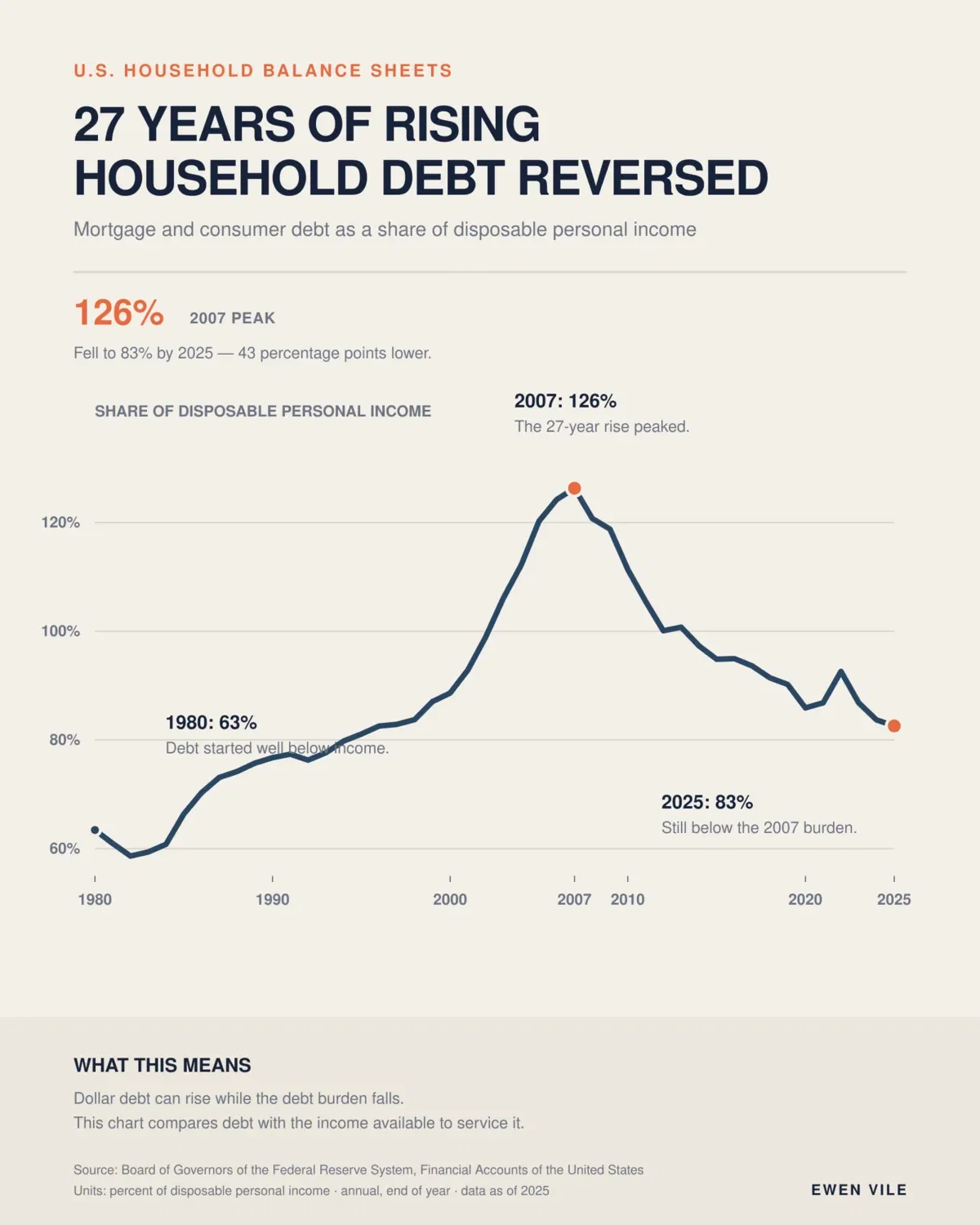
U.S. household mortgage and consumer debt rose from 63% of disposable personal income in 1980 to 126% in 2007. It then reversed: the ratio was 83% in 2025, 43 percentage points below the pre-financial-crisis peak.

This does not mean households owe less debt in dollar terms. It means mortgage and consumer debt have grown more slowly than disposable personal income. A household can carry a larger dollar balance while its income-relative debt load falls.

The measure covers one-to-four-family residential mortgages and consumer credit. It is not a measure of all liabilities, household wealth, or affordability.