
Where Data Tells the Story
© Voronoi 2026. All rights reserved.

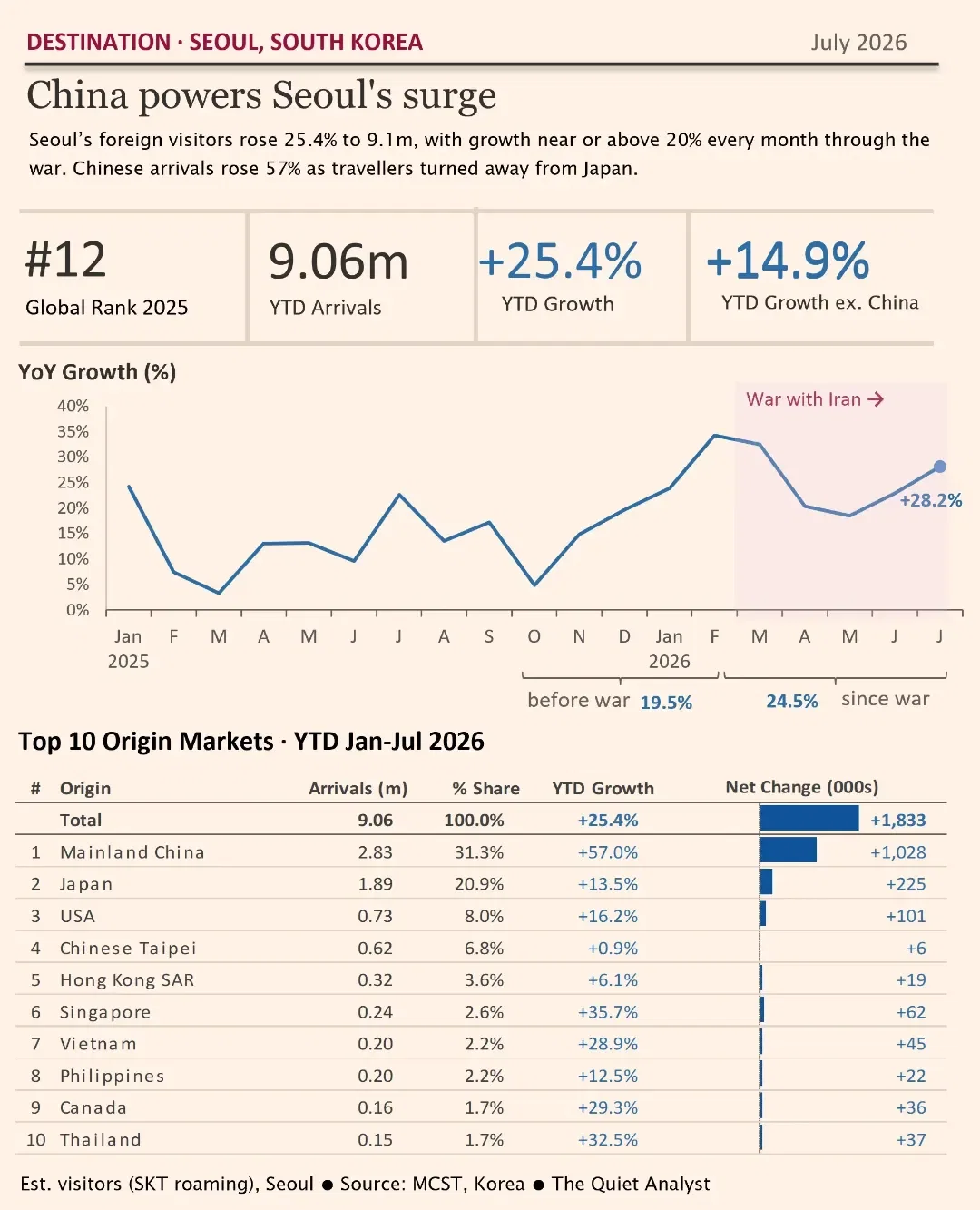
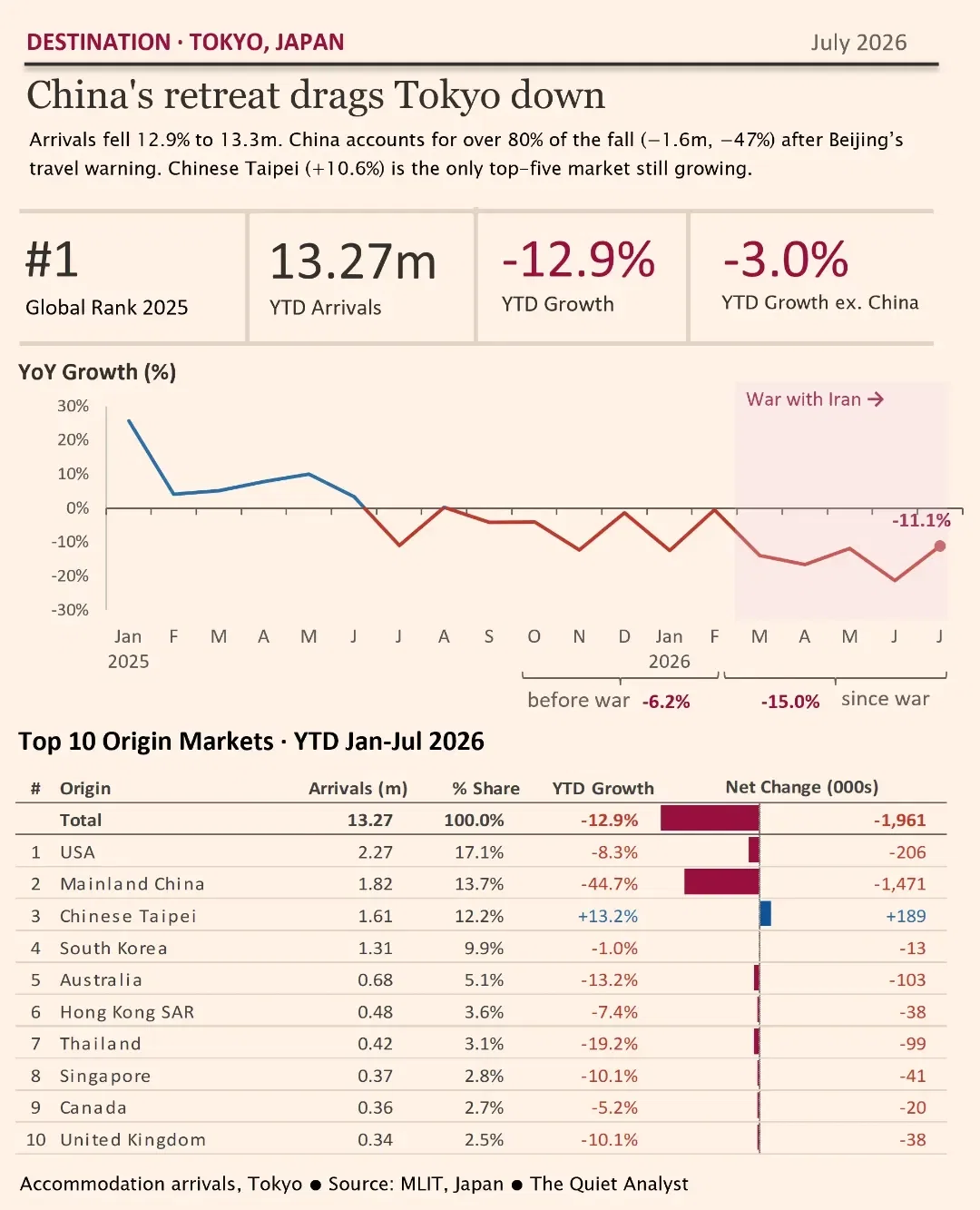
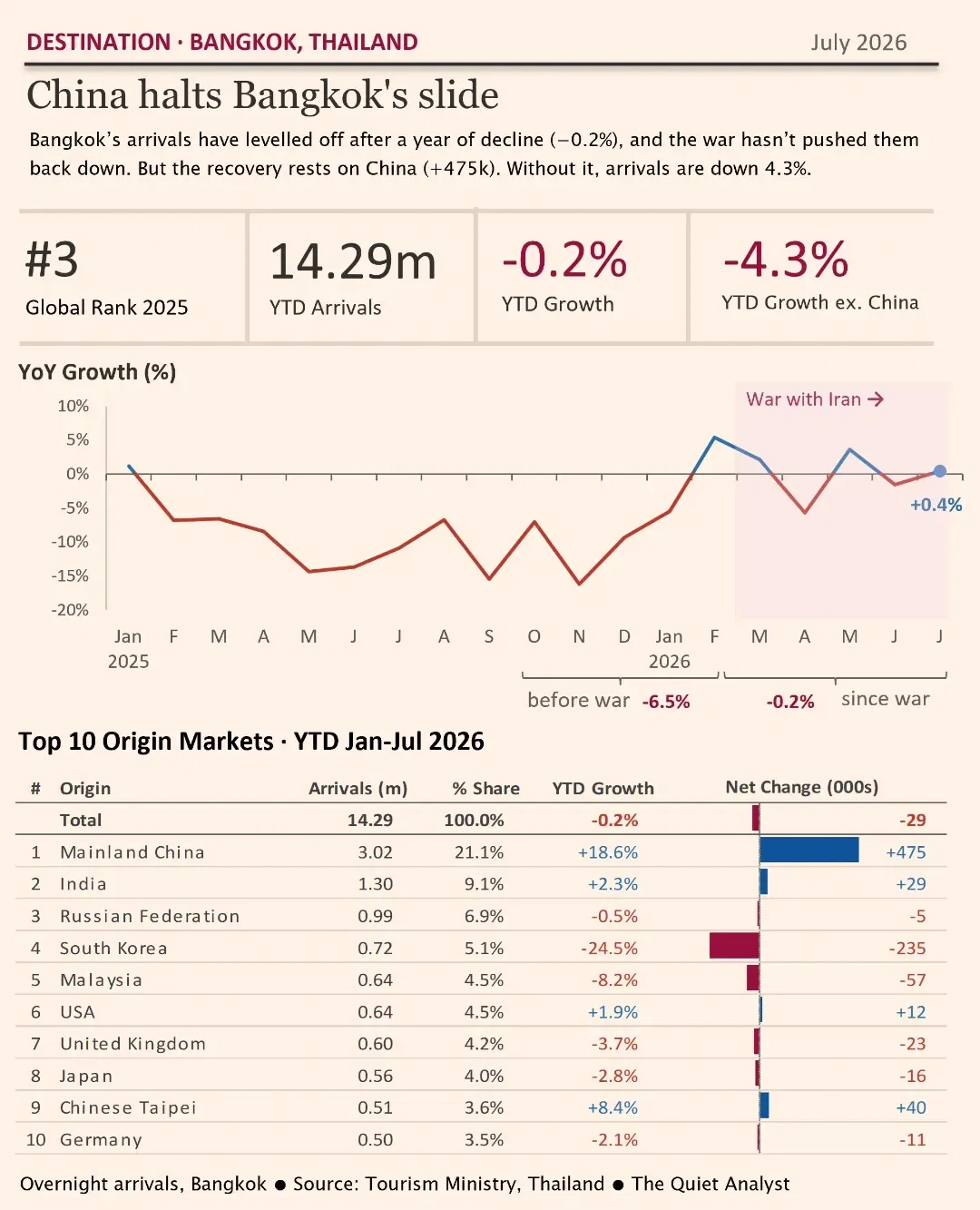
Chinese travellers are reshaping Asia’s city rankings. After Beijing’s travel warning on Japan, Chinese arrivals rose 57% in Seoul and fell 47% in Tokyo, while in Bangkok they helped stop the slide.
Seoul: foreign visitors rose 25.4% to 9.1m in January–July 2026. China added 1.0m (+57%), more than half of Seoul’s gain, but Seoul grew strongly without China too (+14.9%). Growth picked up after the Iran war began, from 19.5% to 24.5%.
Tokyo: arrivals fell 12.9% to 13.3m, and China (−1.6m, −47%) accounts for over 80% of the fall. Excluding China, Tokyo was still down 3%, even though Japan’s border arrivals outside China rose 14%. Many visitors land in Tokyo and travel straight on, so they’re counted at the border but not in Tokyo’s hotels.
Bangkok: arrivals were flat at 14.3m (−0.2%). Chinese arrivals rose 19% (+475k), offsetting falls elsewhere, and July edged back into growth.
Data: each city uses its own official source and unit, so compare growth rates rather than totals. Seoul: estimated foreign visitors from SKT mobile roaming data (Ministry of Culture, Sports and Tourism, Korea). Tokyo: accommodation arrivals (MLIT, Japan); origin split estimated from guest nights, adjusted for each market’s 2025 average stay. Bangkok: overnight arrivals (Ministry of Tourism & Sports). Growth is year on year, January–July 2026 vs 2025. Figures as of 30 September 2026.
Full monthly tracker with country and city breakdowns: The Quiet Analyst on LinkedIn
https://www.linkedin.com/pulse/tourism-growth-cools-iran-war-drags-desmond-choong-0ciac/