
Where Data Tells the Story
© Voronoi 2026. All rights reserved.

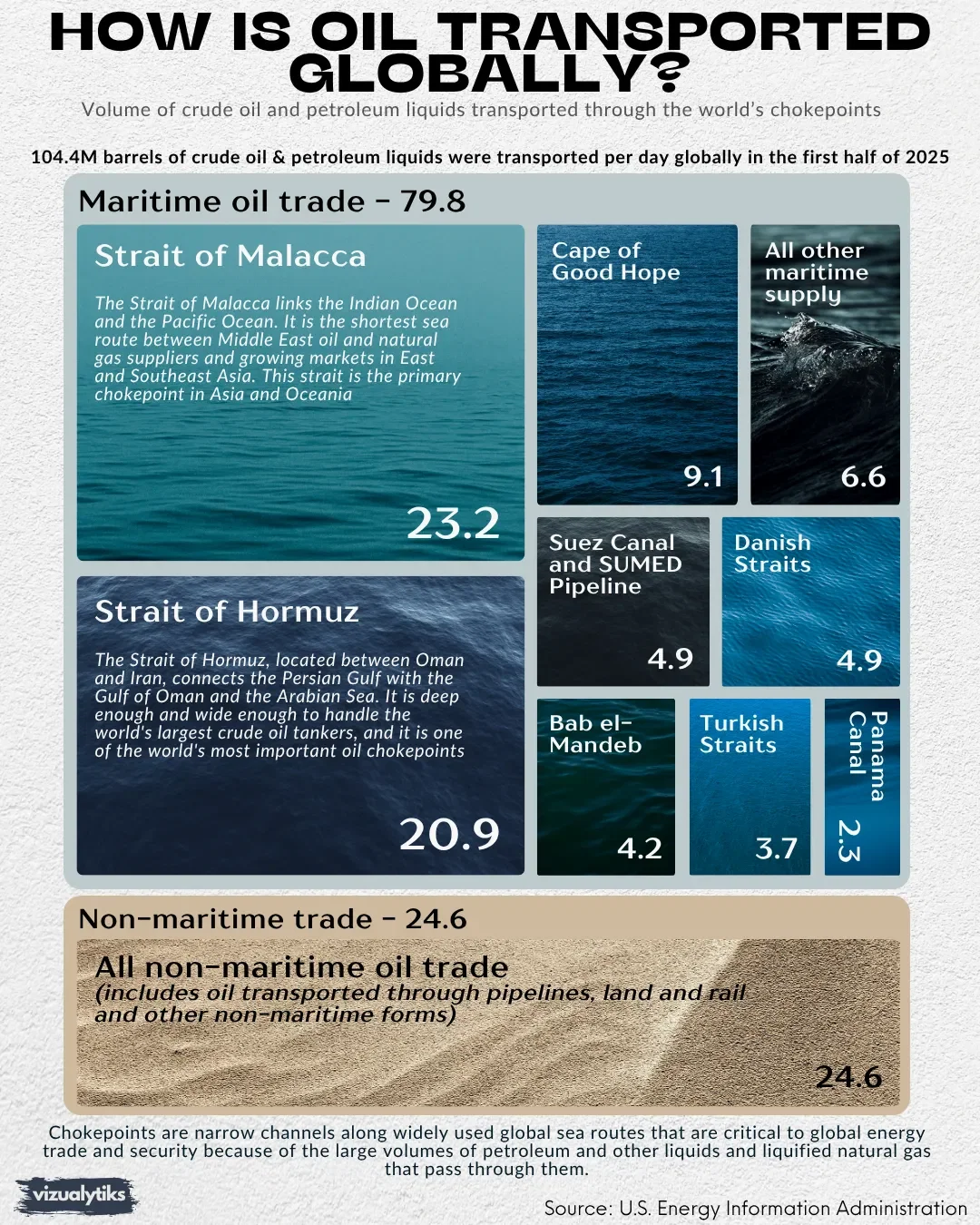
Over 75% of global oil flows move by sea, making maritime chokepoints the backbone of the global energy system. Routes like the Strait of Malacca (23.2M bpd) and Strait of Hormuz (20.9M bpd) are not just shipping lanes, they are pressure points where geography, trade, and geopolitics collide.
Right now, that risk is no longer theoretical. The ongoing U.S.–Israel war with Iran has severely disrupted flows through Hormuz (a route that typically carries about 20% of global oil supply). Tanker traffic has collapsed with threat to attacks on vessels surging, and in some cases the Strait has been effectively closed, removing millions of barrels per day from global markets. 
What this highlights is simple: the global oil system is highly efficient but fragile. When a single chokepoint is disrupted, the ripple effects are immediate with higher oil prices, supply shortages, and rising geopolitical risk premiums. And while pipelines and alternative routes exist, they simply cannot replace the scale of maritime flows, especially when one of the world’s most critical corridors is at the center of a conflict.