
Where Data Tells the Story
© Voronoi 2026. All rights reserved.

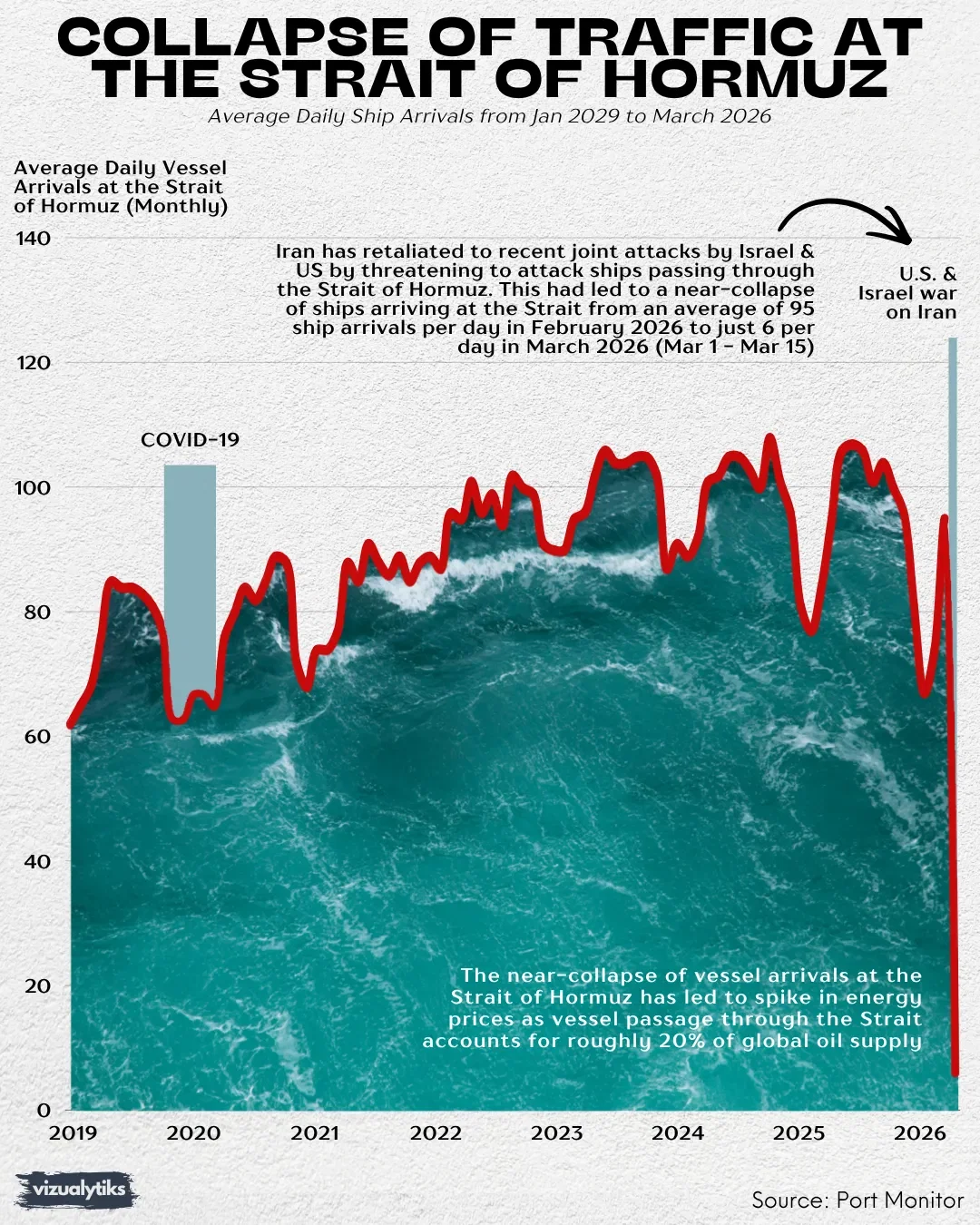
The Strait of Hormuz is one of the most critical chokepoints in global trade, handling roughly 20% of the world’s oil supply. For years, traffic through the Strait has remained relatively stable despite periodic shocks, from COVID-19 disruptions to regional tension, with daily vessel arrivals generally hovering around 80–110 ships.
That stability has now been broken. Following the escalation in the U.S.-Israel conflict with Iran, threats to target vessels moving through the Strait triggered a sharp drop in traffic, from an average of ~95 ships per day to just 6 per day in early March 2026. This isn’t just a decline; it’s a near shutdown of one of the world’s most important energy corridors.
The implications are immediate. Reduced traffic through Hormuz tightens global oil supply, pushes prices higher, and forces markets to price in a significant geopolitical risk premium. More broadly, it highlights how quickly global trade flows can unravel when a single chokepoint becomes a flashpoint and why energy markets remain highly sensitive to events in the Middle East.