
Where Data Tells the Story
© Voronoi 2026. All rights reserved.

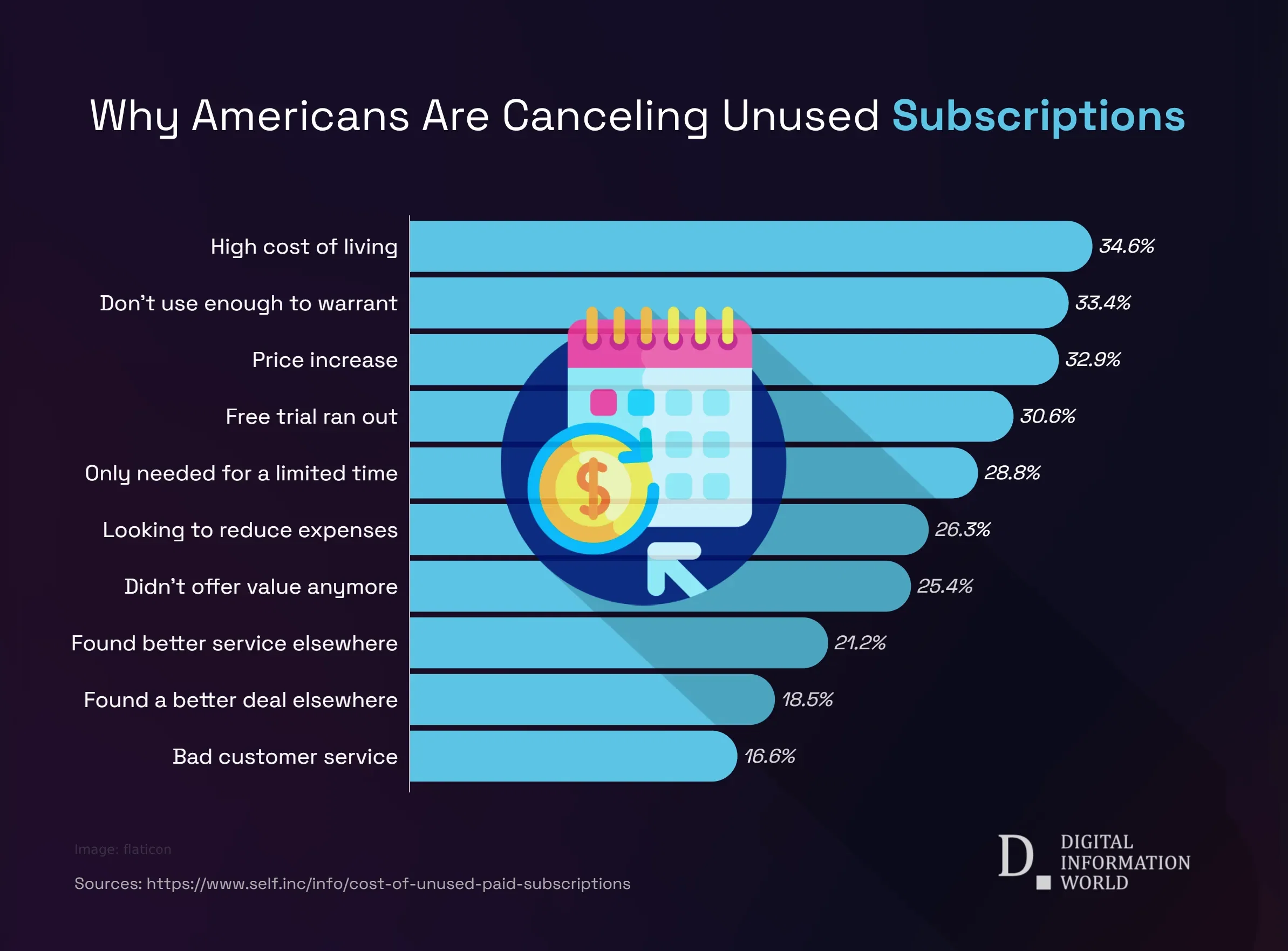
Subscription services once promised convenience and endless choice, from streaming platforms to fitness apps to cloud tools. But as household expenses climb, many Americans are cutting back on recurring charges that feel less essential.
The most common reason is the rising cost of living. About 34.6% of consumers said higher everyday expenses left little room for extras. Close behind, 33.4% reported they simply didn’t use their subscriptions enough to justify the cost, reflecting how quickly novelty can fade.
Price increases triggered another wave of cancellations. Roughly 32.9% dropped services after fees rose, showing how sensitive subscribers have become to even modest hikes. Expired free trials played a role too: 30.6% canceled once promotional periods ended, suggesting that temporary incentives often fail to translate into long-term commitment.
Short-term use also drives turnover. Nearly 28.8% of Americans subscribed for a limited purpose (such as following a sports season or completing a project) and ended service when that need was met. Meanwhile, 26.3% said reducing expenses was their priority, and 25.4% found the service no longer offered real value.
Competition adds further pressure. Around 21.2% moved to a better service, while 18.5% switched after spotting a cheaper deal. A smaller but telling 16.6% canceled due to poor customer service, reminding providers that support remains a deciding factor in crowded markets.
Together, these numbers highlight a broader recalibration in consumer habits. Subscription fatigue is no longer driven only by boredom but by sharper financial trade-offs. In today’s tighter economy, services survive not by relying on convenience alone, but by consistently proving their worth.