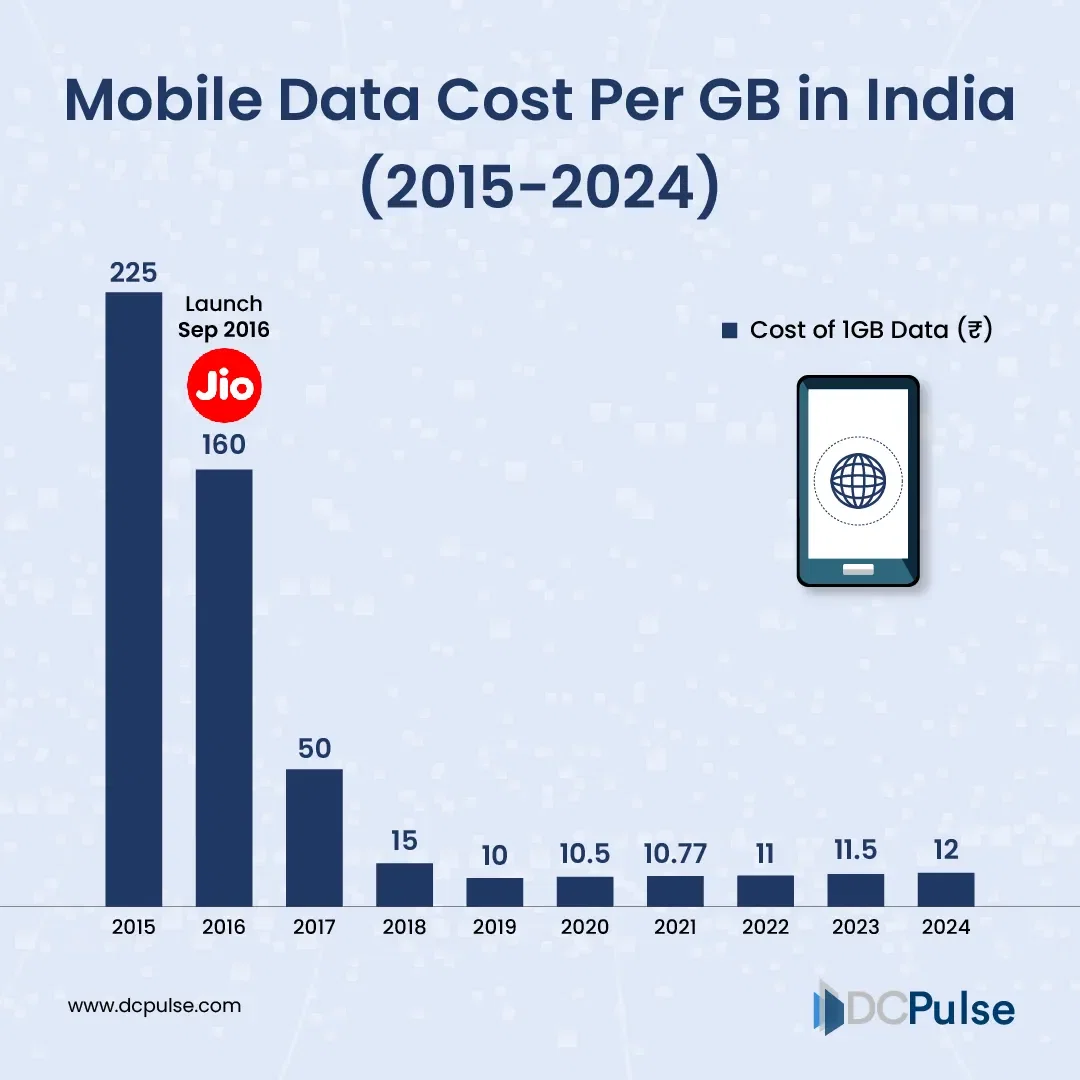
India’s digital revolution has been fueled not just by innovation but also by ultra-affordable mobile data. In 2015, the cost of 1 GB of mobile data was ₹225. By 2024, it dropped to just ₹12, a nearly 95% reduction over a decade. The sharpest decline occurred between 2016 and 2017, coinciding with the launch of Reliance Jio, which disrupted the telecom sector and forced a dramatic market-wide price reduction.
Impact of Affordable Mobile Data:
- Internet Penetration: Reduced costs enabled millions of Indians to access the internet for the first time, particularly in rural areas. By 2024, India became one of the largest online populations globally.
- Startup Growth: Affordable data lowered barriers for app-based startups in fintech, edtech, e-commerce, and digital health, allowing rapid scale without prohibitive connectivity costs.
- Digital Services & Payments: Billions of UPI transactions (over 162 billion in 2024) demonstrate how low-cost mobile internet powers real-time, high-volume digital services.
- AI & Generative Tools Adoption: Cheap data supported mass adoption of AI tools, with 41% of Indians using them daily, and India accounting for 13.5% of active ChatGPT users worldwide.
- Consumer Behavior Shift: Streaming, e-learning, and social media usage surged, enabling a thriving digital economy that continues to drive innovation.
📉 Notable Trend: The Jio effect of 2016-2017 was a game-changer, marking the start of India’s journey toward becoming a global leader in digital consumption.
Key Takeaways:
- 95% reduction in mobile data cost over a decade.
- Affordable internet unlocked access for millions across urban and rural India.
- Supported exponential growth of startups and digital payments.
- Enabled India to lead globally in AI tool adoption.
- The telecom revolution reshaped consumer behavior and digital infrastructure.
👉 Read the full analysis for deeper insights into India’s digital transformation and mobile data trends.