
Where Data Tells the Story
© Voronoi 2026. All rights reserved.

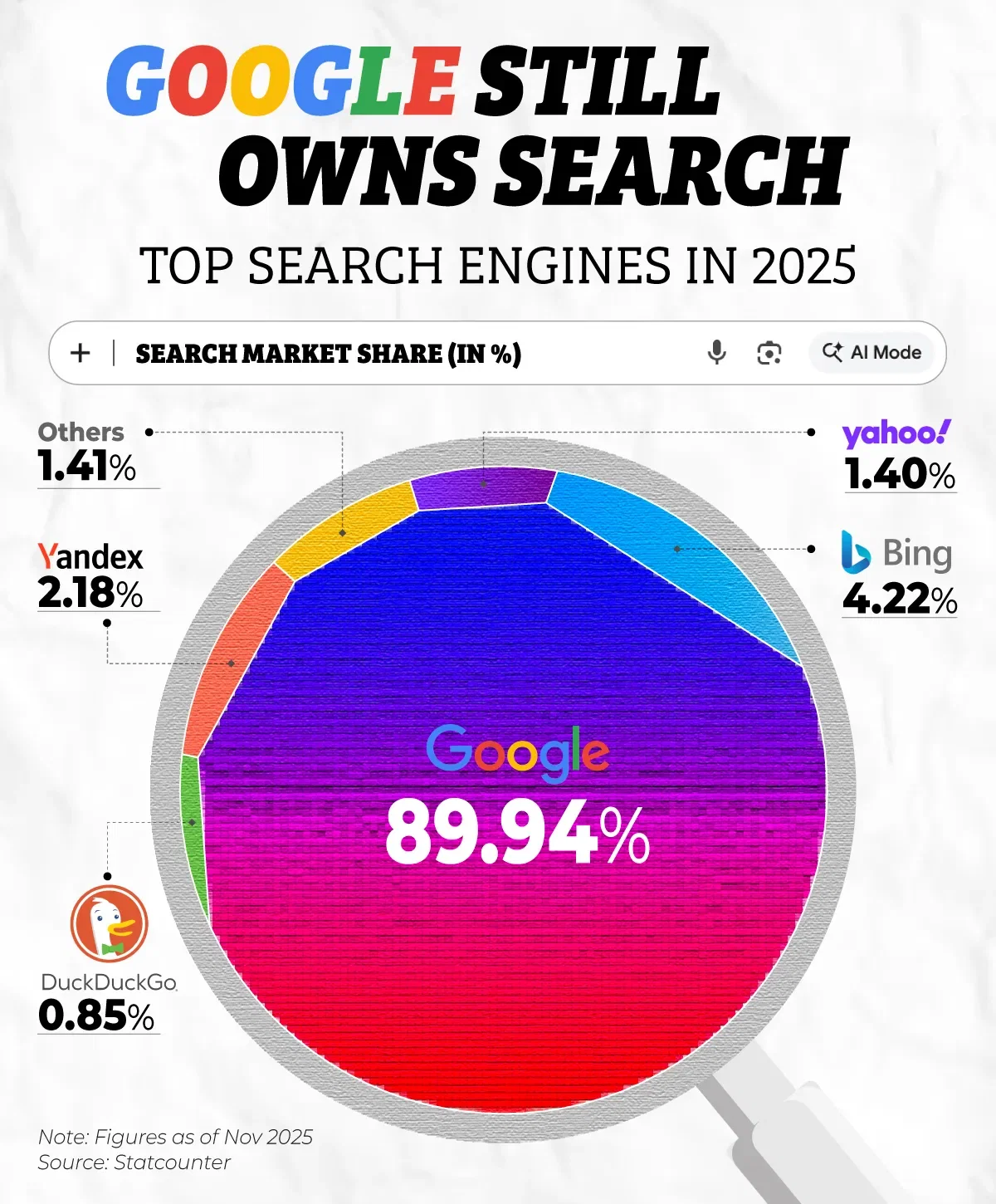
This graphic shows the global search engine market share in 2025, based on data from StatCounter. It highlights how people around the world access information online and which platforms dominate the search landscape at a time when artificial intelligence and alternative discovery tools are gaining attention.
Google continues to overwhelmingly dominate global search, accounting for nearly 90% of all searches worldwide. Despite ongoing debates around competition, regulation, and the rise of AI-driven tools, Google remains the default starting point for most internet users. Its scale, familiarity, and integration across devices and services help reinforce its lead.
Microsoft’s Bing stands in second place but at a considerable distance, with just over 4% of the global market. Recent investments in AI-powered search features and its deep integration with Windows and Microsoft products have helped Bing gain visibility, yet it remains far behind the market leader.
Other players occupy only small niches. Yandex holds a modest share driven largely by regional usage, while Yahoo continues to rely on legacy users and partnerships. DuckDuckGo, known for its privacy-first approach, remains a niche option despite growing awareness around data protection. Together, all remaining search engines account for a small fraction of global searches.
Overall, the data underscores how concentrated the search market remains. Even in 2025, the internet’s front door is still largely controlled by a single company.