
Where Data Tells the Story
© Voronoi 2026. All rights reserved.

The internet can feel universal, but where you are born still decides whether you are likely to have it at all.
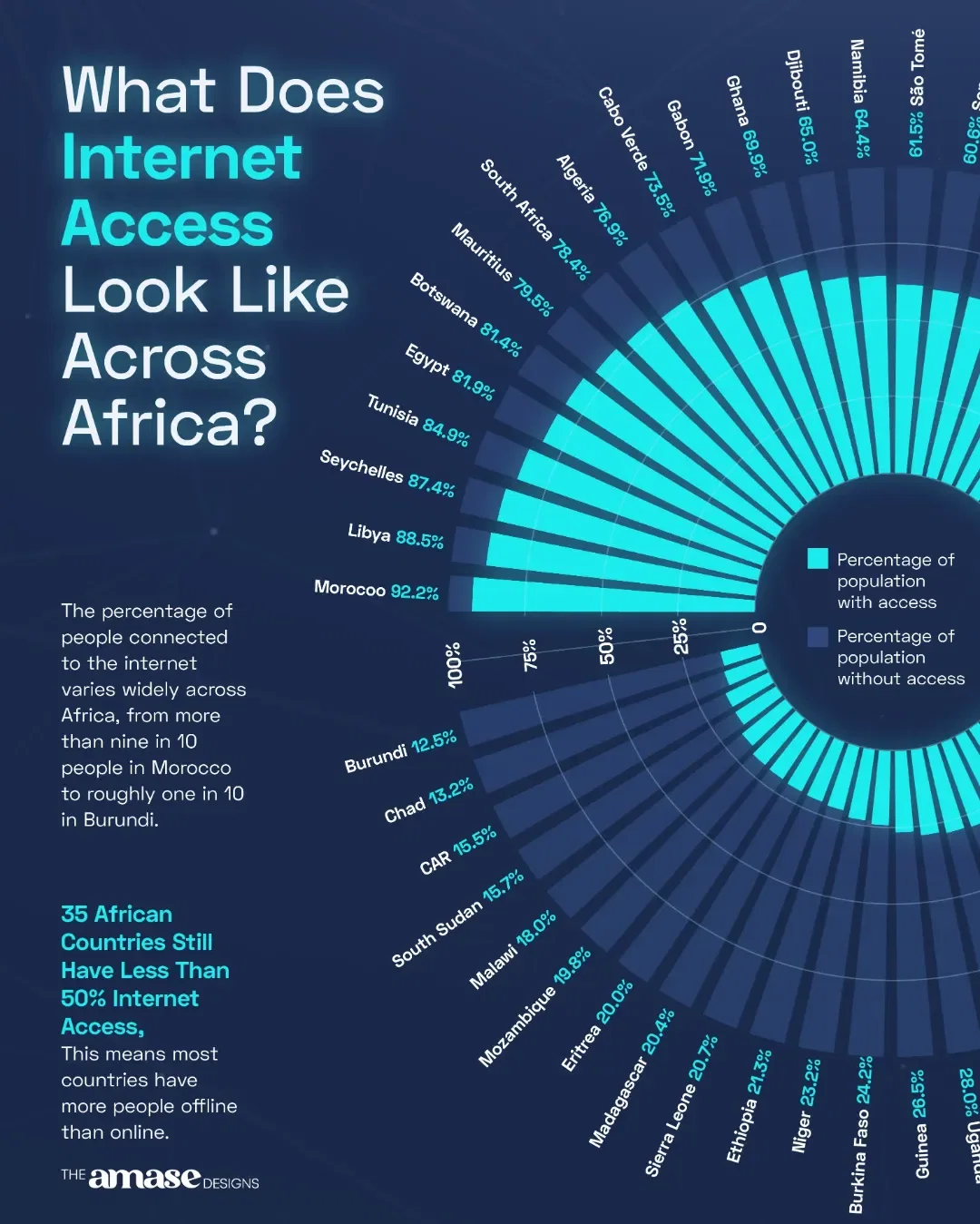
This visualization maps the share of each African country's population with internet access, using the Digital 2025 Global Overview Report from We Are Social and Meltwater. Each bar shows the percentage of people online, set against the percentage still offline.
The gap from top to bottom is enormous. Morocco leads the continent with 92.2% of its population online, more than nine in ten people. At the other end, Burundi sits at 12.5%, roughly one in ten.
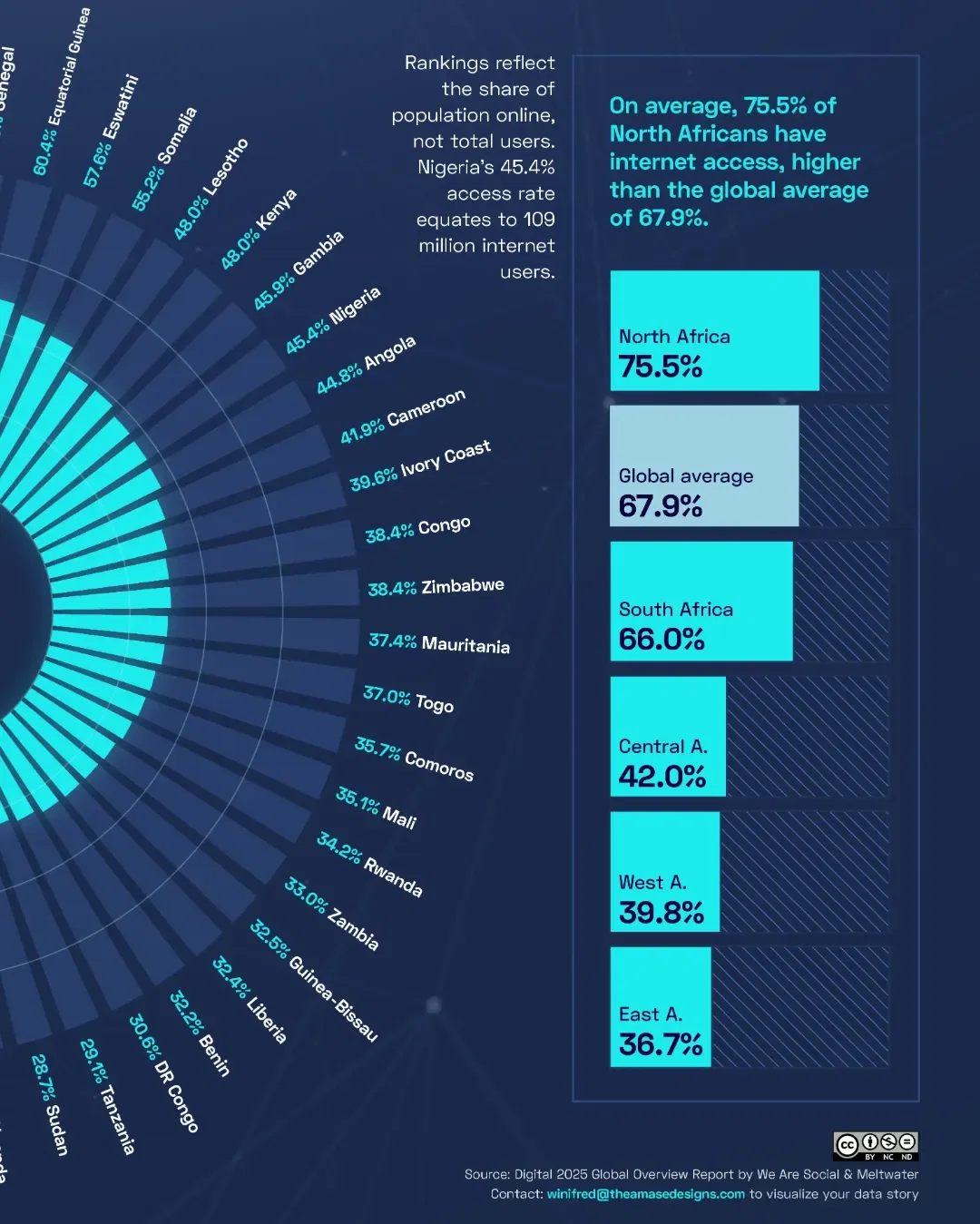
An equally insightful find is how common low access still is. 35 African countries have less than 50% internet access, which means in most of the continent more people are offline than online. Nigeria, the most populous country, falls in this group at 45.4%, though that single figure still translates to 109 million internet users, a reminder that a modest percentage can be a very large number.
The regional pattern is just as clear. North Africa is the standout, where 75.5% of people are online on average, higher than the global average of 67.9%. Every other region falls below that global line. Southern Africa as a region reaches an average rate of 66.0%, while Central, West, and East Africa trail at 42.0%, 39.8%, and 36.7%. East Africa has the lowest regional access on the chart.
So the story is less about whether Africa is coming online and more about how unevenly. The continent holds both some of the most connected populations in the world and some of the least, often within a few borders of each other.