
📈 Risk of a China–Taiwan Conflict for the U.S. AI Industry
China has escalated military pressure on Taiwan through “Justice Mission 2025,” a large-scale joint exercise involving the army, navy, air force, and rocket forces. These drills encircle Taiwan more tightly than in previous years, include live-fire operations, and simulate blockades of key ports.
Taiwan remains a central hub in the global semiconductor supply chain, particularly for advanced logic chips and leading-edge foundry manufacturing that underpin artificial intelligence and data-center infrastructure. While the United States dominates AI-chip design, it has historically lagged in advanced fabrication, leaving much of the world’s most sophisticated chip manufacturing concentrated in Taiwan.
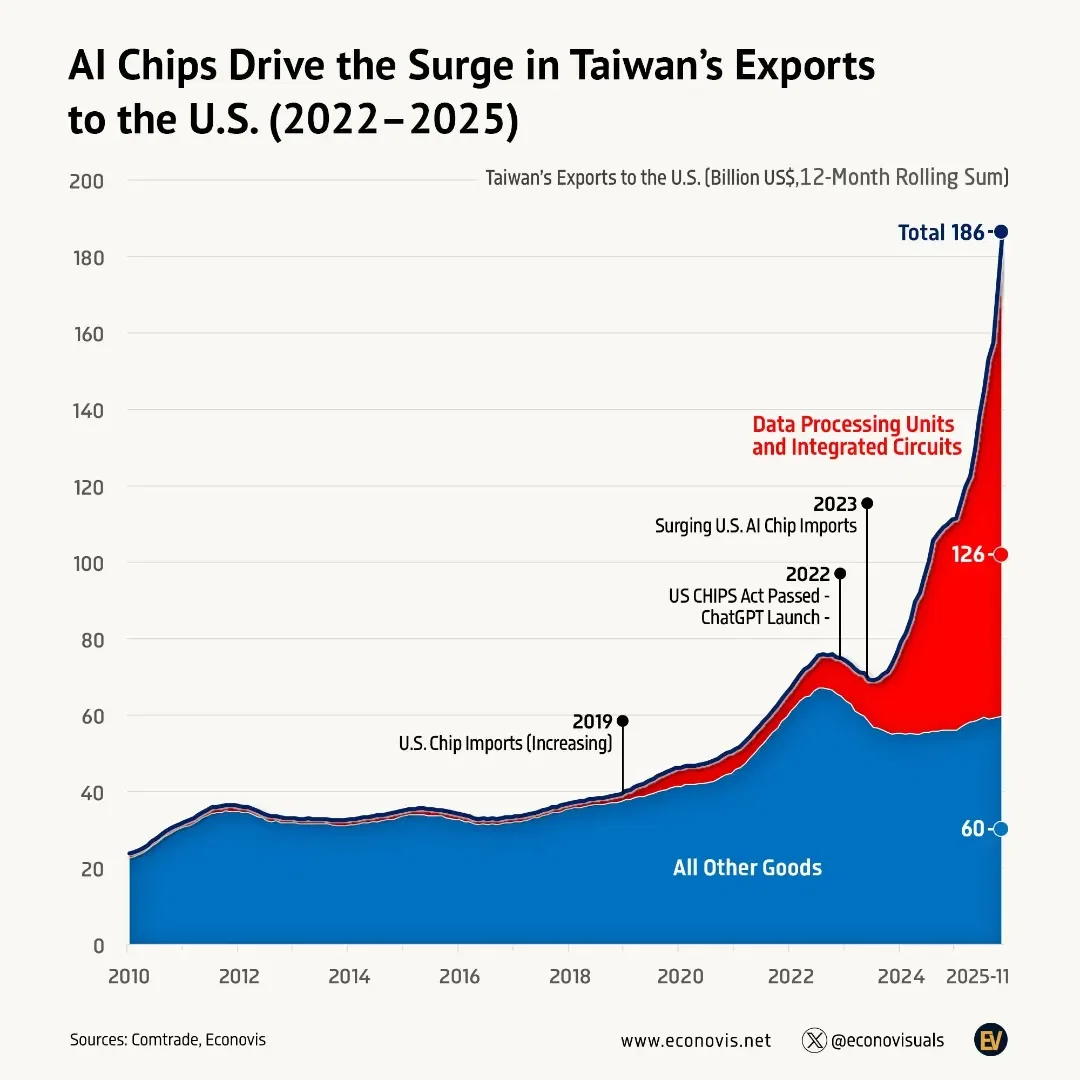
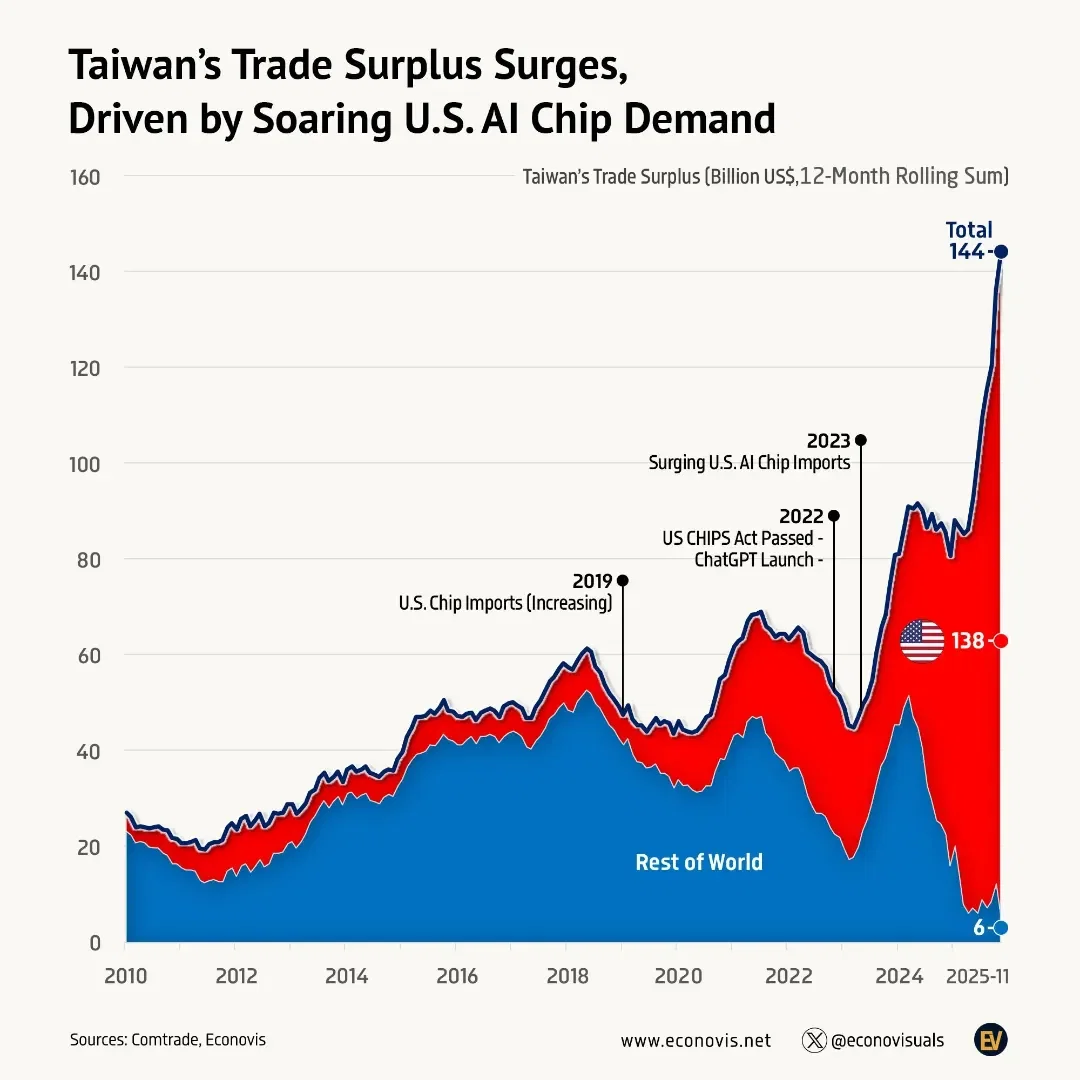
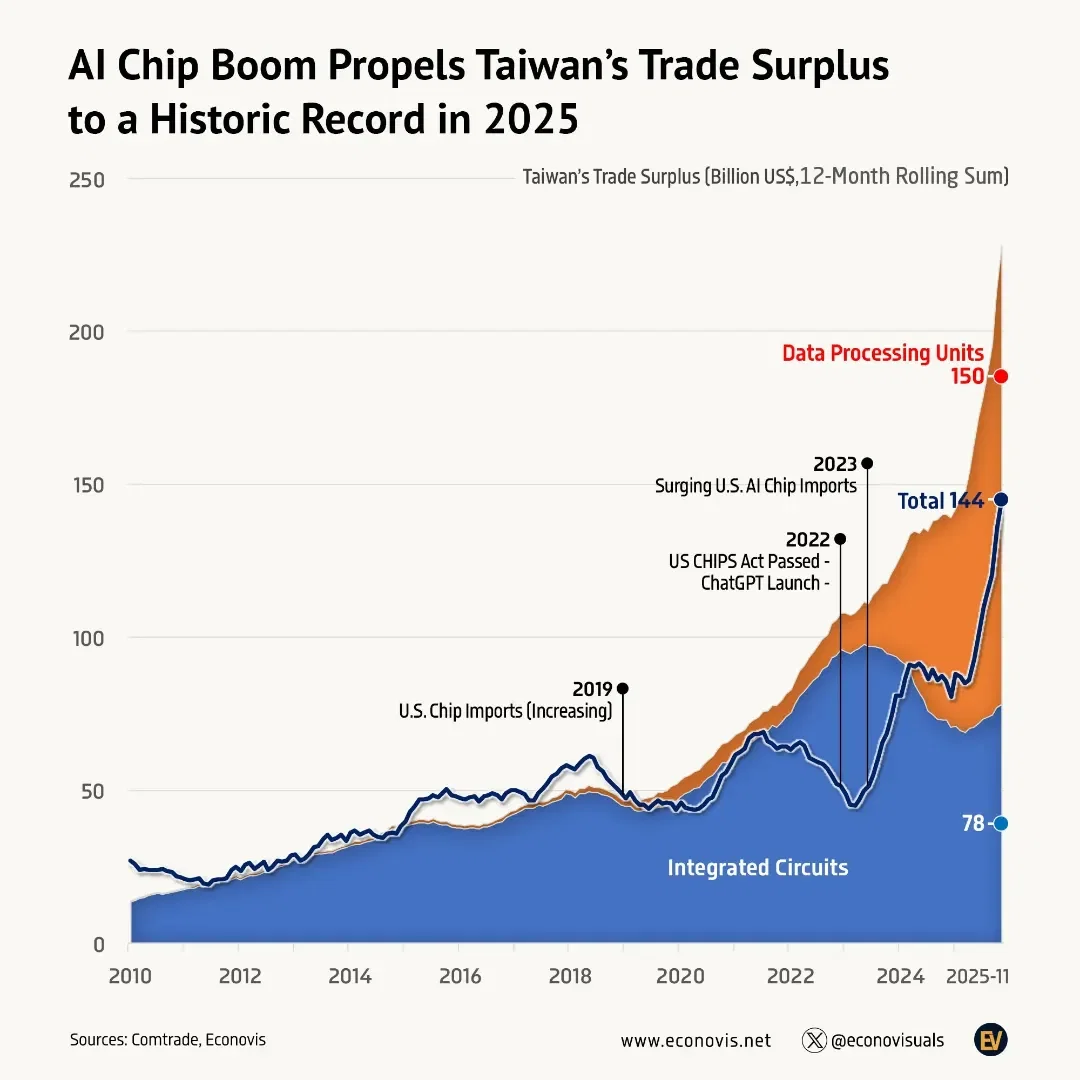
As a result, Taiwan has become the backbone of the U.S. artificial-intelligence boom, supplying advanced AI chips while simultaneously restricting exports of high-end semiconductors to China. This strategic realignment has driven a dramatic surge in Taiwan’s trade surplus—especially with the United States and in AI-related products.
From 2022 to the twelve months ending November 2025:
· Total trade surplus: increased from $51 billion to $144 billion
· Trade surplus with the United States: expanded from $29 billion to $138 billion
· Trade surplus in data-processing units: rose from $12 billion to $150 billion
· U.S. imports of Taiwan-made AI chips: surged from $6.8 billion to $110 billion
Although the United States has significantly increased investment in domestic AI-chip manufacturing—through CHIPS Act subsidies and new fabrication plants in Arizona and elsewhere—self-sufficiency remains years away. Any escalation of tensions in the Taiwan Strait, particularly a blockade or annexation scenario, would therefore pose a systemic risk to the U.S. AI ecosystem, threatening supply chains, slowing innovation, and undermining America’s technological leadership at a critical moment in the global AI race.