
Where Data Tells the Story
© Voronoi 2026. All rights reserved.

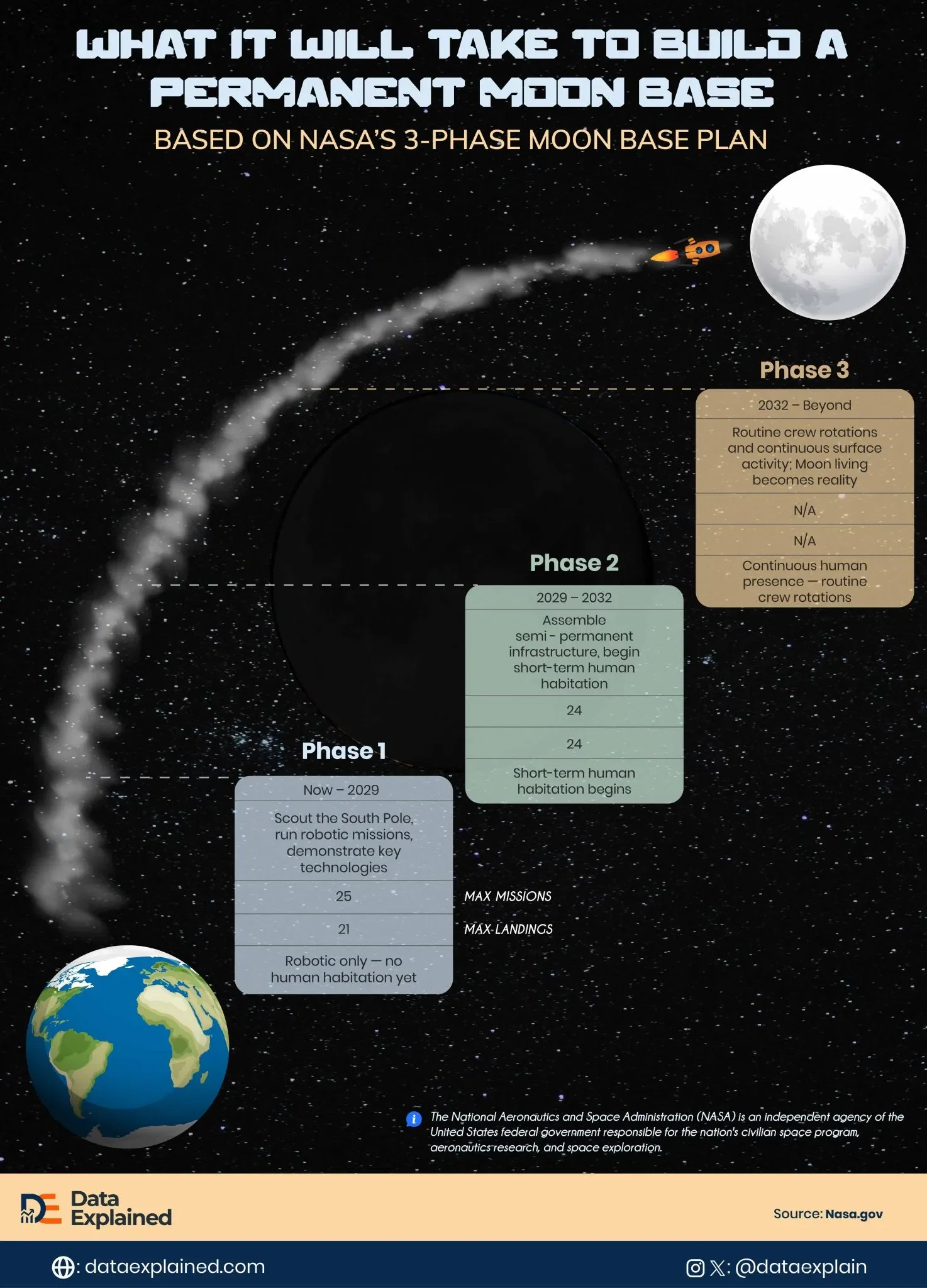
NASA has published official details on May 26, 2026, outlining a specific architecture for establishing a permanent human presence on the lunar surface.
The document divides the program into three phases spanning from now through 2032 and beyond.
Using the data, the infographic above shows a simple comparison of the three phases across 5 factors: goals, missions, landings, cargo, and human presence.
The current phase runs from now through 2029.
Its goal is to scout the lunar South Pole, run robotic missions, and demonstrate the key technologies that human habitation will later depend on.
The plan allows for a maximum of 25 missions and 21 landings during this window (four missions that launch but do not land, almost certainly for orbital reconnaissance, communications relay, positioning, and technology testing).
President Trump has stated publicly that his goal is to land Americans on the Moon before he leaves office in January 2029.
Phase 1, which runs through 2029, contains no human landings.
Phase 2, which is when human habitation begins, starts in 2029.
The NASA architecture, as published, does not show boots on the Moon before Trump’s departure.
The political deadline and the engineering timeline are not the same document.