
Where Data Tells the Story
© Voronoi 2026. All rights reserved.

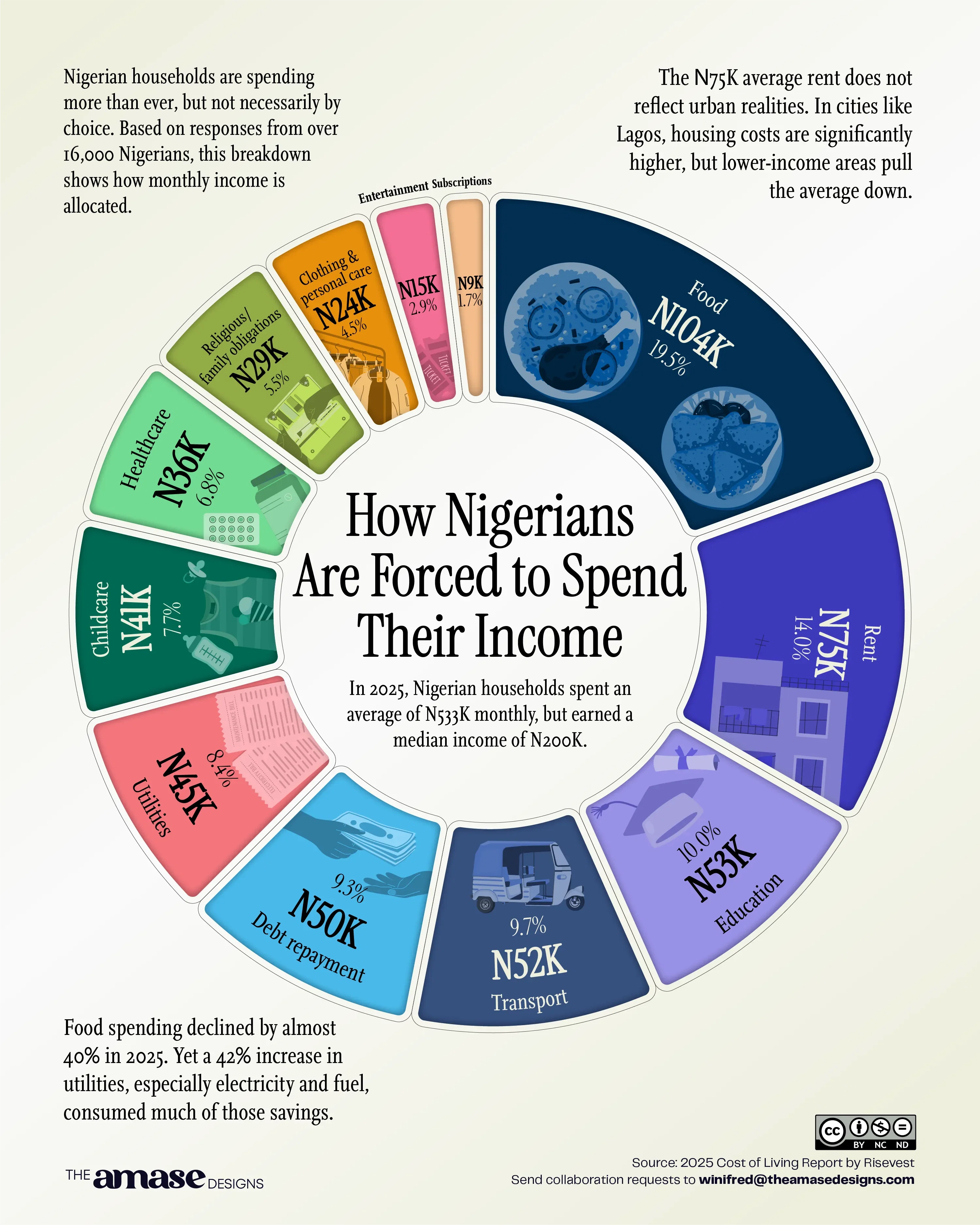
Every month, Nigerians are forced to spend more than what they earn.
This visualization draws on a 2025 cost of living report from Rise, based on responses from more than 16,000 Nigerians. It maps where money earned by households goes each month. The most notable insight is the distance between the two figures. The typical household earned a median income of ₦200,000 ($139), yet households spent an average of ₦533,000 ($369). That is more than two and a half times what they bring in.
Most of their income goes to things people cannot skip. Food, rent, education, and transport together account for more than half of all spending, with food alone at ₦104,000 ($72) and rent at ₦75,000 ($52). Even that ₦75,000 ($52) rent figure is likely too low because cheaper areas pull the average down while cities like Lagos sit well above it.
There is also less obvious change within the numbers. Food spending fell by almost 40% in 2025, which should have freed up money. Instead, a 42% rise in utilities, mostly electricity and fuel, absorbed most of that relief.
So this is less a budget than a squeeze. When spending runs this far ahead of income, the real question is not how households choose to spend, but how they manage to spend at all.