
Where Data Tells the Story
© Voronoi 2026. All rights reserved.

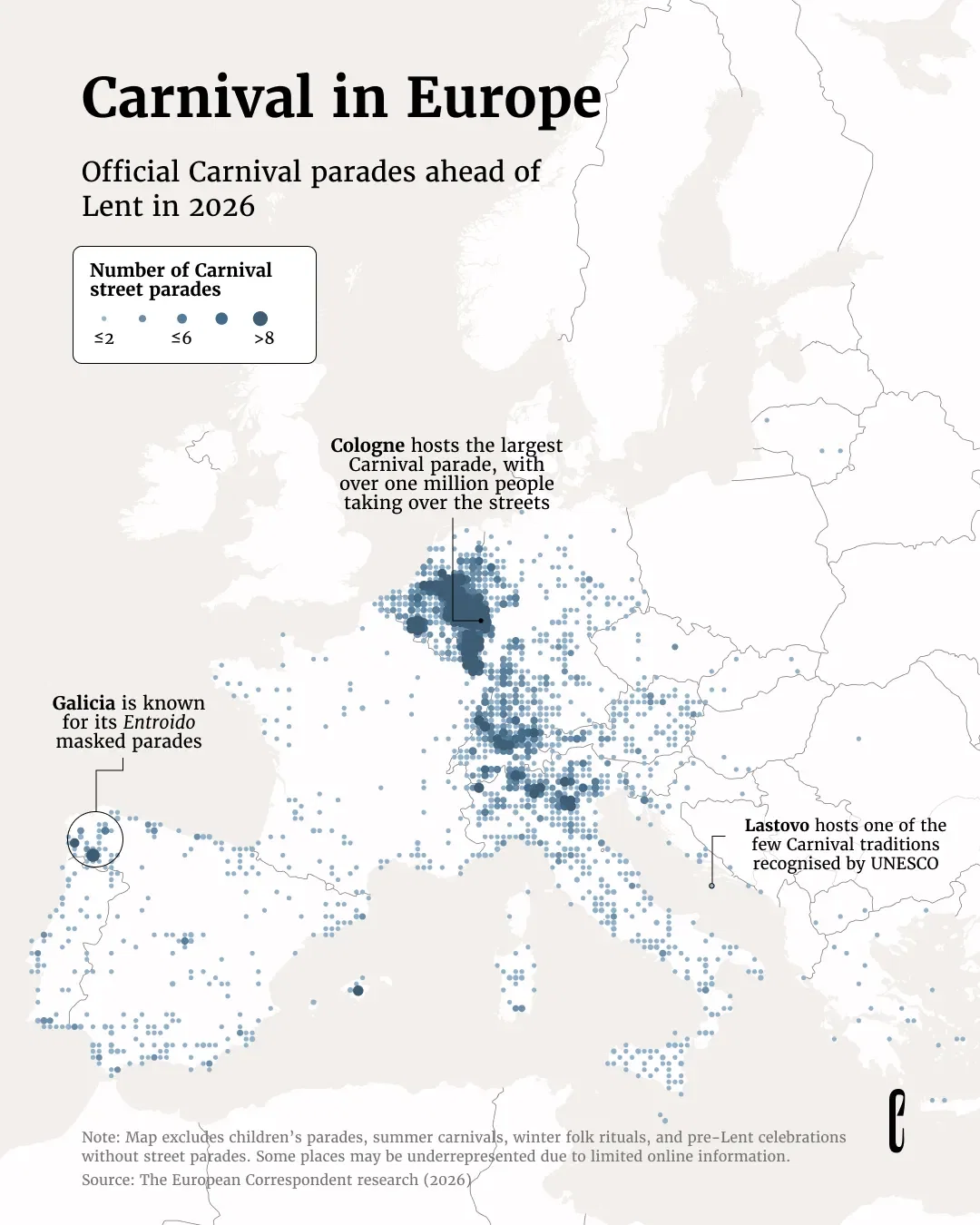
Across Europe, Carnival looks very different depending on where you are. In the traditionally Catholic regions of Germany, the Netherlands and Switzerland, as well as in Belgium, Spain and Italy, it often means several days of parades with big floats, marching bands and street parties.
Elsewhere, similar pre-Lenten traditions go by different names and formats. In Czechia, it’s Fašank; in Croatia, Poklade; and in Greece, Apókries.
Sometimes pre-Lenten celebrations are quieter (and even indoors), revolving around food, dancing, bonfires, and folk customs rather than street parades, like Vastlapäev in Estonia, Pancake Tuesday in Ireland, or Maslenitsa in Ukraine and Russia.
Around the same time of year, you may also come across older rituals that celebrate the end of winter and the return of light – like Meteņi in Latvian pagan traditions. These celebrations use masks, fire, noise, and symbolic figures to drive away winter or evil spirits. They may feel carnivalesque – and are sometimes even called “carnivals” – but they’re seasonal rather than religious.
And then there are the “carnivals” that happen in spring or summer, particularly in the UK and parts of Northern Europe. These are modern urban street festivals, often rooted in Caribbean and Latin American diasporas. They borrow the look and energy of Carnival, but have no connection to the pre-Lenten tradition.