
Where Data Tells the Story
© Voronoi 2026. All rights reserved.

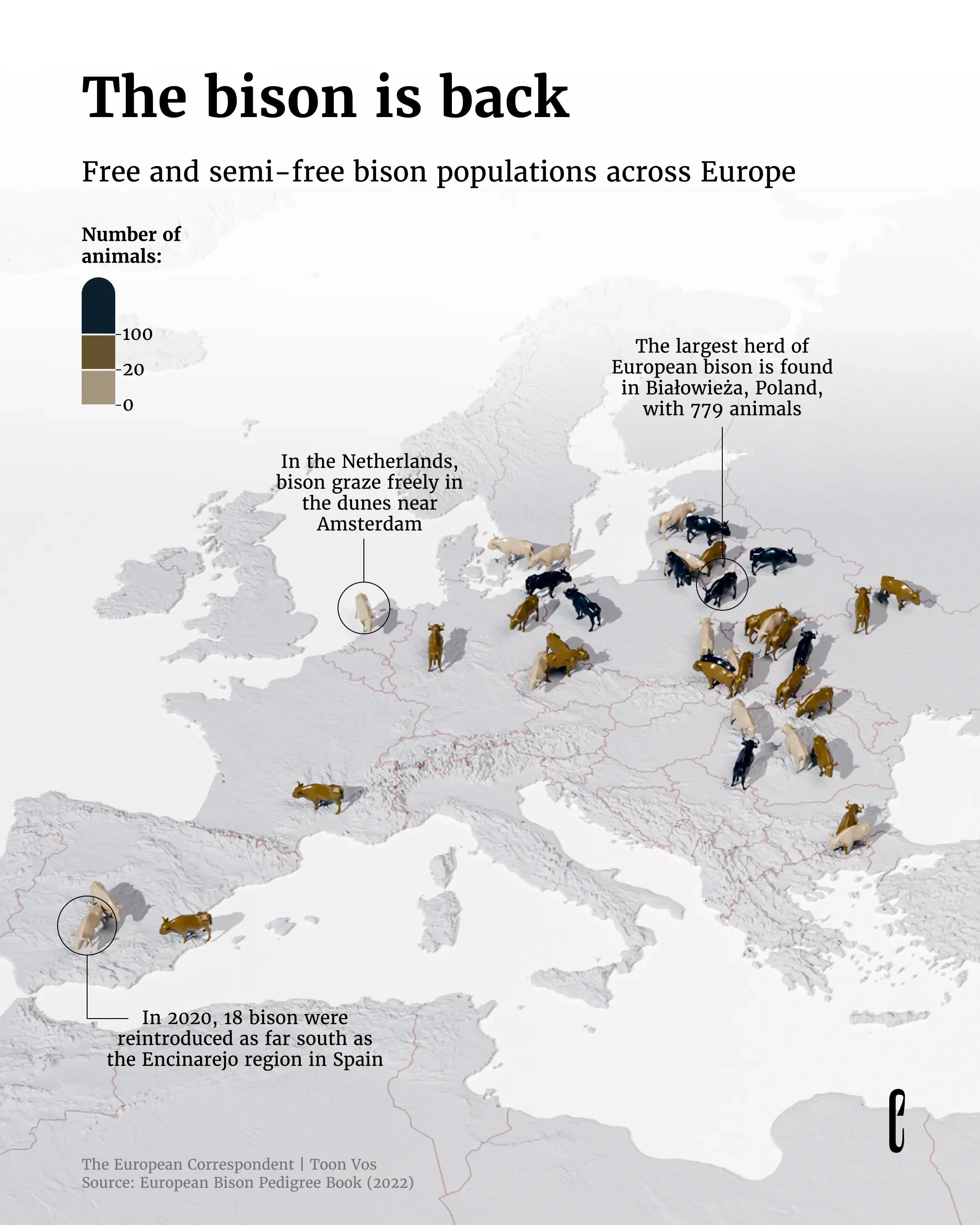
It wasn't looking good for European bison when the last wild individual was shot in 1927. The wisent, as it is also called, was declared extinct in the wild. Its last survivors were kept in zoos.
But dedicated bison conservationists refused to let the story end there. And with success: Today, Europe is home to thousands of free- or semi-free-roaming animals. The bison has become an iconic symbol for wildlife conservation and rewilding.
From their home turf in Białowieża Forest in the now-divided Poland-Belarus border region, to the Andalusian woodlands and shrublands of Encinarejo, Spain, bison roam and graze large stretches of land. They maintain landscapes like no landscaper can, keeping grounds open and giving ample chance to wild plants, birds, and insects to flourish.
Almost a century ago, the wisent seemed destined to follow the fate of the aurochs (a wild ancestor of cattle) into extinction. Today, the bison stands at the forefront of efforts to maintain and revive ecosystems across the continent.