
Where Data Tells the Story
© Voronoi 2026. All rights reserved.

Migrant workers send home almost a trillion dollars annually. These transfers cover the most basic needs: rent, food, medicine, and education. But a large portion of this money never arrives.
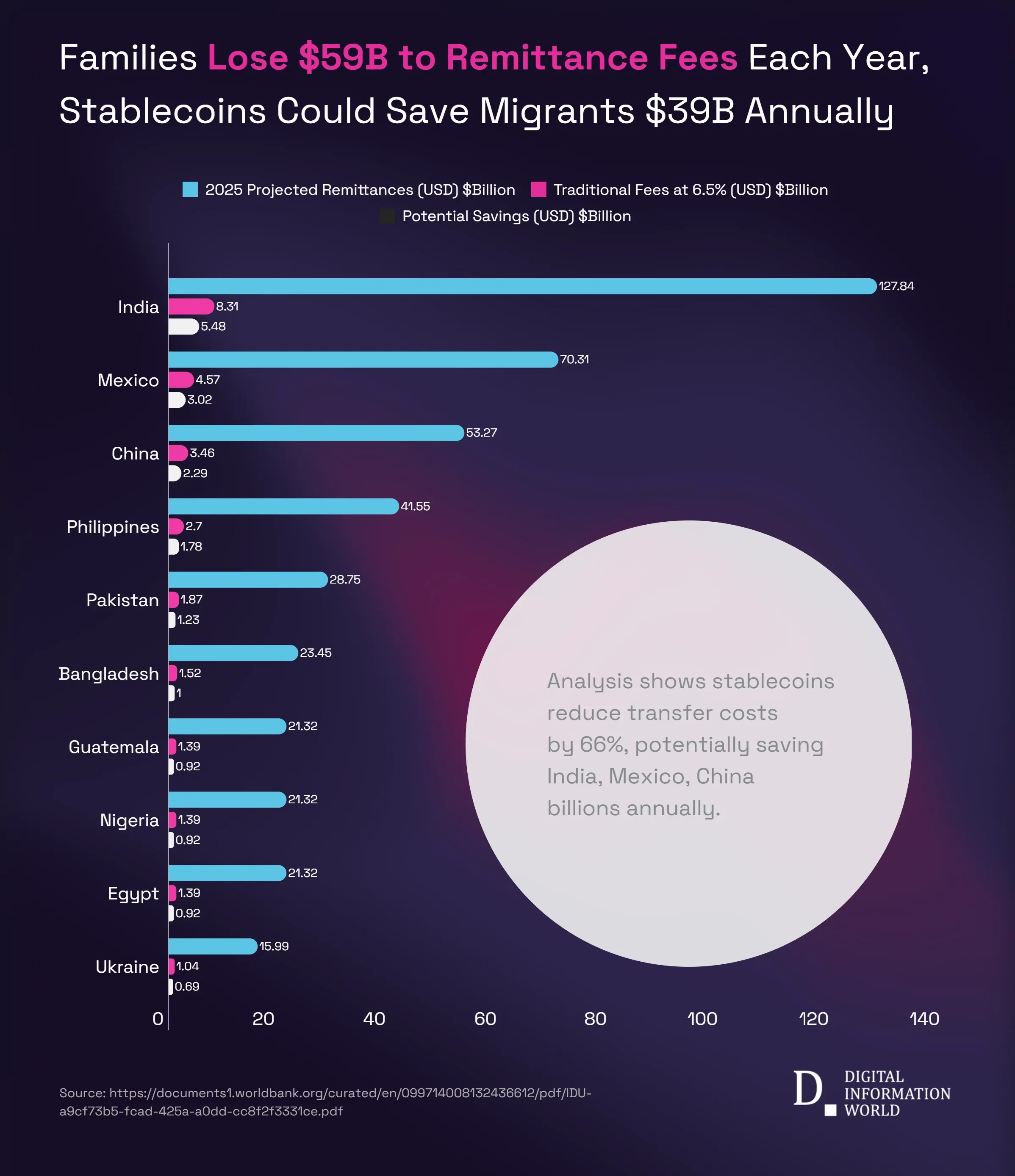
In 2025, global remittances are expected to reach $913 billion. With average fees of 6.5%, more than $59 billion will be lost to banks and transfer services.
Stablecoins offer a possible alternative. Instead of waiting days and paying high charges, transactions can settle instantly at far lower costs. A typical $50 remittance today loses about $3.25 to fees. Using stablecoins, the cost falls to $1.09. At scale, that could save families $39 billion each year.
The benefits vary by country. India would keep an additional $5.5 billion annually. Mexico would save just over $3 billion, and China about $2.3 billion. The Philippines, Pakistan, and Bangladesh would each preserve more than $1 billion. Even smaller remittance markets such as Guatemala, Nigeria, Egypt, and Ukraine could see combined savings of nearly a billion dollars.
Lower fees are only part of the story. Stablecoins allow families to avoid unfavorable exchange rates, protect savings in U.S. dollars, and spend directly through cards or digital transfers. For countries facing inflation, this flexibility is especially valuable.
For millions of households, remittances mean survival. Cutting fees by two-thirds does not just save money. It changes lives.