
Where Data Tells the Story
© Voronoi 2026. All rights reserved.

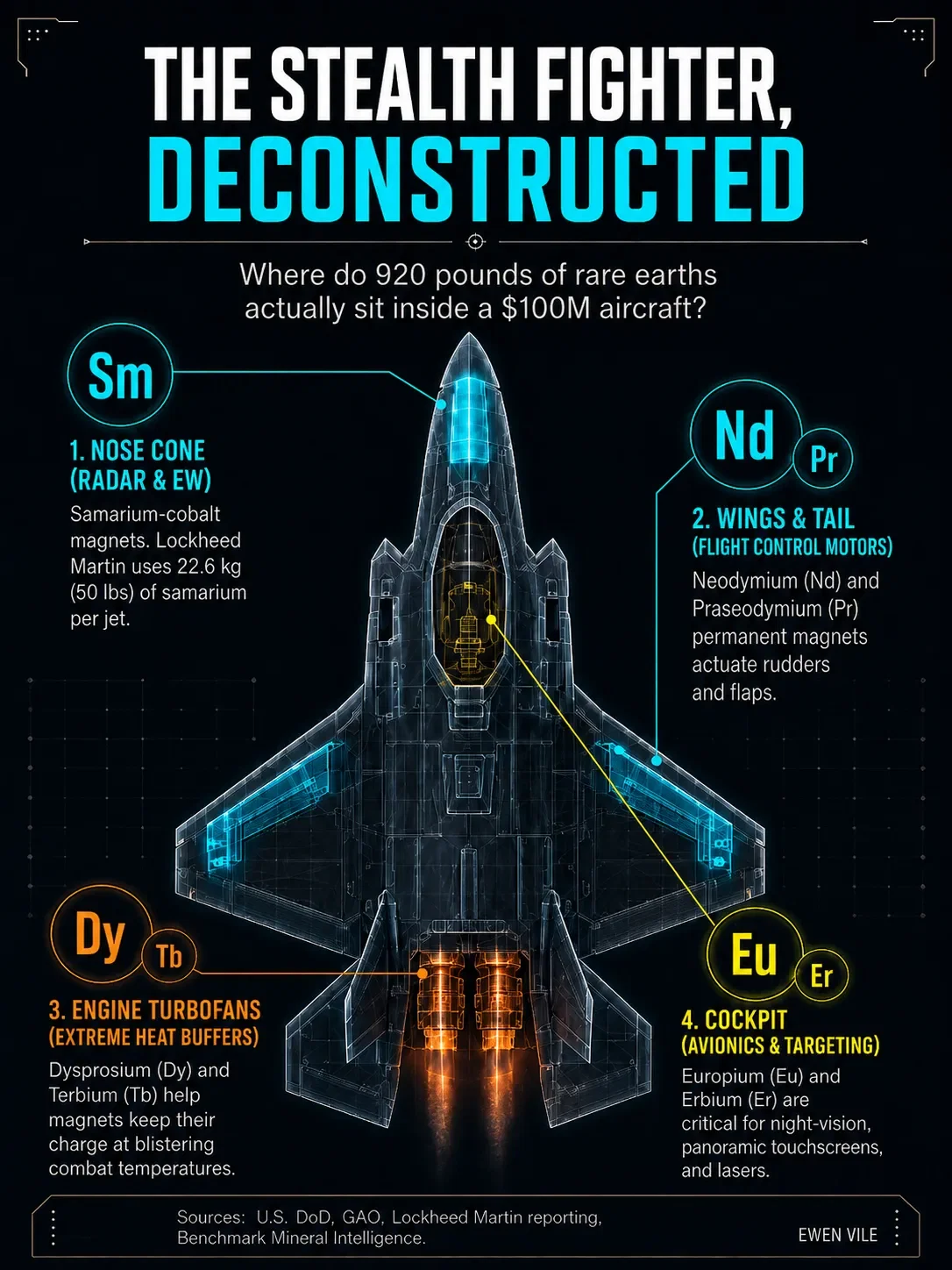
While the Lockheed Martin F-35 Lightning II is a masterclass in modern aerospace engineering and stealth technology, its physical nervous system is deeply dependent on specialty minerals.

A single aircraft contains approximately 417 to 418 kilograms (920 lbs) of rare earth elements (REEs). This deconstruction highlights where these elements are deployed: Samarium-Cobalt (SmCo) magnets in the nose cone's radar and electronic warfare suites (22.6 kg/50 lbs per jet); Neodymium (Nd) and Praseodymium (Pr) permanent magnets in flight control actuators to move rudders and flaps; and heavy stabilizers like Dysprosium (Dy) and Terbium (Tb) in engine turbofans to withstand extreme high-operating temperatures. However, this high-tech hardware creates a severe macroeconomic vulnerability: China controls 91% of global rare earth processing and over 85% of permanent magnet manufacturing.

In response to this bottleneck, the U.S. and allied governments launched aggressive 2026 industrial policies, including the $12 billion "Project Vault" strategic reserve and $200 billion in financial authority under "Deal Team Six" to finance ex-China mineral supply chains.