
Where Data Tells the Story
© Voronoi 2026. All rights reserved.

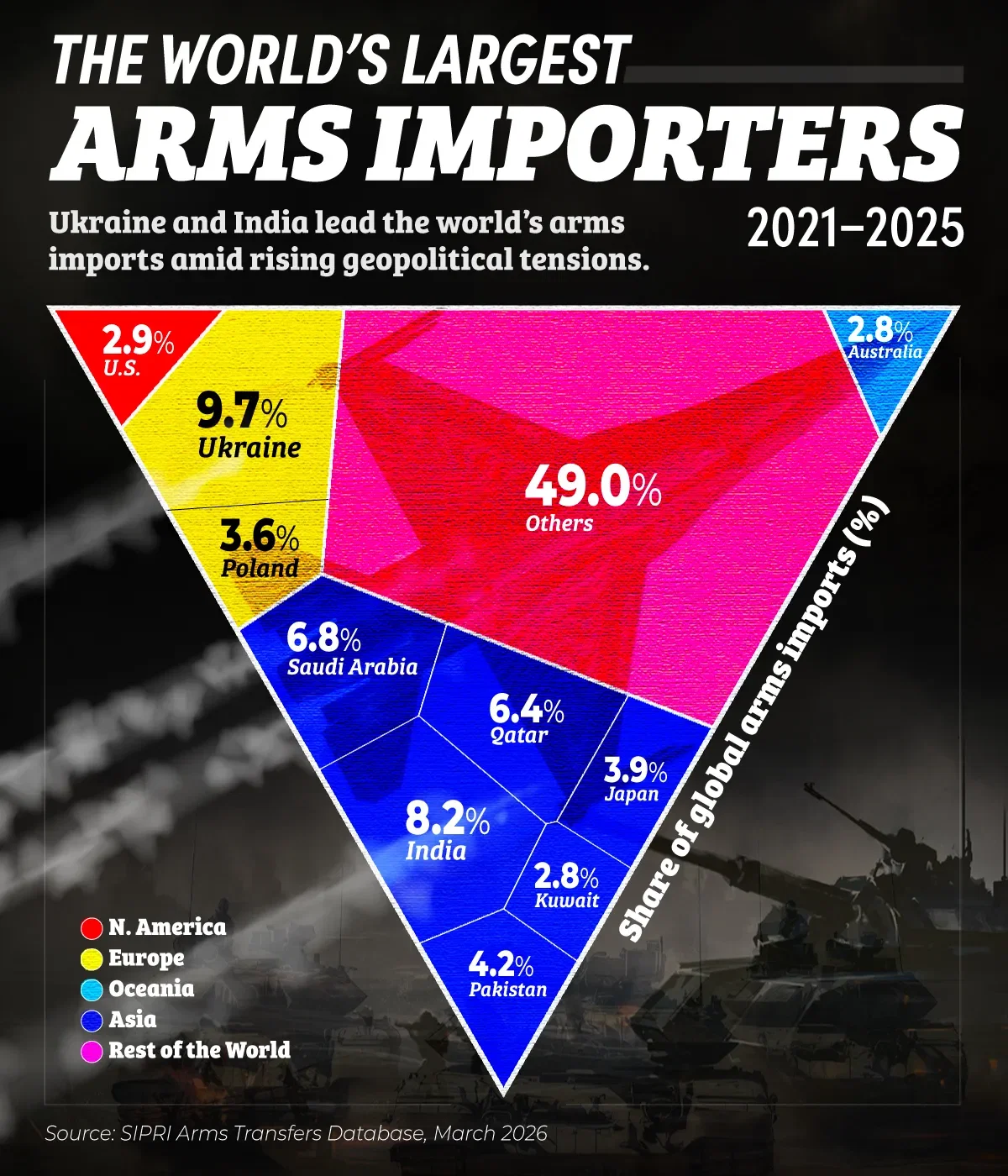
This graphic highlights the world’s largest arms importers between 2021 and 2025, based on each country’s share of global arms imports by value. The visualization ranks the top importers and shows how global weapons demand is distributed across key regions, including Europe, Asia, and the Middle East.
Together, the data illustrates how geopolitical tensions, regional security concerns, and military modernization programs are shaping global arms demand. While a handful of countries account for a significant portion of total imports, nearly half of global arms purchases are spread across dozens of other nations, reflecting the widespread nature of defense spending.
The data is sourced from the SIPRI Arms Transfers Database, March 2026
• Ukraine is the world’s largest arms importer, accounting for 9.7% of global arms imports between 2021 and 2025. The surge reflects the country’s urgent defense needs amid its ongoing war with Russia and the steady flow of military aid from Western allies.
• India ranks second, with an 8.2% share, highlighting its continued efforts to modernize its armed forces as regional security dynamics evolve across Asia.
• Middle Eastern demand remains strong, with Saudi Arabia (6.8%) and Qatar (6.4%) among the world’s largest arms buyers amid persistent regional security concerns.
• Other major importers include Pakistan (4.2%), Japan (3.9%), and Poland (3.6%), reflecting growing defense investments in Asia and Europe.
• Despite the concentration among leading buyers, ‘Other countries’ account for 49% of global arms imports, showing that military procurement is widely distributed across the international system.