
Where Data Tells the Story
© Voronoi 2026. All rights reserved.

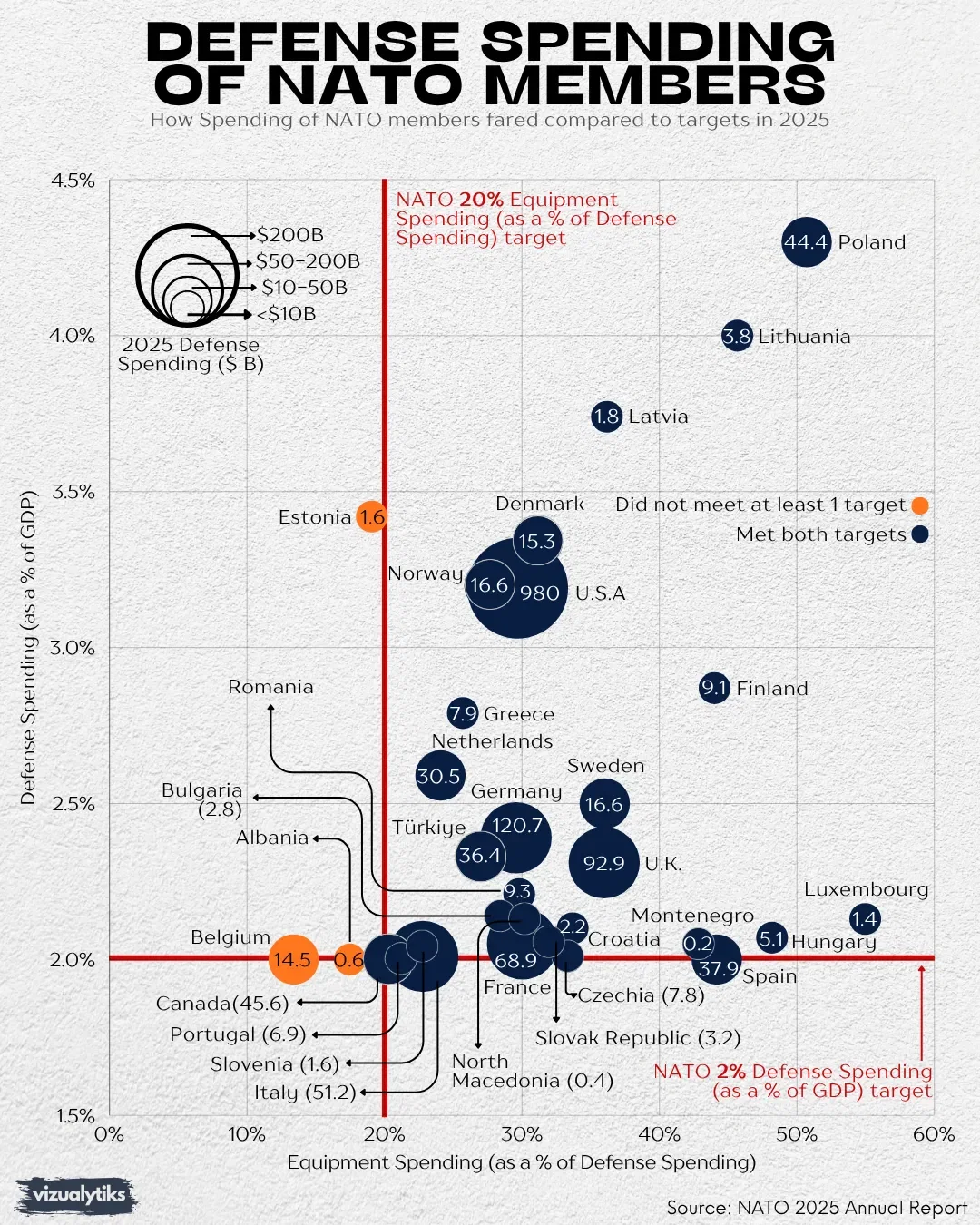
Defense spending across NATO has increased significantly in recent years as the alliance responds to a more uncertain global security environment. Russia’s invasion of Ukraine in 2022, alongside rising geopolitical tensions across Europe and the Middle East, has pushed many members to accelerate military investment. As part of this shift, NATO’s benchmark for defense spending was raised from about 1.5% of GDP to 2%, reflecting a stronger emphasis on burden sharing within the alliance.
Several countries, particularly those closer to Russia’s borders such as Poland, Lithuania, Latvia, and Estonia have moved well beyond the 2% threshold as security concerns in Eastern Europe intensified. Larger economies like the United States, the United Kingdom, Germany, and France continue to account for the majority of NATO’s overall defense spending, given the scale of their economies and military capabilities.
Beyond the size of defense budgets, NATO also encourages members to allocate at least 20% of their military spending toward equipment and modernization, ensuring that increased budgets translate into stronger capabilities. While progress has been made, some members still fall short of one or both benchmarks, meaning the debate around burden sharing and defense readiness is likely to remain central to NATO policy in the years ahead.