
Where Data Tells the Story
© Voronoi 2026. All rights reserved.

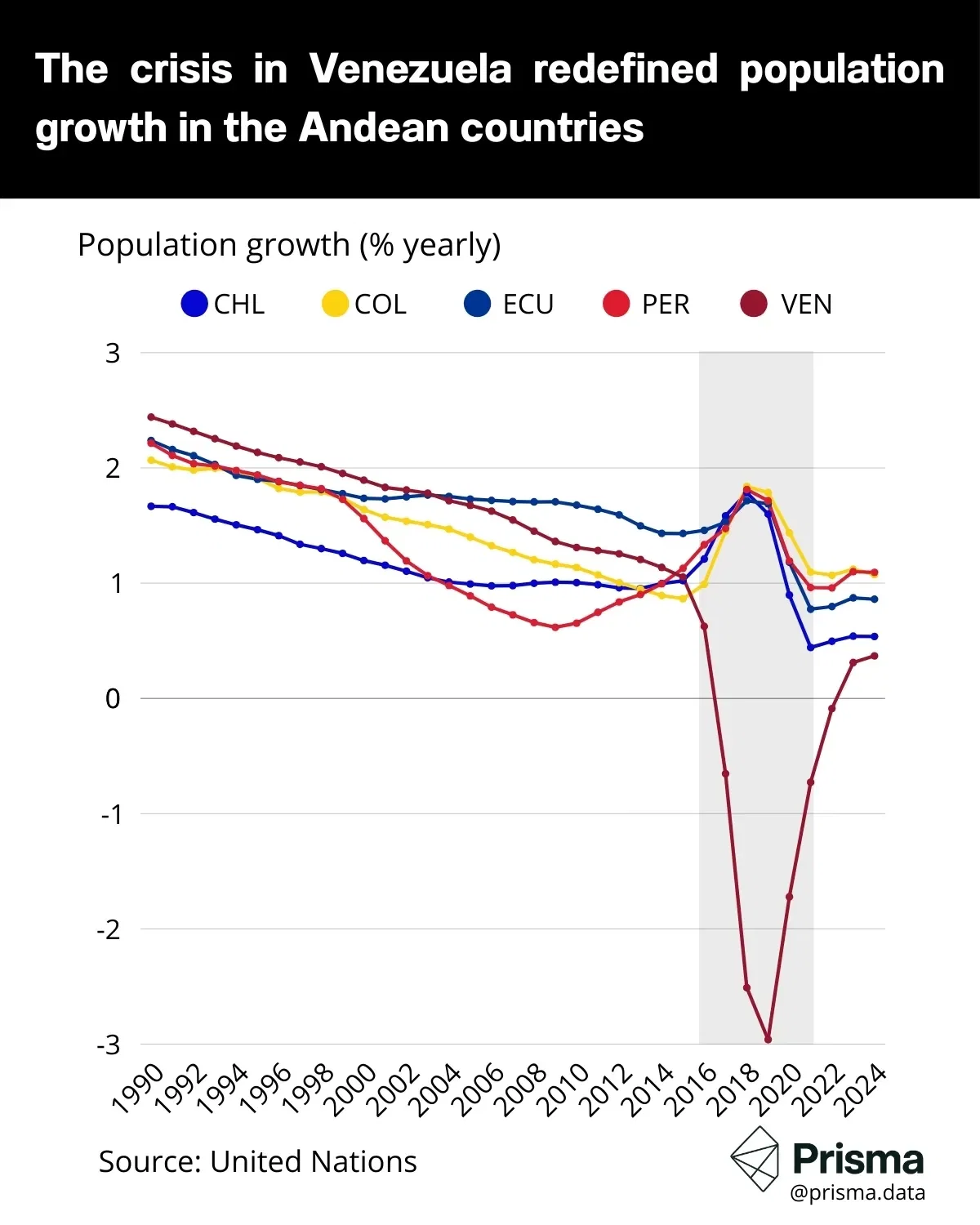
More than 7 million Venezuelans have migrated since 2015, making this flow the largest migratory movement in the recent history of Latin America.
🎯 Colombia, Peru, Ecuador, and Chile have been the main destination countries. In a context of population decline in the Andean countries and across the region, these countries face both opportunities and challenges in integrating this population into their economic and social structures.
💼 According to a report by the World Bank and UNHCR, the data reveals a complex reality: Venezuelans have a higher level of education than the local population and, with the exception of Colombia, are more likely to find employment. However, many work in lower-skilled jobs than they held in Venezuela, mainly because their academic degrees are not recognized in the host countries.
📈 According to figures from the International Monetary Fund, with proper integration policies, Venezuelan migration could increase the GDP of these four countries by between 2.5 and 4.5 percentage points by 2030. This figure demonstrates the economic potential that migration can bring to both migrants and the local population.
🚨 Nonetheless, according to the World Bank and UNHCR report, challenges remain. Between 26 and 40 percent of Venezuelans report having experienced discrimination—a figure that is higher among younger people and women. Additionally, few participate in social activities beyond religious events in their host countries, limiting their cultural integration.
Venezuelan migration represents both a challenge and an opportunity for economic growth and social integration in the region. 🤝