
Where Data Tells the Story
© Voronoi 2026. All rights reserved.

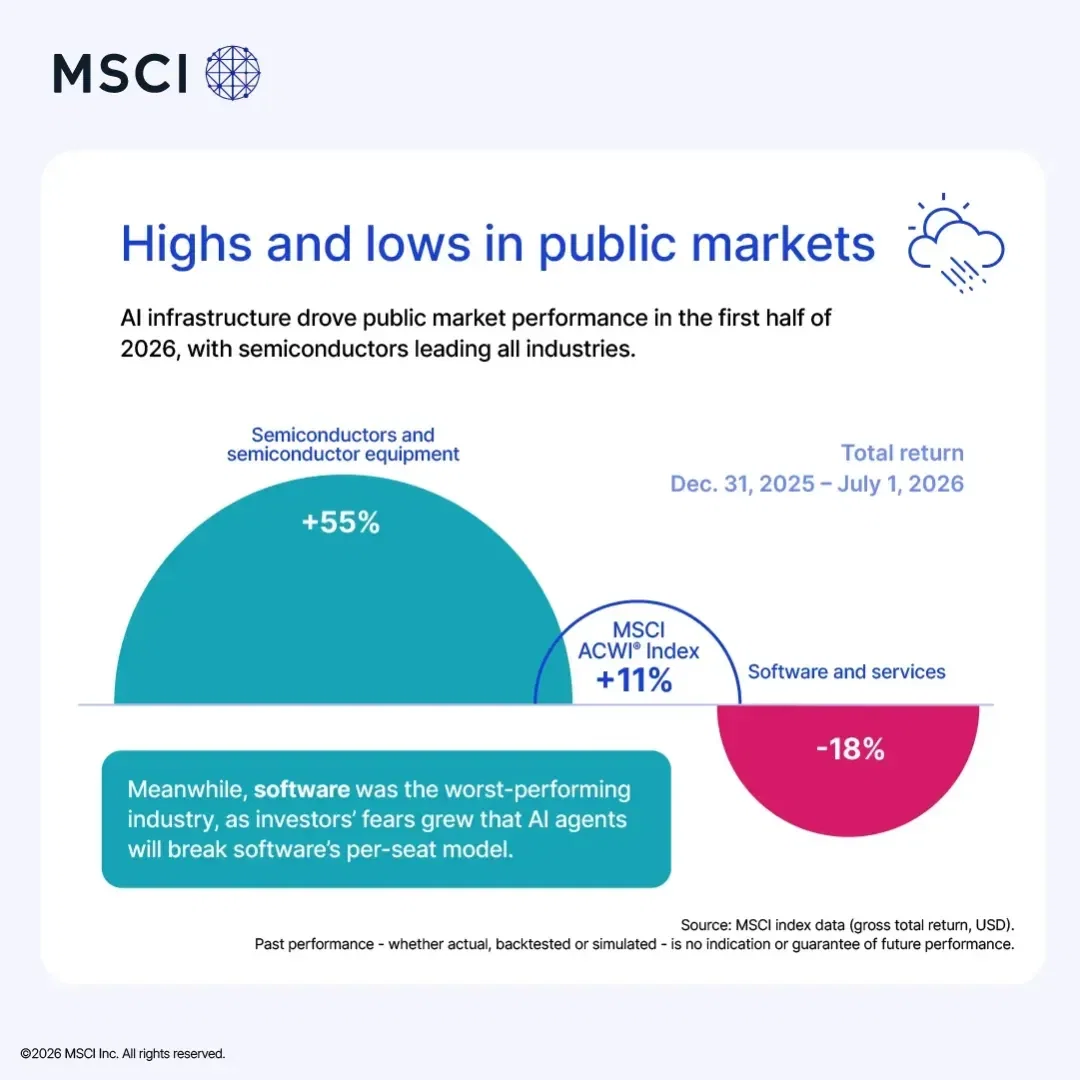
Despite wars, energy shocks, and geopolitical uncertainty, AI has become the biggest force shaping markets in 2026. But as some AI companies thrive while other parts of the market face disruption, AI’s impact has been far from uniform.
In public markets, semiconductors lead all industries with a 55% return in the first half of the year. On the other hand, software was the worst-performing industry as investors' fears grew that AI agents will break software's per-seat model.
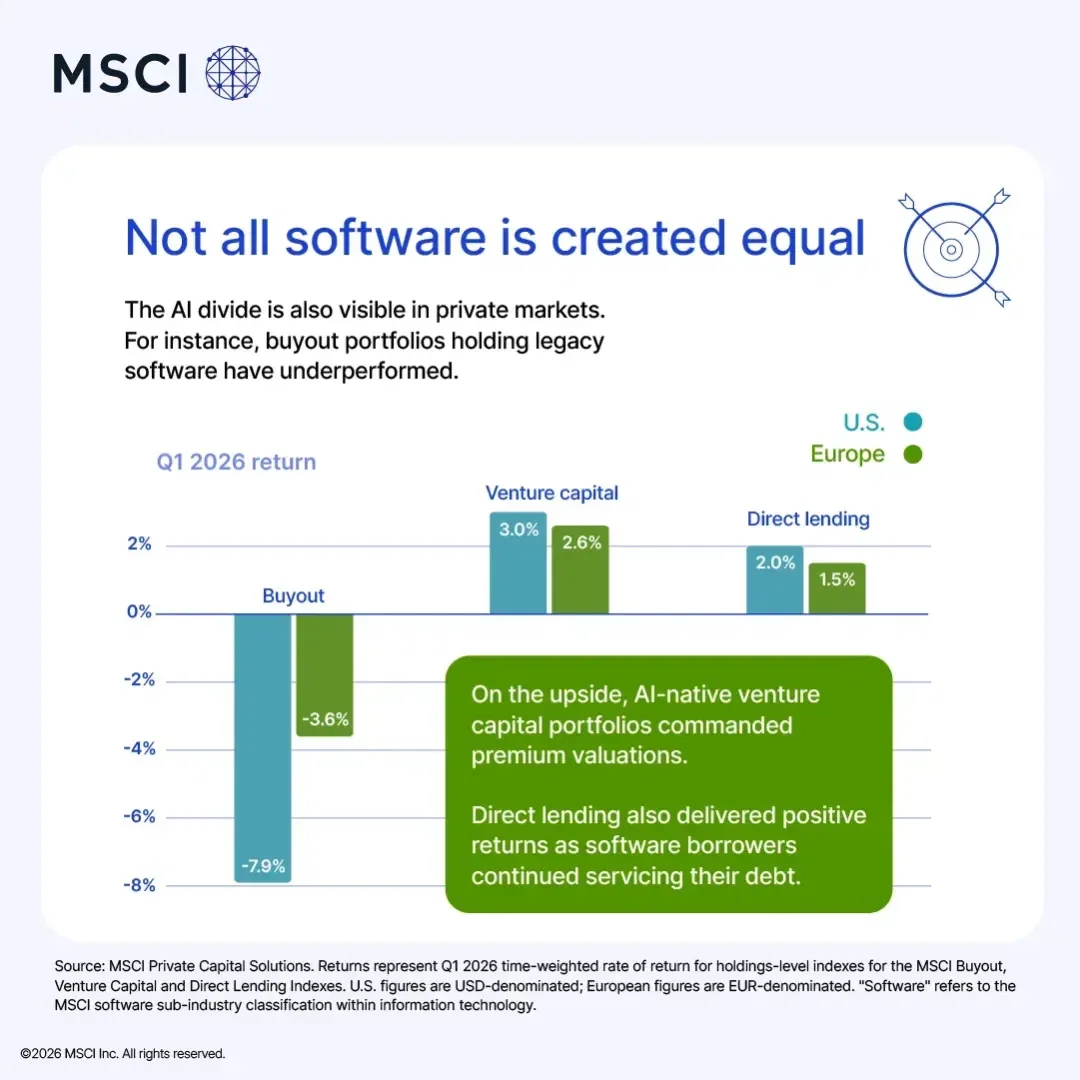
The AI divide was also visible in private markets. Buyout portfolios holding legacy software underperformed, while AI-native venture capital portfolios commanded premium valuations.
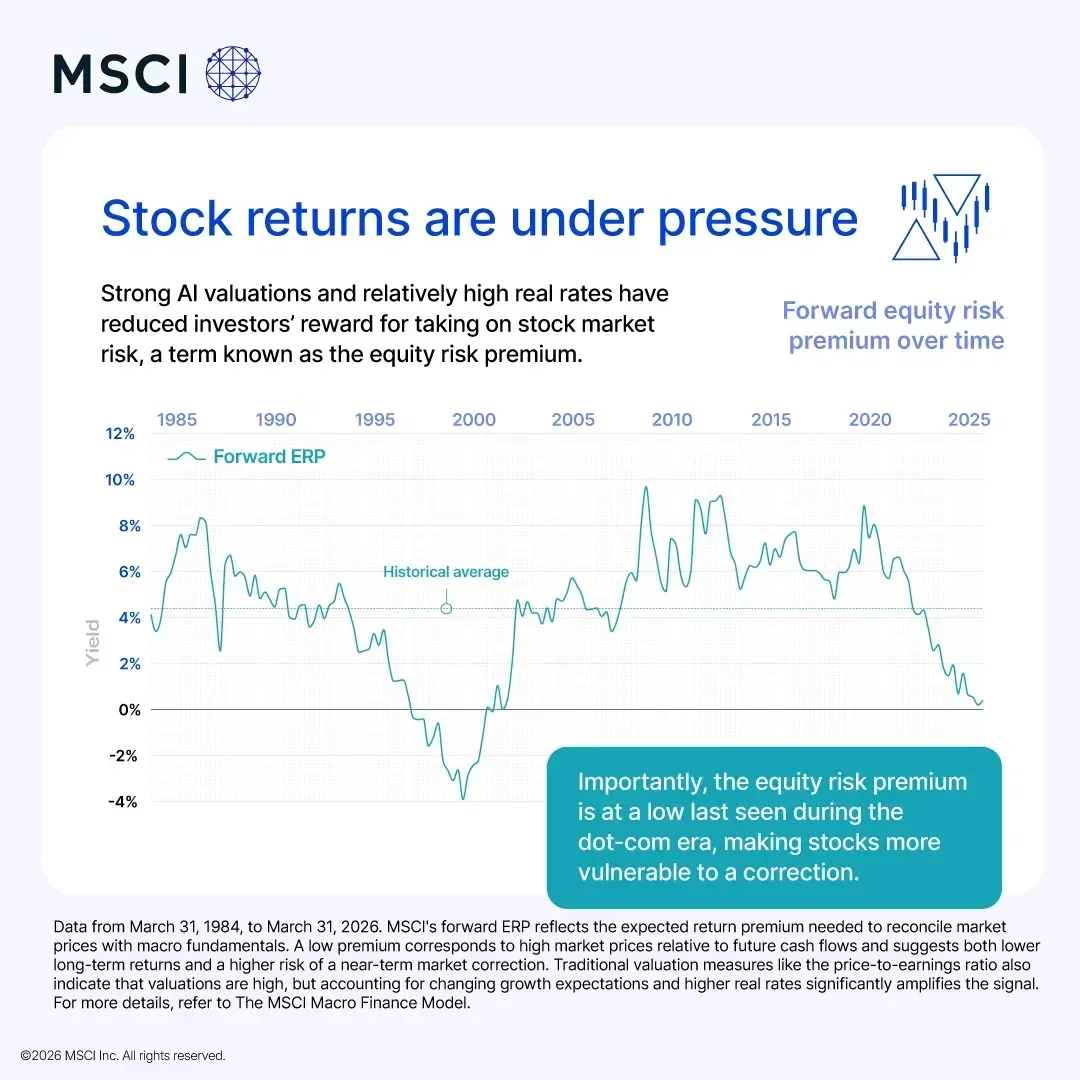
These strong AI valuations and relatively high real rates have reduced the equity risk premium, or investors' reward for taking on stock market risk, to a low last seen during the dot-com era.
While strong earnings from AI companies have supported stock prices so far, high valuations and real rates leave little room for disappointment. If earnings growth falls short of expectations, stock prices could come under pressure.