
Where Data Tells the Story
© Voronoi 2026. All rights reserved.

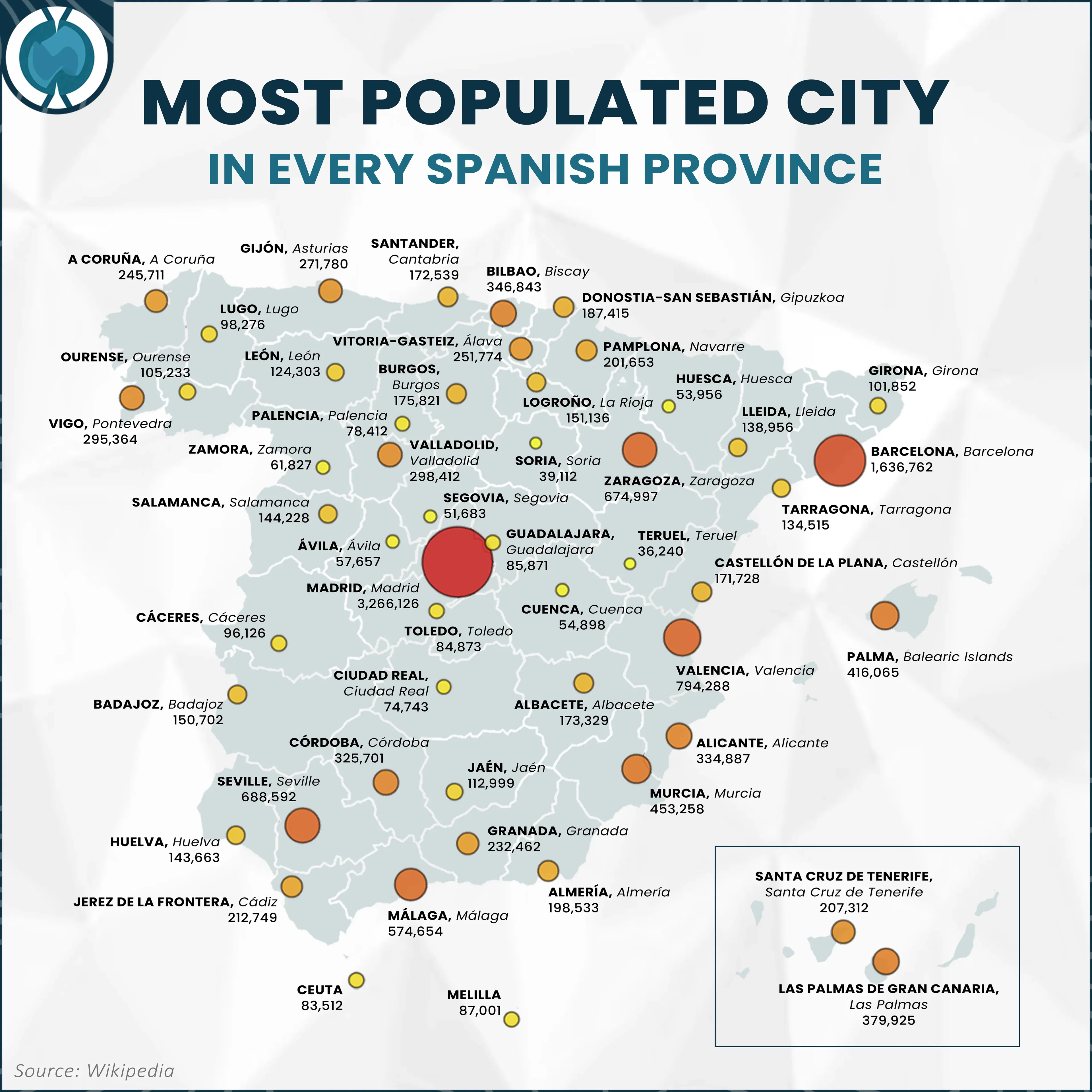
The demographic distribution of Spain presents a striking case study in macrocephaly and the "Empty Spain" (España Vacía) phenomenon. A geospatial analysis reveals a polarized structure: a massive central hub in Madrid (3.26M) surrounded by a sparsely populated interior plateau, which is then ringed by a dense coastal periphery. Madrid’s population alone exceeds the combined total of the next three largest provincial leaders (Barcelona, Valencia, and Zaragoza excluded), highlighting an intense centralization of human capital and economic activity in the capital.
Conversely, the data exposes the fragility of the interior provinces. The five least populated provincial leaders—Teruel, Soria, Segovia, Cuenca, and Huesca—have a combined population of roughly 233,000. This entire aggregate is less than 8% of Madrid's metropolitan weight, illustrating the severe demographic desertification of the Castilian interior. Furthermore, economic power dynamics are visible where non-administrative capitals outpace their provincial seats, notably in Pontevedra (where industrial Vigo dominates) and Cádiz (led by Jerez de la Frontera), signaling that administrative status does not always correlate with economic primacy.