
Where Data Tells the Story
© Voronoi 2026. All rights reserved.

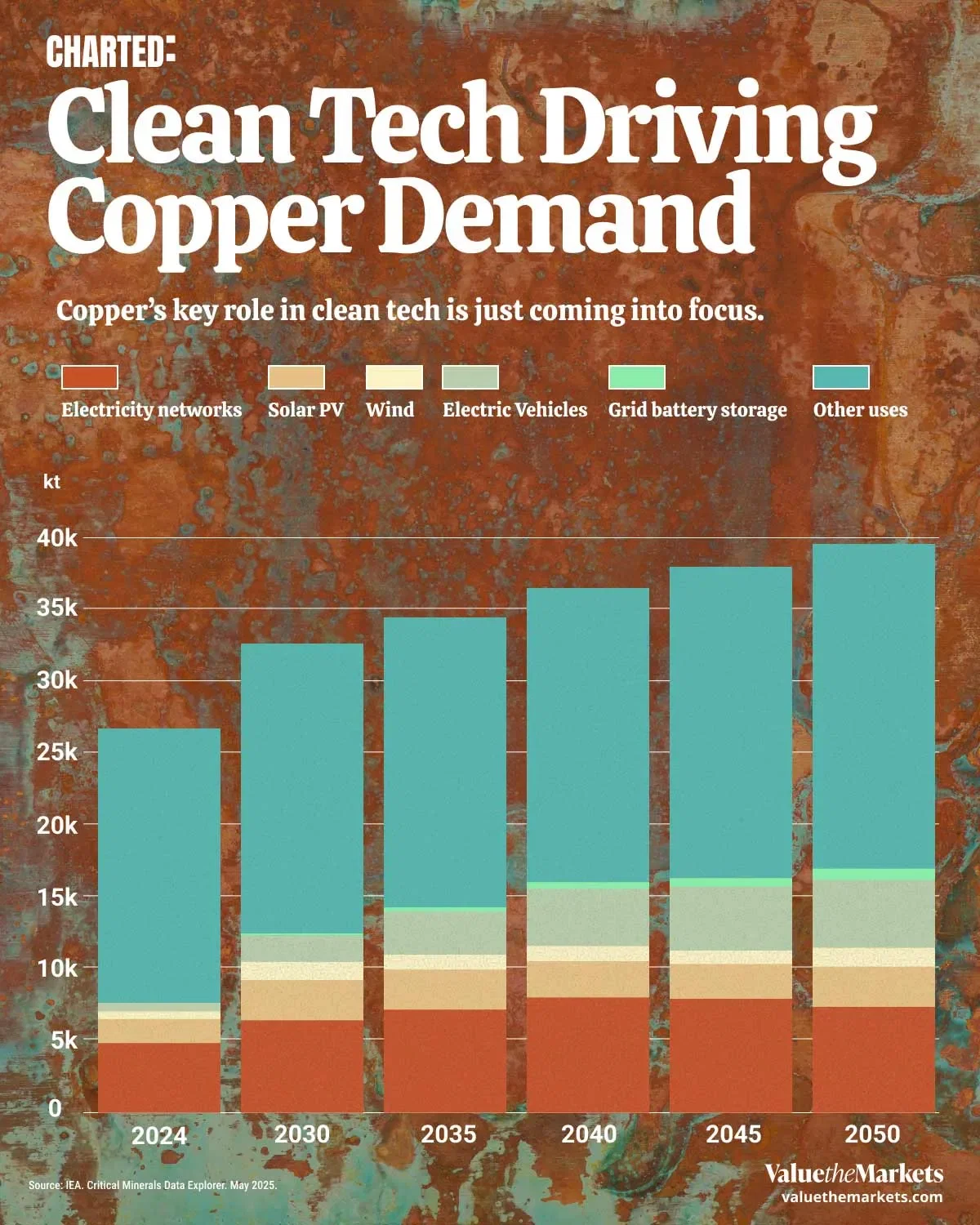
Clean tech is rewriting the copper playbook. As countries ramp up renewable energy, electric vehicles, and grid infrastructure, copper is becoming one of the most strategically critical materials on the planet. In fact, copper demand from clean tech is expected to soar, accounting for 43% of total demand by 2050, up from 29% in 2024, according to the International Energy Agency.
This shift goes far beyond just solar and wind. Electric vehicles, power grids, and battery storage are all copper-intensive. Altogether, global demand for copper is expected to rise nearly 50% over the next 25 years.
Clean energy tech is projected to drive a 122% increase in copper use by 2050. That growth is concentrated in a few high-impact sectors:
This evolving mix is transforming copper from a traditional industrial metal into a clean tech essential. Mining companies with exposure to the right geographies and project pipelines stand to benefit.
Copper has always been a backbone metal in construction and manufacturing. Now it’s also a cornerstone of electrification. Solar panels, wind turbines, EVs, and grid infrastructure all rely heavily on copper.
That means long-term demand is being reshaped by policy, not just the business cycle. Clean energy goals from governments around the world are effectively setting a floor under copper demand.
By 2050, clean tech uses could represent nearly half of all copper consumption. Investors focused on copper miners, ETFs, or industrial tech firms should be reassessing exposure now based on these long-term fundamentals.
While clean tech is driving the headlines, conventional uses for copper are still growing. Demand from construction, electronics, and machinery is projected to rise from 18.9 million tonnes in 2024 to 22.5 million tonnes by 2050.
This matters because it supports a broad base of copper demand that can help buffer prices even if clean tech adoption varies by region or slows in the near term.
Copper is no longer just an industrial metal. It's now a clean energy essential. Here's a deeper look at how the shift is playing out globally.