Mean Centre of Population in the United States, 1790–2020 - VoronoiMean Centre of Population in the United States, 1790–2020
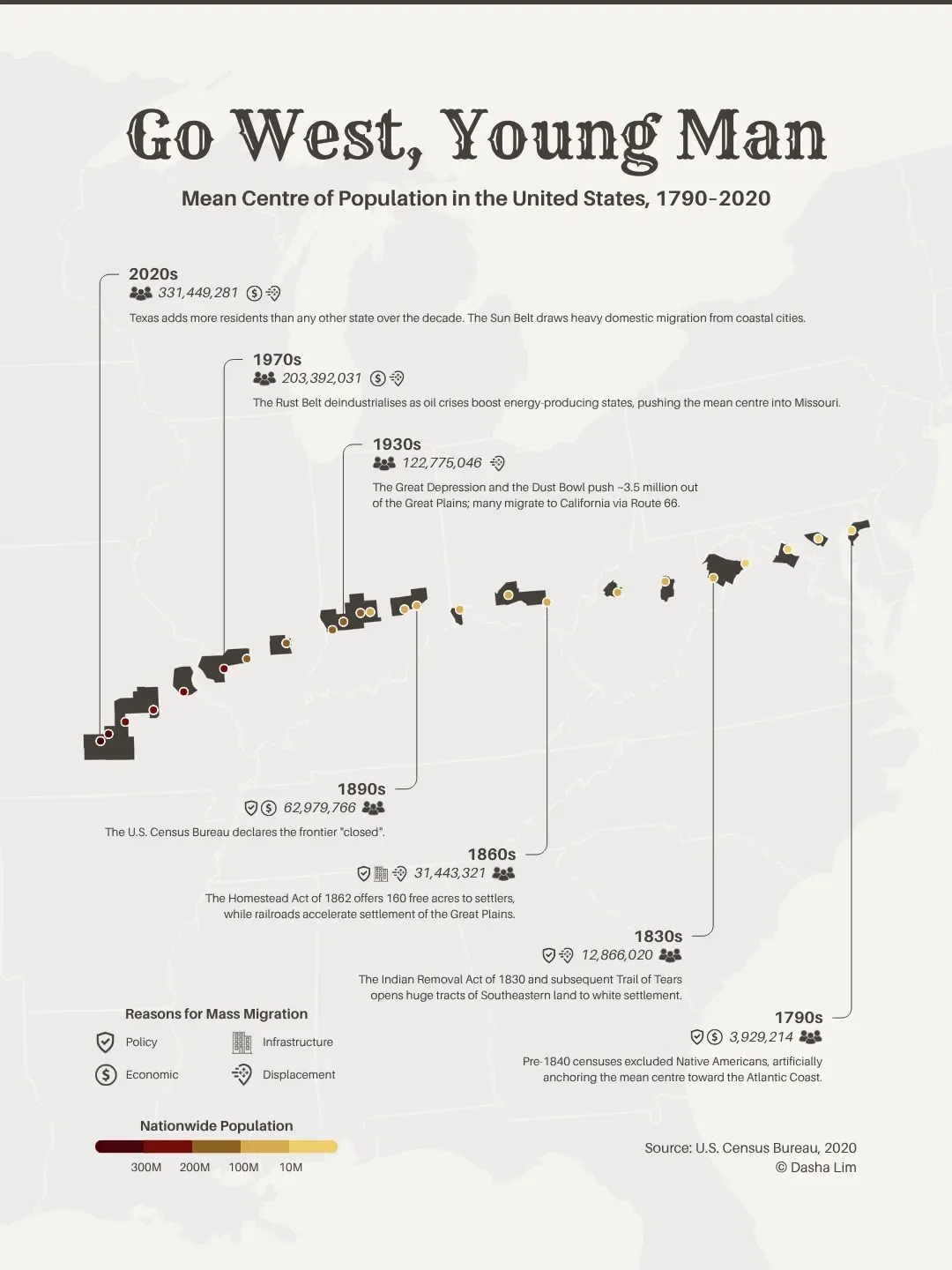
1790s–1840s: Westward Expansion
- Calculated by the U.S. Census Bureau after every decennial census.
- Early counts were artificially anchored toward the Atlantic Coast.
- The Cumberland Gap permitted substantial movement by Anglo-Americans.
- Forced removal of Native Americans opened vast tracts of land in the Deep South.
- A series of gold rushes drew sudden surges to sparsely inhabited regions.
1860s–1960s: Industrialisation and Population Shifts
- Railroads opened the interior to mass settlement, enabling major land runs.
- The Great Migration saw African Americans move to cities, intensifying after WWII.
- The Great Depression and Dust Bowl displaced millions westward.
- Investment in the Southwest increased greatly with the Interstate Highway System.
- Air conditioning rendered hot, humid climates tolerable for year-round habitation.
1970s–2020s: Migration to the Sun Belt
- Deindustrialisation weakened the Midwest’s traditional manufacturing base.
- Two energy crises boosted energy-producing states in the Sun Belt.
- Retirees, drawn by a host of factors, relocated southwards in substantial numbers.
- Relative stagnation of growth in the Northeast shows little sign of reversing.
- From 1790 to 2020, the mean centre traversed more than 885 miles.

