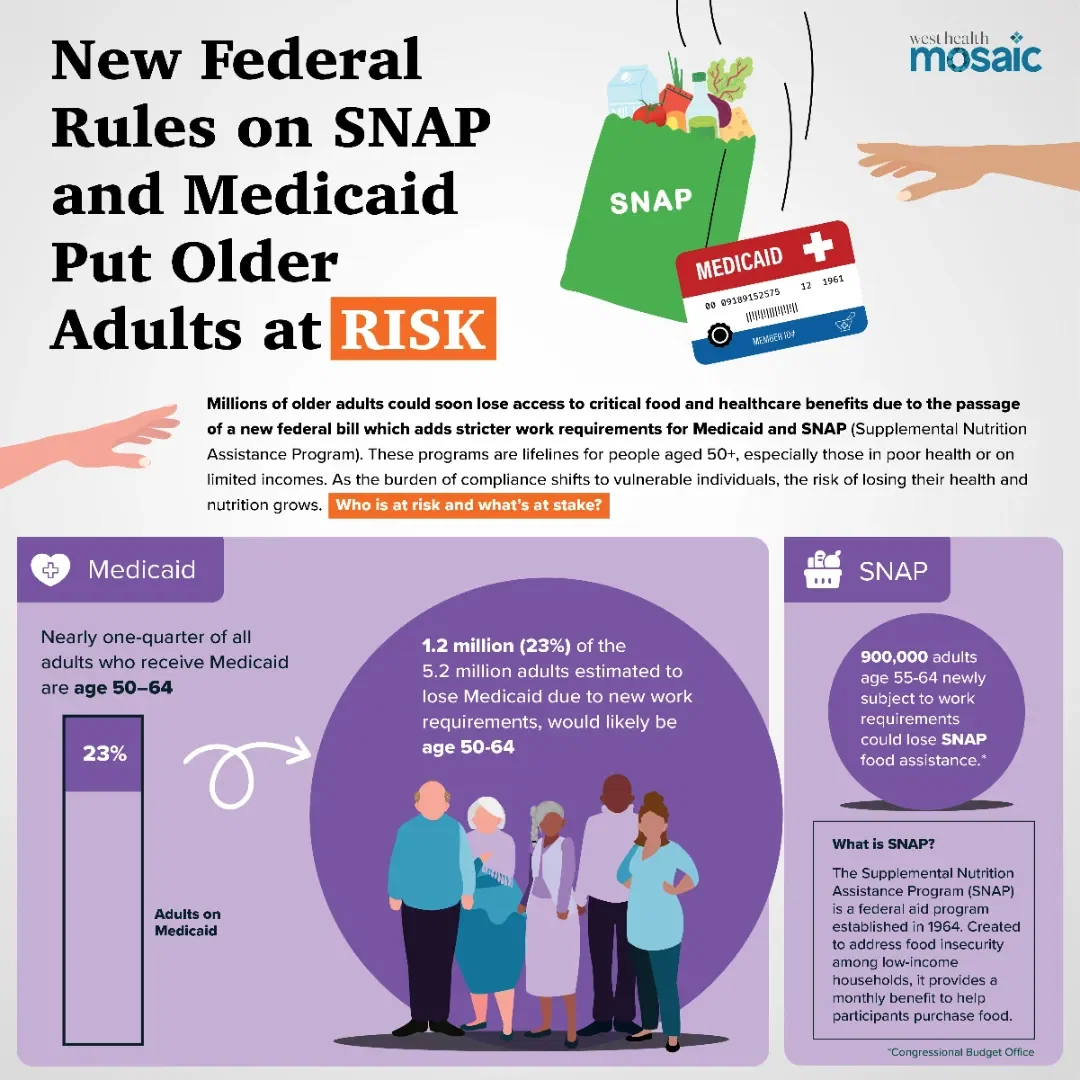
Millions of older adults rely on the Supplemental Nutrition Assistance Program (SNAP) and Medicaid to meet their most basic needs—putting food on the table, accessing medications, and receiving essential healthcare. But new federal rules introduce stricter work requirements for adults in their 50s and early 60s, creating unprecedented barriers for people who are more likely to face health challenges, unstable employment, or limited income. These changes, part of a broader federal budget law, could result in millions losing access to critical support at a time when the rising cost of living is already straining household budgets and increasing financial insecurity.
Key Takeaways:
- Despite widespread concern about rising costs of food and healthcare, new federal rules put millions at risk of losing essential support.
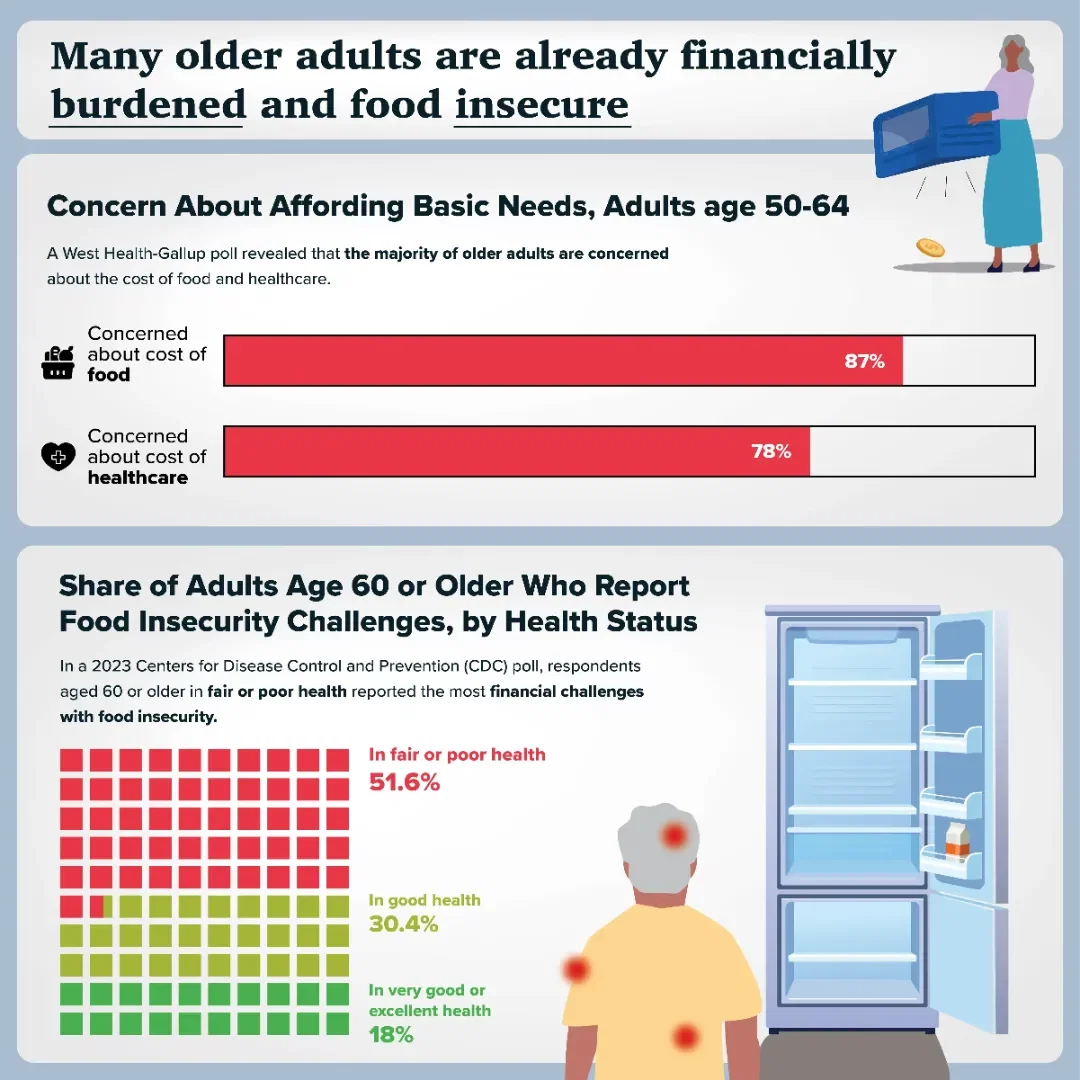
- 87% of adults age 50–64 are concerned about affording food, and 78% are concerned about healthcare—yet they are the group most impacted by new work requirements.
- New rules could result in 1.2 million adults age 50–64 losing Medicaid and nearly 1 million adults age 55–64 losing SNAP benefits.
- More than half of older adults in fair or poor health already experience food insecurity, making new administrative barriers especially harmful for those with chronic conditions or limited ability to work.
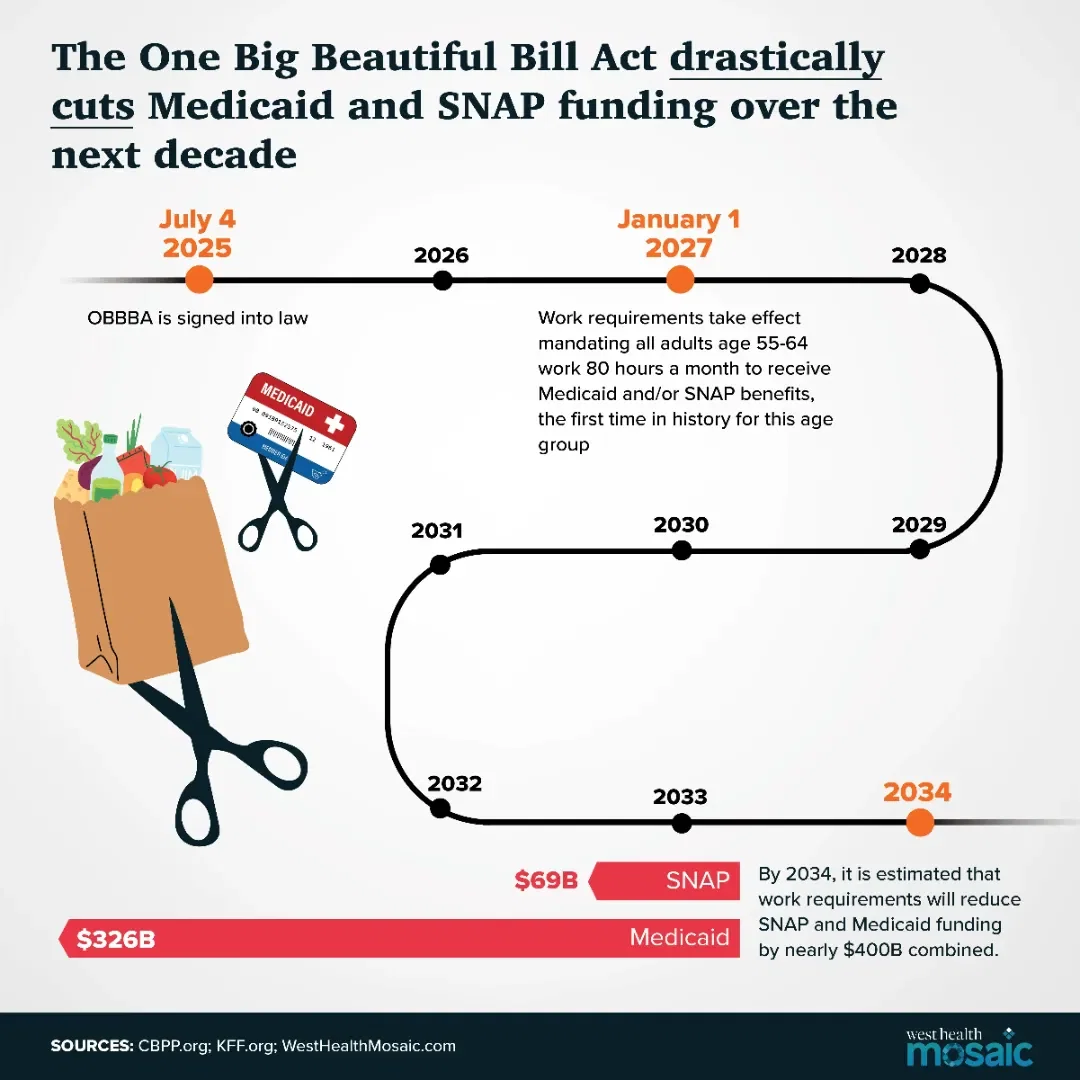
- These changes are part of the One Big Beautiful Bill Act, which is projected to cut nearly $400 billion from Medicaid and SNAP combined over the next decade.