
Where Data Tells the Story
© Voronoi 2026. All rights reserved.

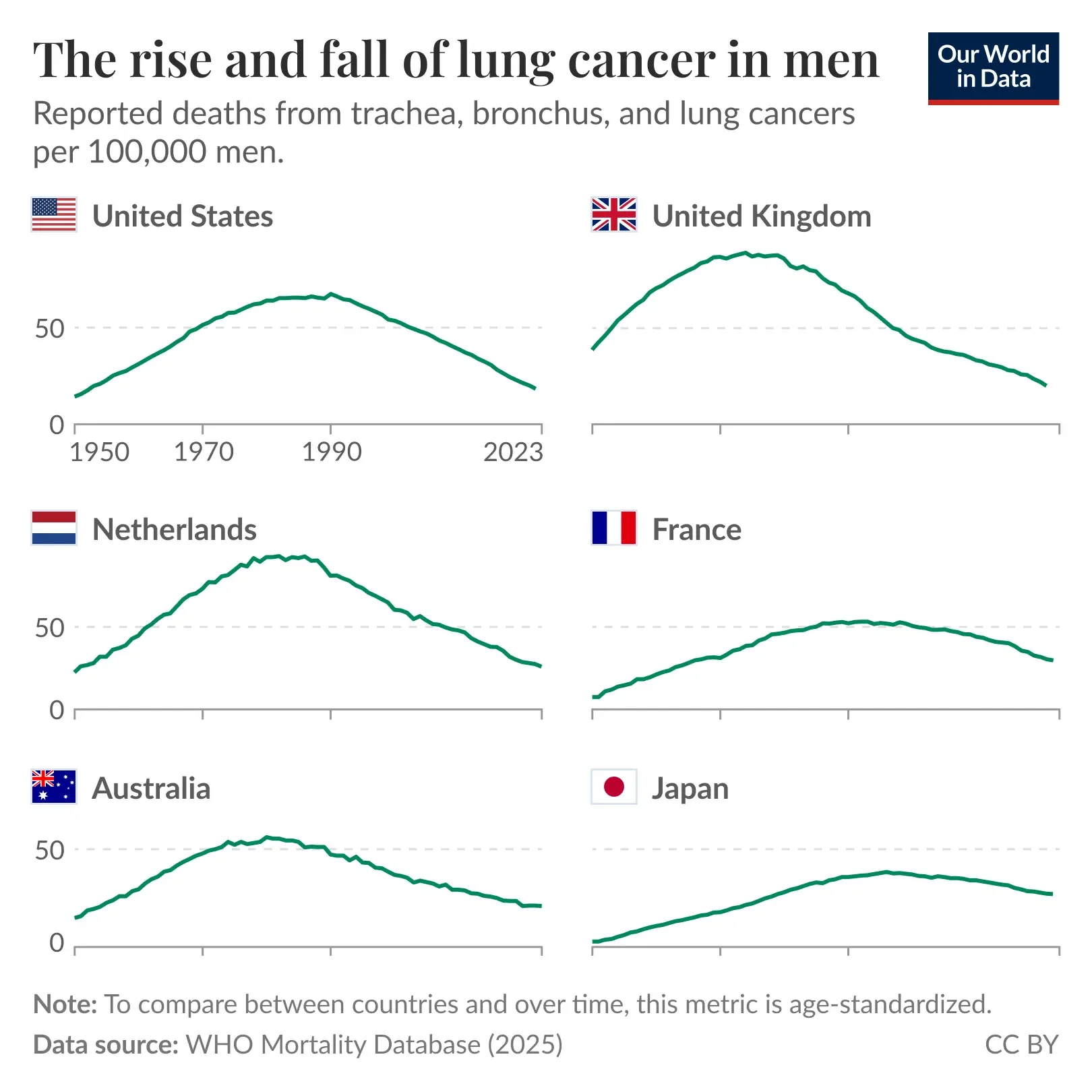
Lung cancer kills more than two million people every year, making it the most fatal cancer globally.
While a number of factors increase the risk, the 20th century brought one like no other: smoking.
There is now plenty of epidemiological evidence linking smoking to lung cancer, but we can also see it in the patterns of death over decades. The chart shows death rates from lung, trachea, and bronchus cancers among men in a selection of high-income countries. Each shows a very clear rise and fall over the late 20th century.
This pattern mirrors smoking rates, with a lag. The timing and height of each peak depend on when and how strongly smoking took hold: early in the United Kingdom, later in Japan.
You also see this rise and fall among women, shifted later, since they took up smoking after men did.
Today, most smokers live in low- and middle-income countries, who are at different stages of this curve. Helping people quit or preventing them from starting in the first place would save many lives for decades to come.