
Where Data Tells the Story
© Voronoi 2026. All rights reserved.

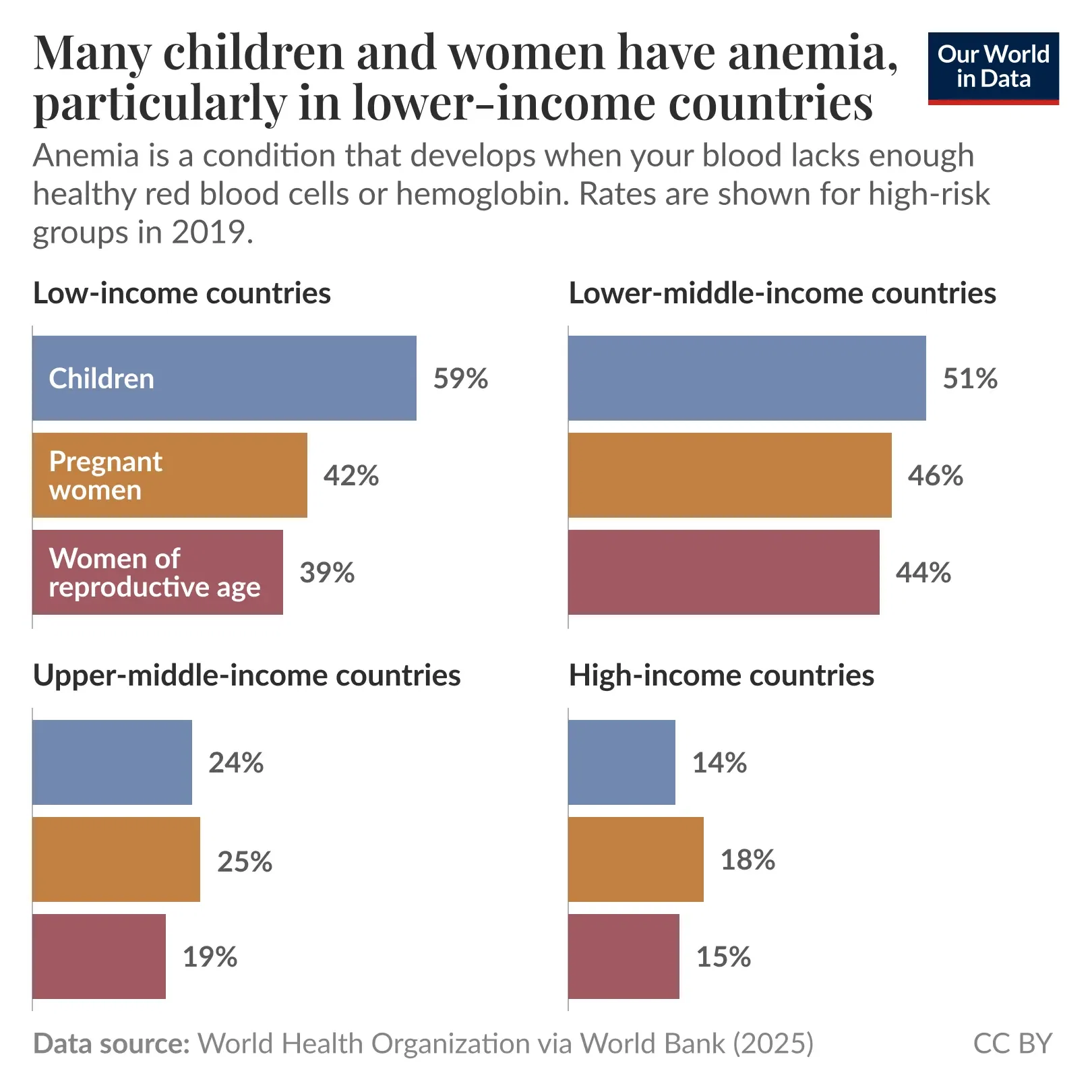
Few health problems affect billions of people at any time; anemia is one of them.
Anemia is a condition in which someone has fewer red blood cells or lower hemoglobin levels in their blood. It might seem like a minor health condition, but it can have serious implications. In children, it can lead to delays in cognitive and physical development. During pregnancy, it can increase the risk of mortality for both the baby and the mother.
Around half to two-thirds of cases are caused by nutritional deficiencies, particularly iron, but also folic acid and vitamin B12.
As you can see in the chart, anemia is more common in lower-income countries: the condition affects more than half of children and almost half of pregnant women. Poverty often means that people can’t afford diverse diets and are more likely to fall ill from infectious diseases, increasing their nutrient requirements.
While rates are much lower in rich countries, it’s not a solved problem. I know relatives and friends in the United Kingdom who have struggled with anemia.