
Where Data Tells the Story
© Voronoi 2026. All rights reserved.

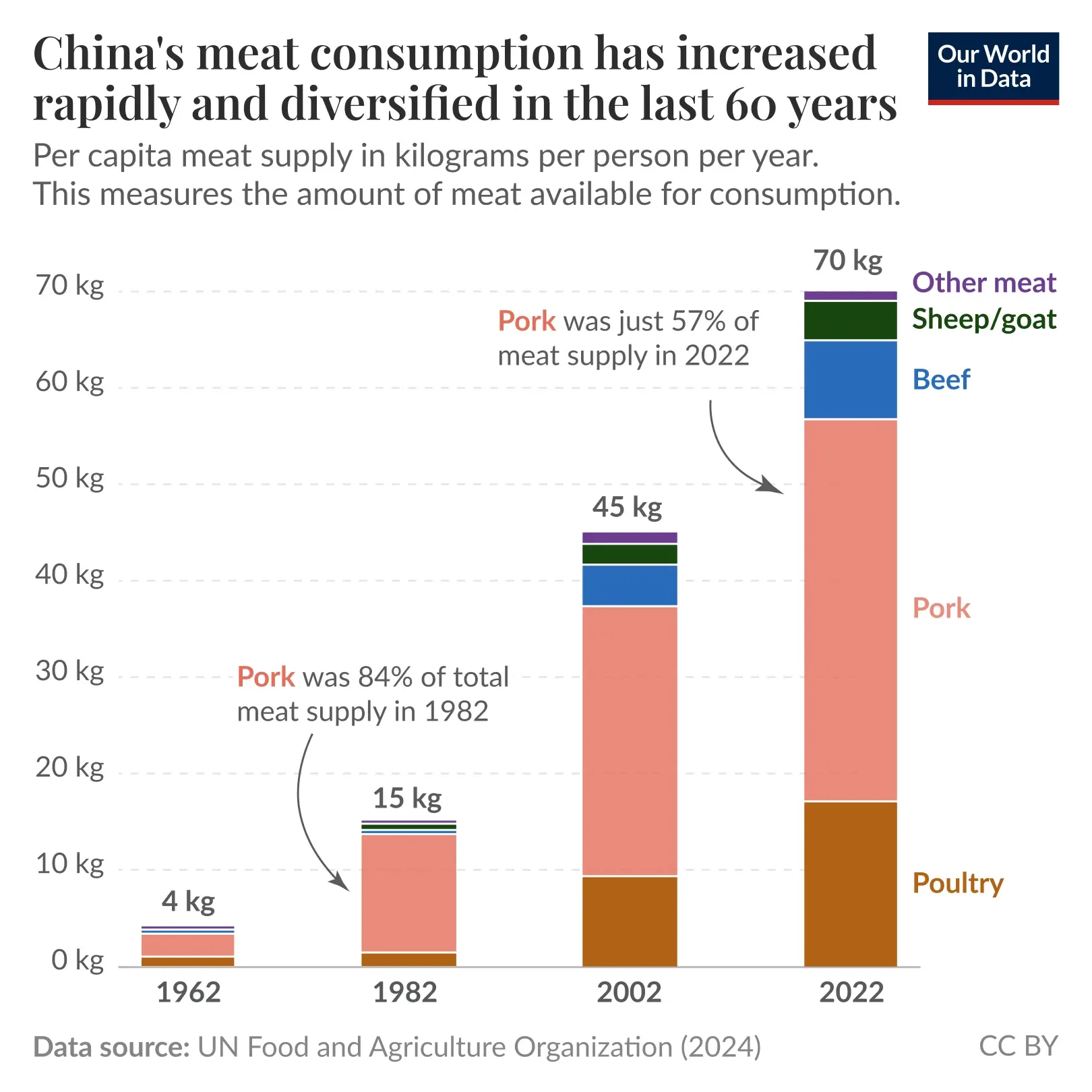
Go back to China in the 1960s, and you’ll find that the average person ate very little meat. This isn’t surprising: most of the country lived in extreme poverty and could not afford it. Meat consumption is strongly correlated with income: as countries get richer, they tend to have more diverse, meat-heavy diets.
However, as the chart shows, meat supply per person has increased significantly over the last sixty years. In 1962, annual consumption was just 4 kilograms per person. By 2022, it had increased almost 18-fold to 70 kilograms.
It’s not only the amount of meat consumed that’s changed: people in China also eat a more diverse mix. In the 1960s and 1980s, almost all meat came from pork. Today, pork still dominates, but it is joined by more poultry and beef.
This change in diet matters for various reasons. More diversified diets (which are not only about animal products) tend to be more nutritious than monotonous staple-heavy diets that are common for people living in poverty. But this increase in meat consumption also comes with a large environmental impact and consequences for animal welfare.