
Where Data Tells the Story
© Voronoi 2026. All rights reserved.

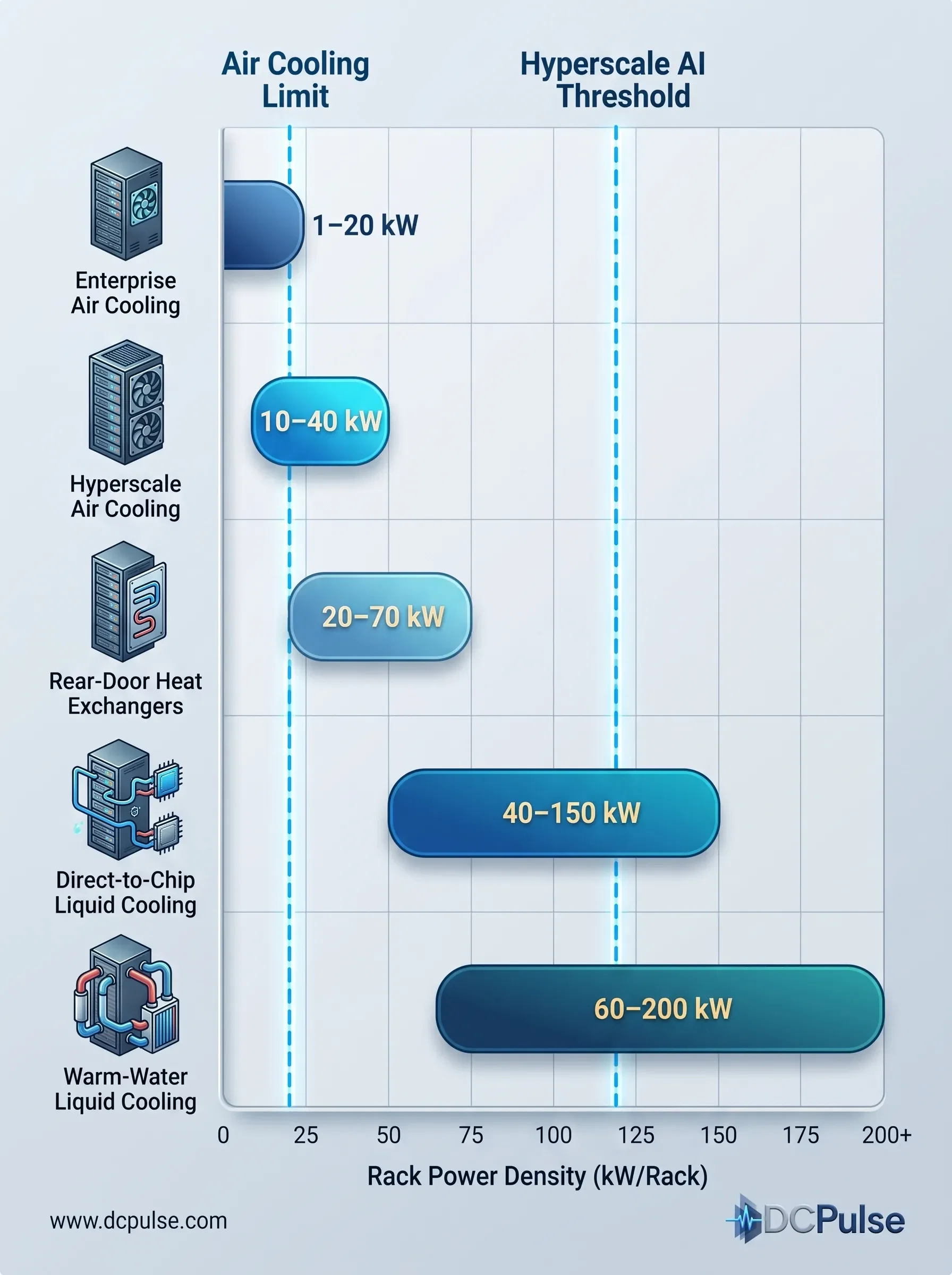
Warm-water cooling is beginning to change more than thermal management. In next-generation hyperscale environments, it is increasingly influencing how facilities are physically designed, how energy moves through infrastructure, and how waste heat is economically valued.
One of the biggest shifts is the rise of direct-to-chip liquid cooling systems operating at higher inlet water temperatures. Instead of relying on large volumes of chilled air to remove heat indirectly, these architectures capture heat closer to the processor itself, improving thermal transfer efficiency while reducing dependence on high-power airflow systems. Lenovo’s Neptune liquid cooling architecture demonstrates how higher-temperature water loops can support dense AI workloads while reducing overall facility energy consumption. (Source: Lenovo Neptune Liquid Cooling Architecture)