Sodium-Ion vs Lithium-Ion Batteries: A Comparative Analysis
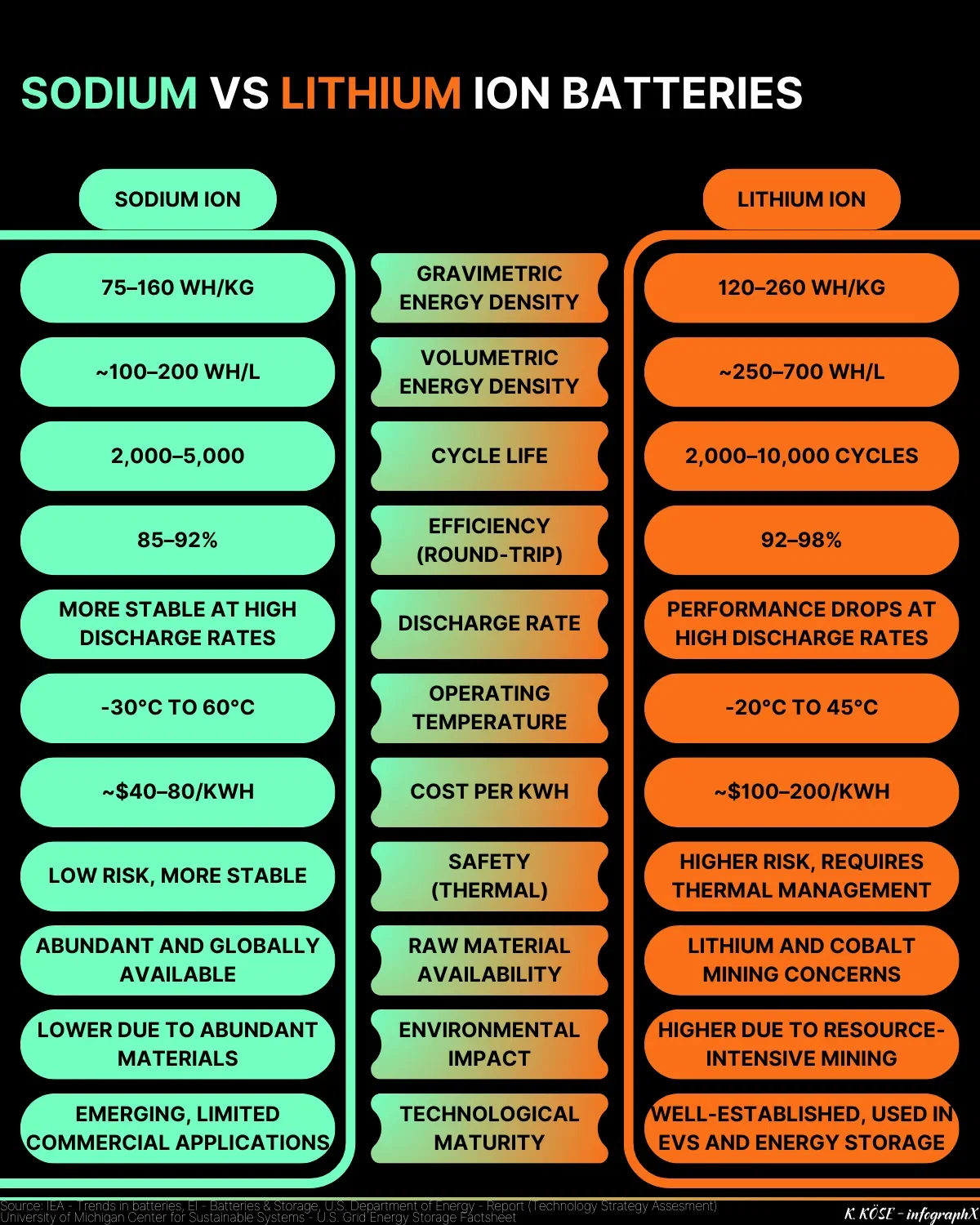
Gravimetric Energy Density
Sodium-Ion: 75–160 Wh/kg
Lithium-Ion: 120–260 Wh/kg
Gravimetric energy density refers to the amount of energy stored per unit of battery mass. Lithium-ion batteries offer higher energy density, making them more compact and lightweight.
Volumetric Energy Density
Sodium-Ion: ~100–200 Wh/L
Lithium-Ion: ~250–700 Wh/L
Volumetric energy density measures the energy stored per unit of volume. Lithium-ion batteries have a much higher volumetric density, allowing them to store more energy in a smaller space.
Cycle Life
Sodium-Ion: 2,000–5,000 cycles
Lithium-Ion: 2,000–10,000 cycles
Cycle life refers to the number of charge and discharge cycles a battery can undergo before losing capacity. Lithium-ion batteries generally have a longer lifespan.
Efficiency (Round-trip)
Sodium-Ion: 85–92%
Lithium-Ion: 92–98%
Round-trip efficiency represents the percentage of energy that can be recovered after a full charge-discharge cycle. Lithium-ion batteries exhibit a higher efficiency.
Discharge Rate
Sodium-Ion: More stable at high discharge rates
Lithium-Ion: Performance drops at high discharge rates
Discharge rate indicates how quickly a battery can release its energy. Sodium-ion batteries perform better under high discharge rates compared to lithium-ion batteries.
Operating Temperature Range
Sodium-Ion: -30°C to 60°C
Lithium-Ion: -20°C to 45°C
The operating temperature range shows the environmental conditions where each battery type can perform optimally. Sodium-ion batteries can operate at a broader range of temperatures.
Cost per kWh
Sodium-Ion: ~$40–80/kWh
Lithium-Ion: ~$100–200/kWh
Cost per kWh reflects the price of storing 1 kilowatt-hour of energy. Sodium-ion batteries are more cost-effective compared to lithium-ion batteries.
Thermal runaway refers to a situation where the battery becomes dangerously hot. Sodium-ion batteries are considered safer, with less risk of thermal runaway.
Raw Material Availability
Sodium-Ion: Abundant and globally available
Lithium-Ion: Lithium and cobalt mining concerns
The availability of raw materials impacts the sustainability and environmental footprint of each technology. Sodium-ion batteries use abundant materials, while lithium-ion requires limited and more costly resources.
Environmental Impact
Sodium-Ion: Lower due to abundant materials
Lithium-Ion: Higher due to resource-intensive mining
Environmental impact is determined by the extraction and processing of raw materials. Sodium-ion batteries have a lower environmental impact because they use more abundant materials.
Lithium-Ion: Well-established, used in EVs and energy storage
Technological maturity reflects how widely the technology has been adopted. Lithium-ion is well-established and used in electric vehicles, while sodium-ion is still emerging in commercial use.