
Where Data Tells the Story
© Voronoi 2026. All rights reserved.

Many of us take artificial light for granted. Most of us use it daily: we can read, cook, and do tasks indoors; students can study at night; and our communities and homes are safer when not cloaked in darkness.
It’s not just light that has been transformative, but cheap light. The price of lighting has fallen by more than 99.9% since the 1700s.
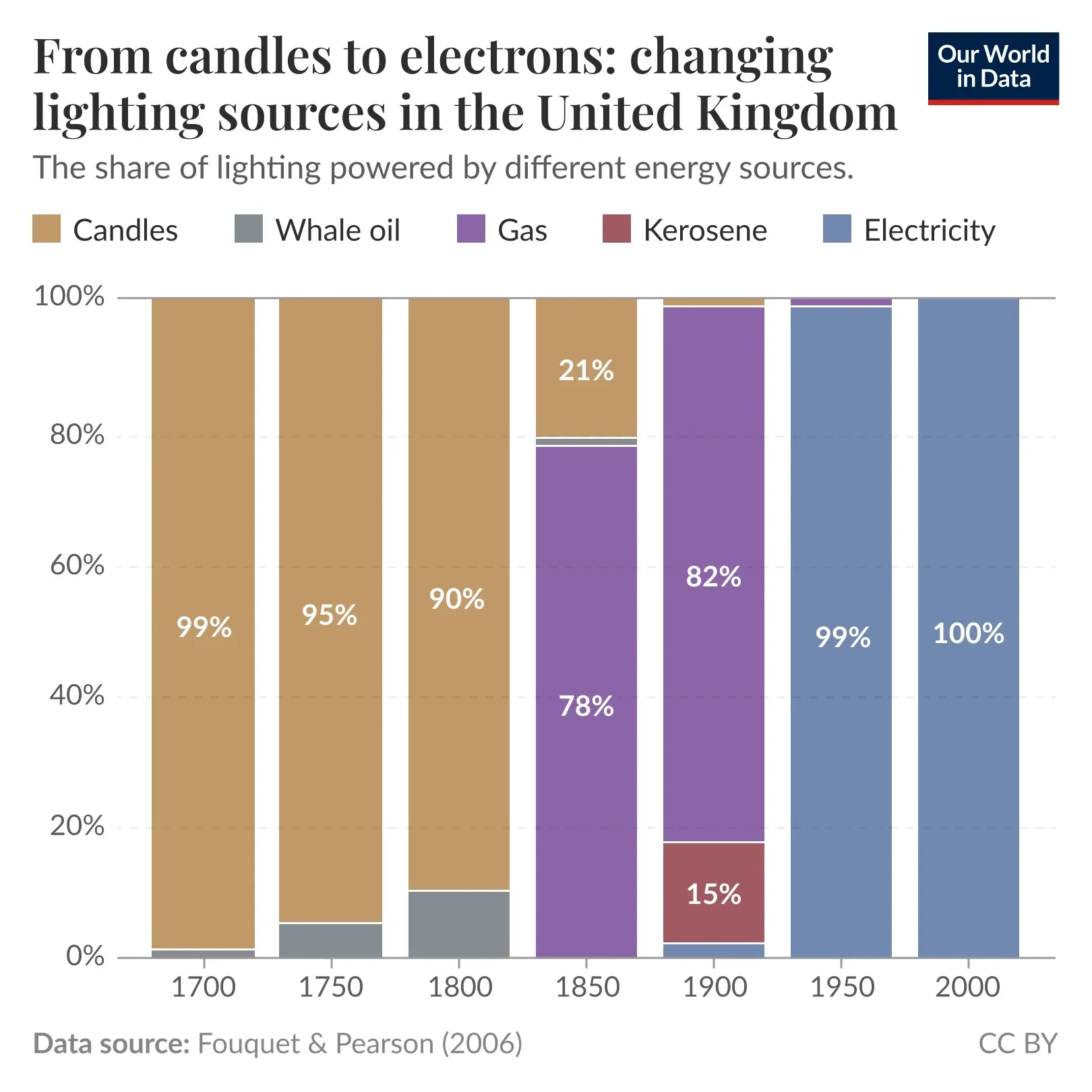
Changes in what we use to power lighting have been crucial to the plummeting costs. This chart, based on data from Fouquet and Pearson, shows these changes from 1700 to 2000.
In 1700, the typical British household lit its evenings with candles. In the 18th century, they started using whale oil, and by the 19th century, they saw the rise of burning gas. Kerosene briefly provided a fifth of light around 1900. With each transition, lighting became more efficient, and the costs dropped. But the defining transition has been to electricity. It now provides almost all of the UK’s artificial light.
For hundreds of millions of the world’s poorest, lighting at night is still a luxury, and will remain so until they get access to electricity.