
Where Data Tells the Story
© Voronoi 2026. All rights reserved.

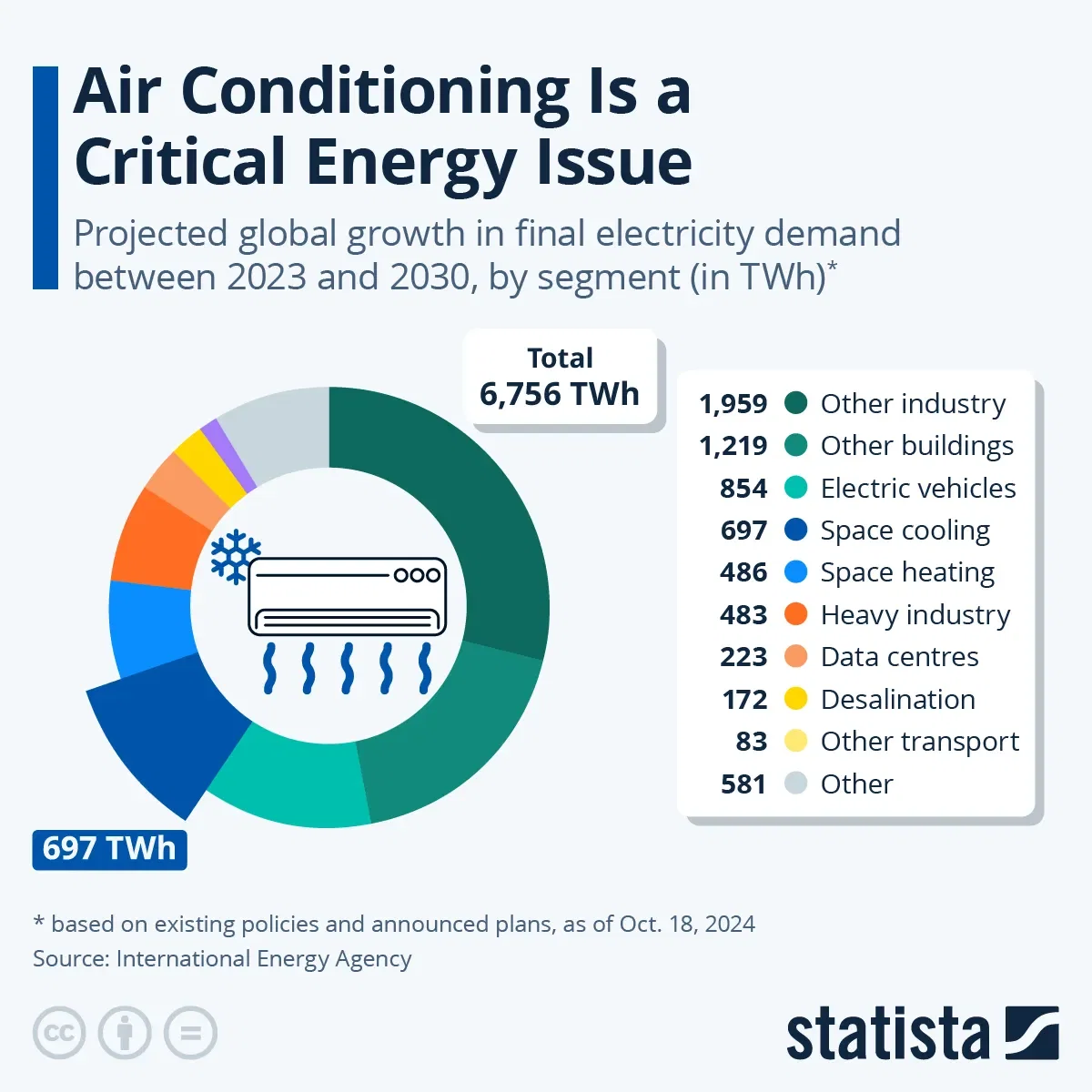
By 2030, space cooling - which includes air conditioning - is projected to require an additional 697 terawatt-hours (TWh) of electricity, according to data from the International Energy Agency (IEA). This means it will account for 10 percent of the world's growing electricity demand. By contrast, electric vehicles will account for 13 percent of global growing electricity needs, while heating will account for seven percent. The IEA defines space cooling as any means of lowering indoor temperatures, including air conditioning.
Looking ahead, the IEA states that by 2050, around two-thirds of the world’s households will own an air conditioning unit. While AC can decrease the risk of heat deaths, it still comes with a catch: Most AC units are powered by electricity that, in many parts of the world, is still generated from fossil fuels. This means AC is contributing to the planet's warming.
The IEA states that investing in more energy-efficient AC units could cut future energy demand in half, reduce local air pollution and lower operating costs. Meanwhile, setting higher efficiency standards for cooling and greener building designs could reduce the need for new power plants and cut costs.