
Where Data Tells the Story
© Voronoi 2026. All rights reserved.

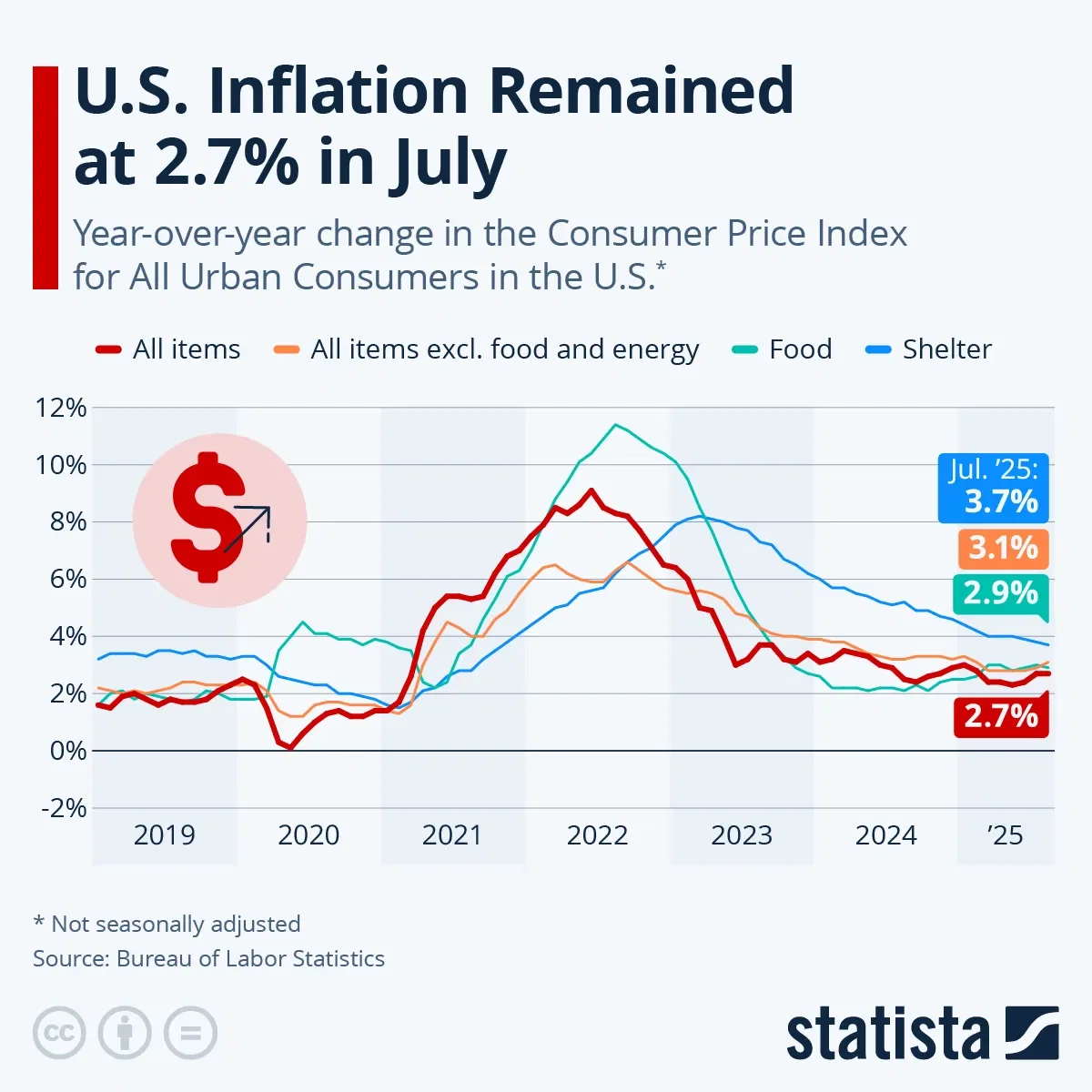
Consumer prices in the U.S. remained elevated in July, with headline inflation staying at an annualized 2.7 percent, while the core index excluding more volatile food and energy prices stood at 3.1 percent, compared to 2.9 percent the month before. The latter two figures are both above the Federal Reserve’s 2 percent target.
According to data published by the Bureau of Labor Statistics on Tuesday, consumer prices increased 0.2 percent in July on a monthly basis, which is down from the 0.3-percent increase in June. The index for shelter rose 0.2 percent on a monthly basis in July. Core inflation was up 0.3 percent over the month.
The Consumer Price Index measures a basket of goods and services. It includes a wide range of items such as the prices for takeout and restaurants (+3.9 percent since 2024), the prices for used cars and trucks (+4.8 percent), for medical care services (+4.3 percent) and motor vehicle maintenance and repair (+6.5 percent). Notably, overall energy prices were down 1.6 percent compared to July one year ago, suggesting that cheaper gasoline is one of the factors offsetting some of the impacts from Trump’s tariffs.
According to AP, the latest figures likely reflect some of the impact from the 10 percent universal tariff imposed in April, in addition to higher duties on countries such as China and Canada.
Economists say that there is often a delay before the full effects of tariffs can be seen in consumer prices, citing how some retailers have been stocking up, which can mask such price shifts in the short term.