
Where Data Tells the Story
© Voronoi 2026. All rights reserved.

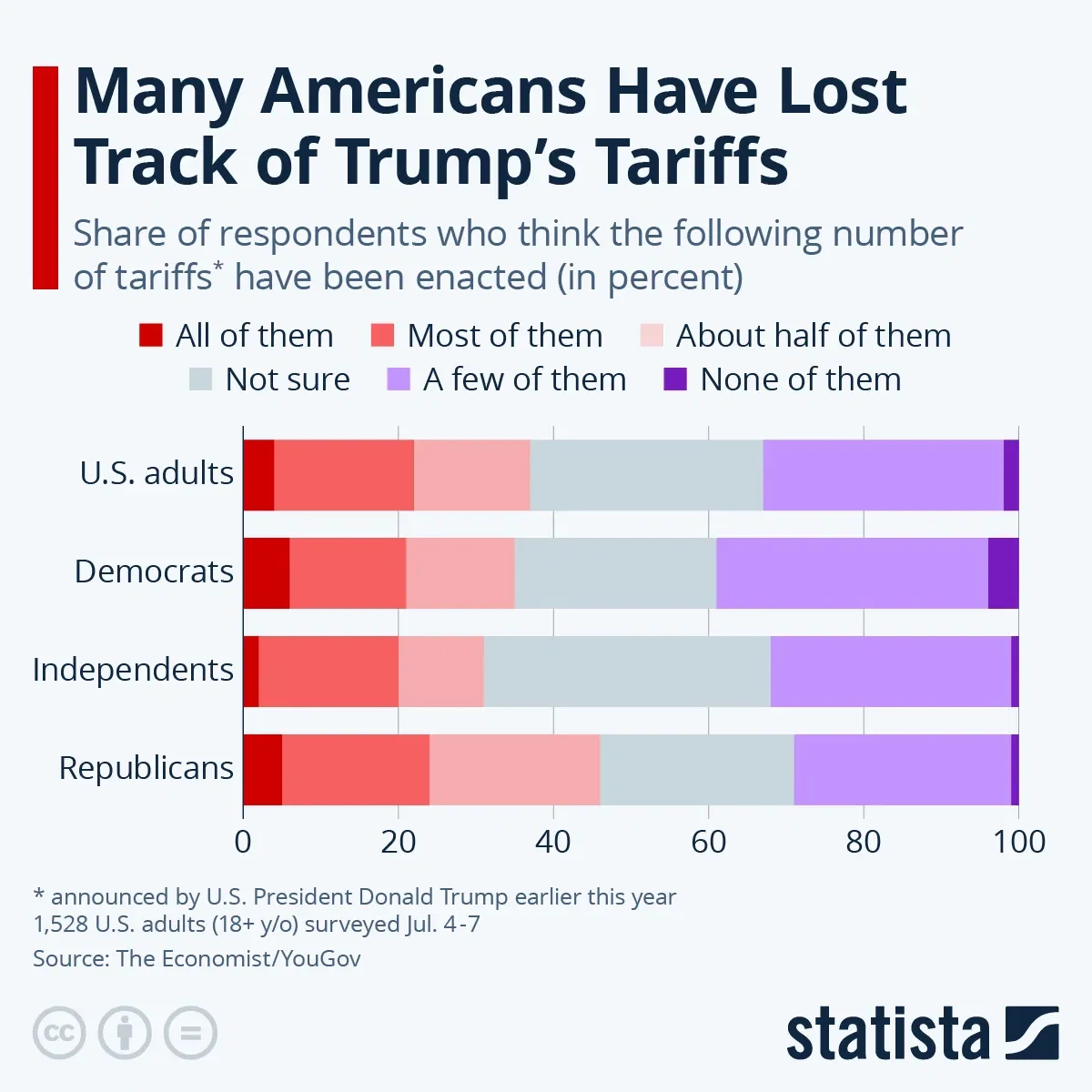
U.S. President Donald Trump has once more postponed the start date of a widespread package of so-called “reciprocal” tariffs, with the new deadline set for August 1. The tariffs were initially announced back in April, with a 90-day window intended to give countries time to negotiate. The new, smaller window of time is adding urgency. Meanwhile, 14 countries have been warned that they will face even higher tariffs if they do not come to the table.
As businesses and consumers face continued uncertainty over their financial futures, many U.S. adults are losing track of which tariffs have actually been implemented. Data from a poll conducted by The Economist and YouGov this month shows that 30 percent of respondents said they are unsure of how many tariffs earlier announced by Trump have been enacted. A third of respondents meanwhile said that they believe few or none have gone into effect, while 15 percent said they think about half of them have and 21 percent say all of them or most have. Republicans were more likely than Democrats to say that they thought a lot of the tariffs had come into force, while the opposite was true in terms of the perception that few have been.
The survey also found that 40 percent of Americans would prefer for tariffs on foreign goods to be decreased compared to 20 percent who say they think tariffs should be increased, as 22 percent said they would prefer for them to be kept the same.