
Where Data Tells the Story
© Voronoi 2026. All rights reserved.

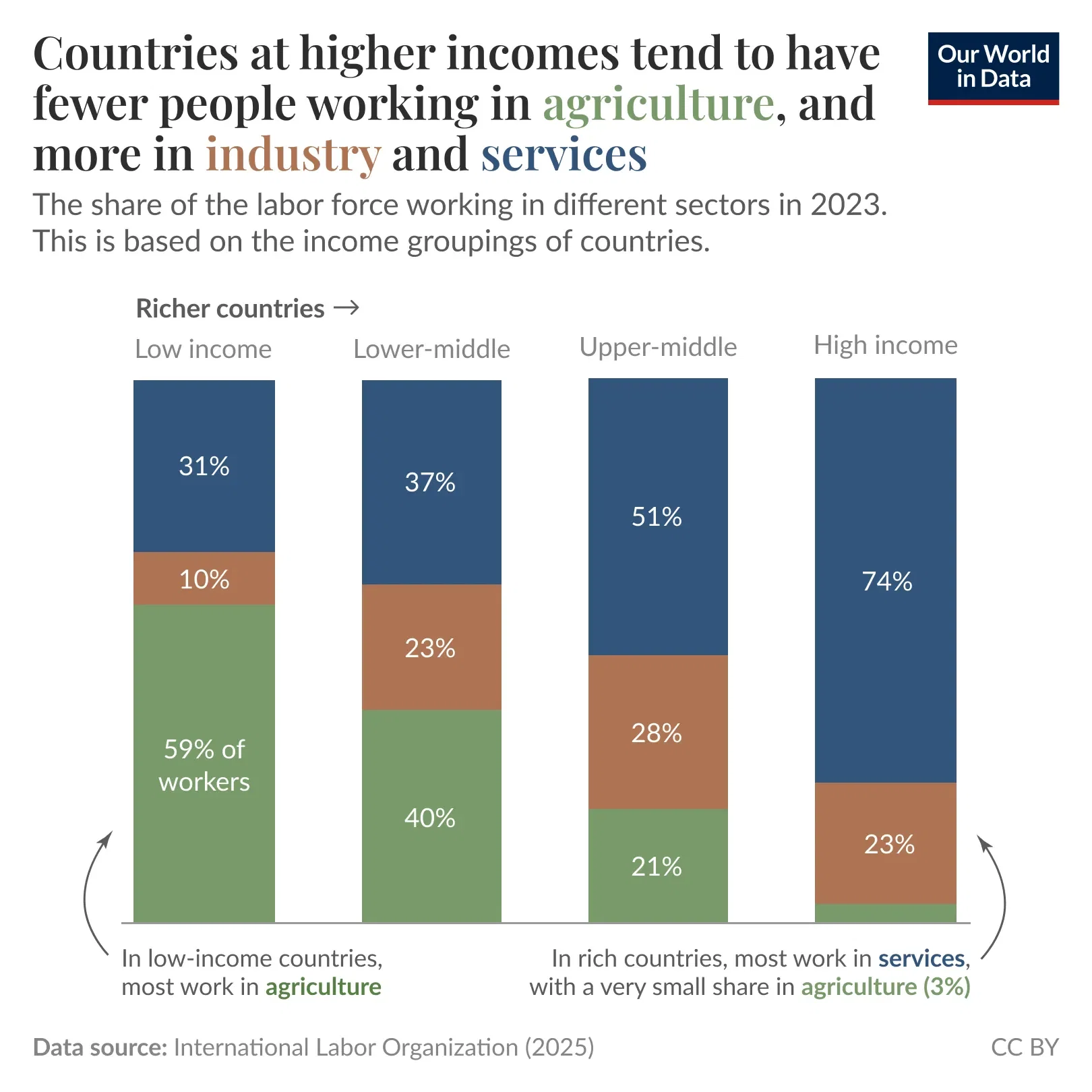
As countries get richer, the type of work that people do changes a lot.
The chart breaks down the workforce by sector by country income groups. In most low-income countries, a majority of people work in agriculture. People grow their own food, get a surplus to sell to others, or produce commodities that they can export overseas.
In comparison, fewer people work in farming in middle- and high-income countries. People start to move to industrial and service jobs instead.
In rich countries, three-quarters of workers are employed in services, compared to just 3% in agriculture.
There are several drivers of this. Agricultural productivity tends to increase as countries get richer (and they gain access to better seeds, fertilizers, irrigation, and land). This means fewer family members must work on the farm to produce the same — or more — income.
At the same time, many industrial and service jobs pay more, so people are incentivized to move out of farming to higher-paying roles when they become available. This transition has been a key driver of economic growth and poverty reduction for many countries.