
Where Data Tells the Story
© Voronoi 2026. All rights reserved.

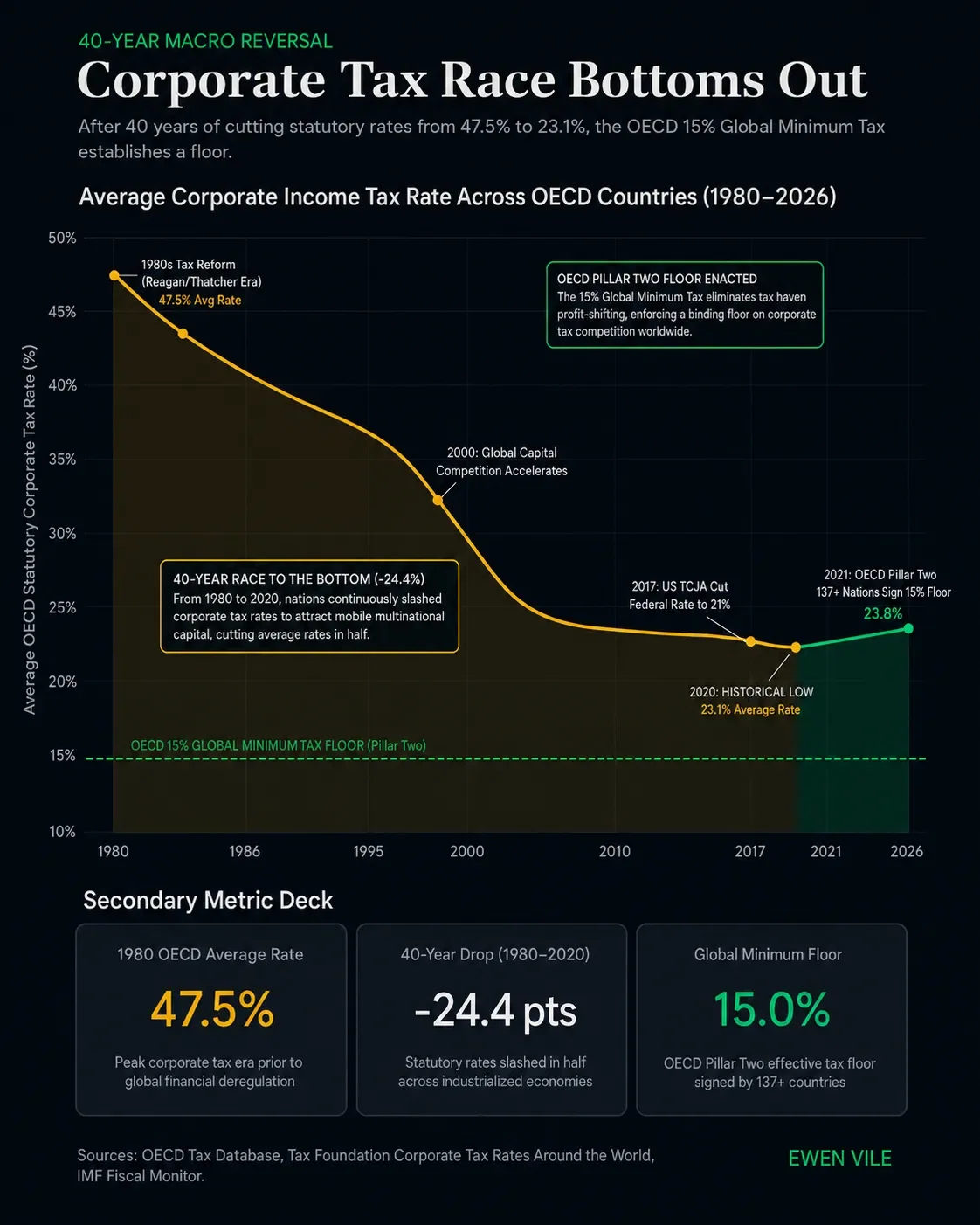
Average Corporate Income Tax Rate Across OECD Countries (1980–2026)
For four decades (1980–2020), industrialized nations competed aggressively for mobile corporate investment by continuously slashing corporate income tax rates. Following major tax deregulation in the 1980s—anchored by the U.S. Tax Reform Act of 1986—the average statutory corporate tax rate across OECD economies fell in half, dropping from 47.5% in 1980 to a historic low of 23.1% in 2020. This 40-year "race to the bottom" enabled multinational corporations to route profits through low-tax jurisdictions and tax havens, shrinking national corporate tax bases worldwide. In 2021–2026, that multi-decade trend officially hit a hard floor. Under the OECD/G20 Pillar Two agreement signed by over 137 countries, a 15% Global Minimum Effective Tax rate was established. By imposing top-up taxes on multinational entities operating in low-tax jurisdictions, Pillar Two has effectively neutralized tax haven advantages and stabilized corporate tax rates for the first time in 40 years. KEY METRICS & HIGHLIGHTS: • 1980 OECD Average Rate: 47.5% (Peak corporate tax era prior to global financial deregulation) • 40-Year Drop (1980–2020): -24.4 Percentage Points (Statutory rates slashed in half across OECD) • 2020 Historical Low: 23.1% (Trough of the 40-year international tax competition race) • Global Minimum Tax Floor: 15.0% (OECD Pillar Two effective tax floor signed by 137+ countries)