
Where Data Tells the Story
© Voronoi 2026. All rights reserved.

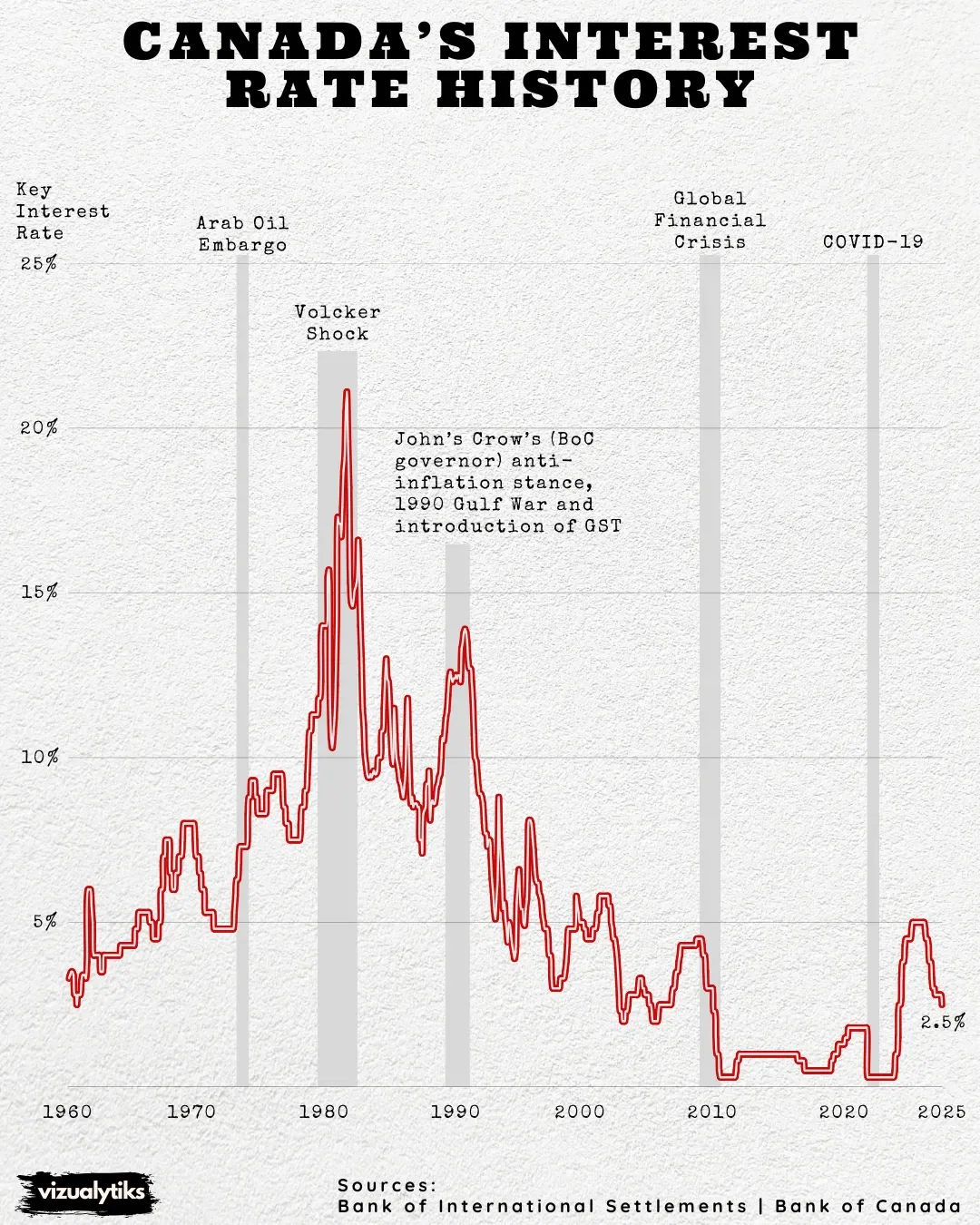
Canada’s interest rate story is closely tied to global events. In the early 1980s, rates skyrocketed to over 20% during what’s known as the Volcker Shock. At that time, U.S. Federal Reserve Chair Paul Volcker sharply raised American interest rates to break runaway inflation. Canada, heavily linked to the U.S. economy, was forced to follow suit. The result was a painful recession, soaring unemployment, and a housing market crunch that a few Canadians still remember. This puts in context the 5% post-pandemic high.
The 1990s brought another round of high rates under Governor John Crow, as Canada struggled with inflation, the Gulf War, and the new GST. But from the 2000s onward, the pattern shifted, with every major crisis from the Global Financial Crisis in 2008 to COVID-19 in 2020, rates were slashed to historic lows to keep the economy afloat.
Now, since 2024, rates have gradually eased back to 2.5% after climbing to fight post-pandemic inflation. This reminds us of the delicate balance of controlling prices and supporting growth.