
Where Data Tells the Story
© Voronoi 2026. All rights reserved.

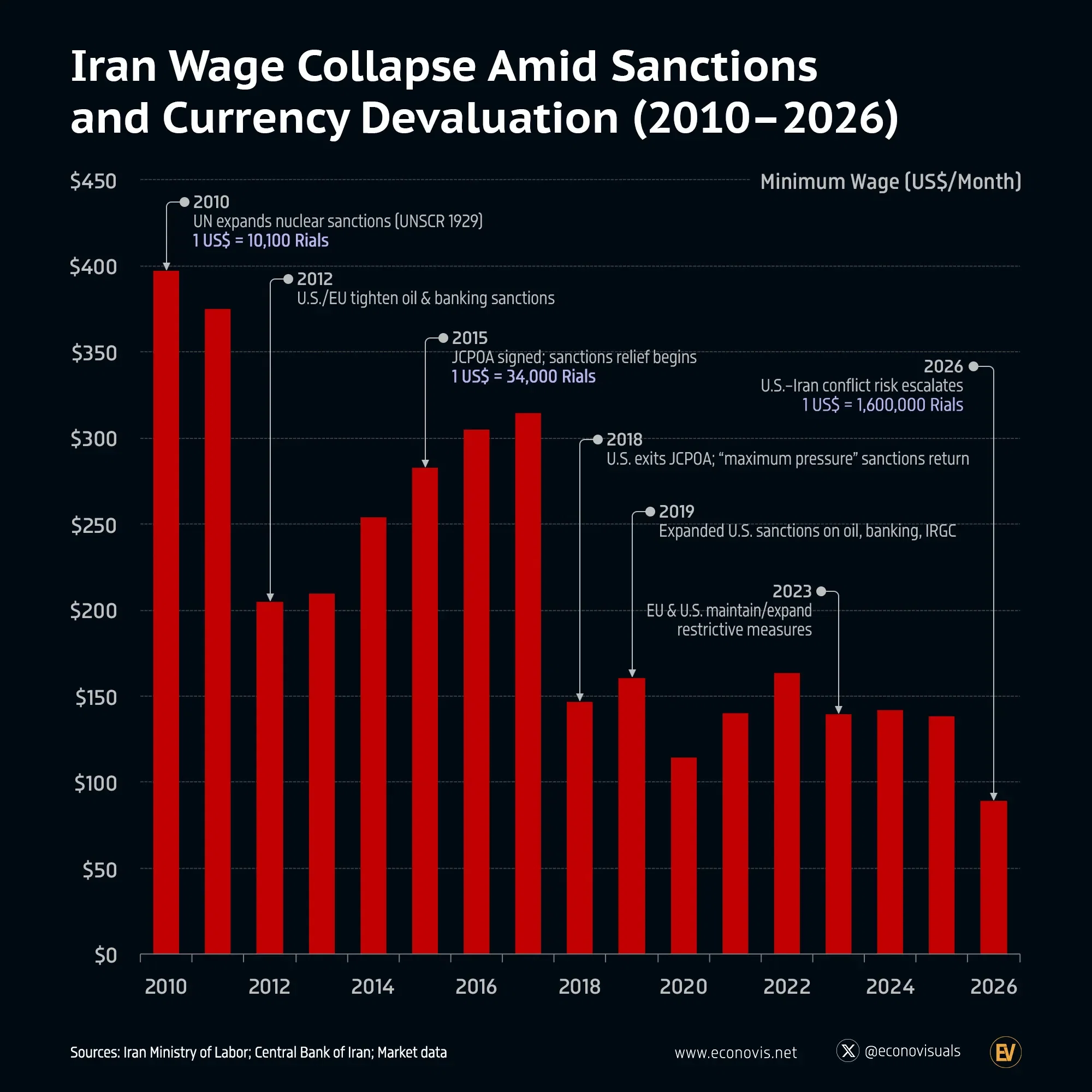
Wage Suppression and the Erosion of Iran’s Middle Class
Despite high inflation and repeated currency devaluations, government wage controls kept wages from keeping pace, shifting the burden of sanctions, economic mismanagement, and corruption onto low- and middle-income households.
Iran’s minimum wage stood near $400 per month in 2010 (≈$600 in today’s dollars) but fell by roughly half in 2012 after expanded UN nuclear sanctions (UNSCR 1929) and tighter U.S./EU oil and banking restrictions.
Following the 2015 nuclear deal (JCPOA) and partial sanctions relief, minimum wages rose by about 50% in 2016–2017. However, after the U.S. withdrew from the JCPOA in 2018 and reimposed “maximum pressure” sanctions, the minimum wage again declined sharply — averaging around $140 per month between 2018 and 2025.
As U.S.–Iran tensions escalated in 2026, the Iranian Rial depreciated further, food prices doubled, and the minimum wage fell to below $100 per month, contributing to renewed unrest and protests.
Over 16 years of sanctions and political tensions, prolonged wage suppression significantly eroded the middle class, while wealth became increasingly concentrated among groups linked to political power, state rents, and privileged monopolies.