2d ago
The World Moves to Cities

What We’re Showing
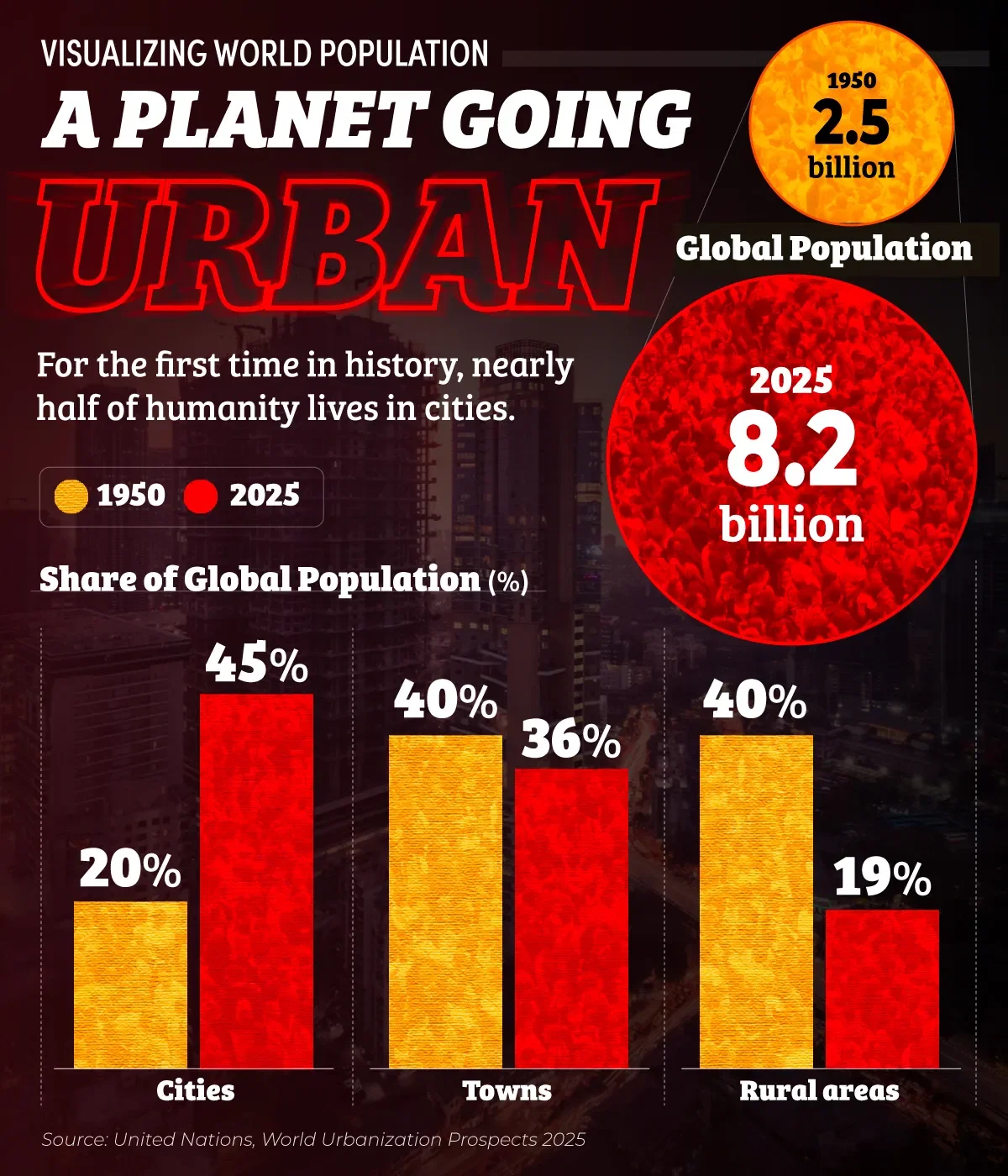
This graphic tracks how the world’s population has shifted between cities, towns, and rural areas from 1950 to 2025. It compares overall population growth with changes in where people live, highlighting the steady rise of urban centres over seven decades. Circles represent the total global population in 1950 and 2025, while bars show the share of people living in cities, towns, and rural areas. The data is sourced from the United Nations’ World Urbanization Prospects 2025.
Key Takeaways
- Cities now house nearly half of humanity, with 45% of the world’s 8.2 billion people living in urban areas in 2025, up from just 20% in 1950.
- Rural areas have seen the sharpest decline, with their share of the global population falling from 40% in 1950 to 19% in 2025.
- Towns remain a major living environment, accounting for 36% of the global population in 2025, though their share has slipped slightly over time.
- Global population growth has accelerated alongside urbanisation, rising from 2.5 billion in 1950 to more than three times that level by 2025.