
Where Data Tells the Story
© Voronoi 2026. All rights reserved.

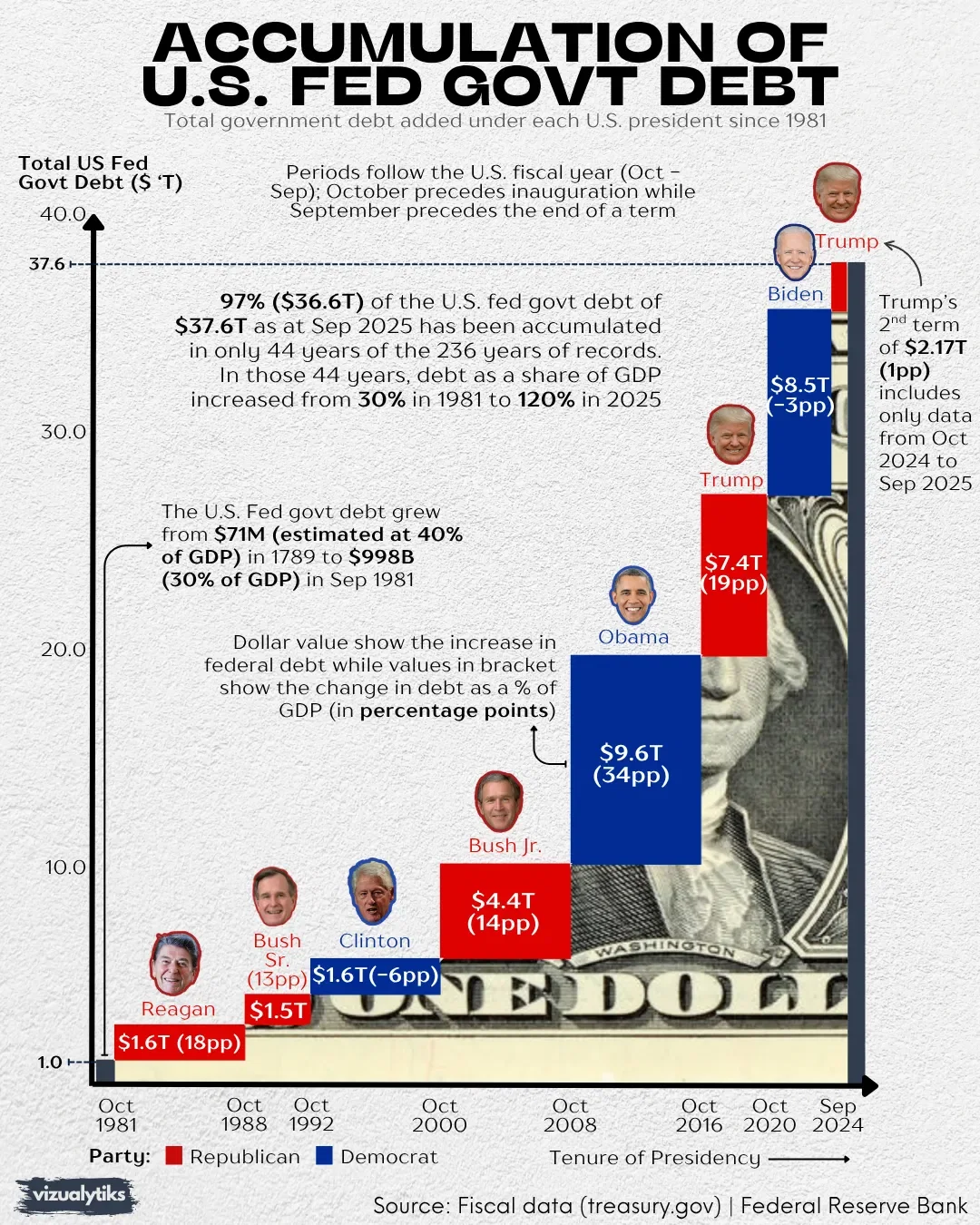
U.S. federal government debt has risen sharply over the past four decades, with the vast majority accumulated in the modern era. As of September 2025, total federal debt stands at about $37.6T, and nearly 97% of that amount has been added since 1981. Over the same period, debt as a share of GDP has climbed from roughly 30% to about 120%, reflecting a combination of tax cuts, wars, financial crises, economic stimulus programs, and rising entitlement spending.
The largest increases occurred during periods of major economic stress. Debt expanded significantly under George W. Bush following the wars in Iraq and Afghanistan and the 2008 financial crisis. It then surged further during Barack Obama’s presidency as the government responded to the aftermath of the financial crisis. More recently, the pandemic-era fiscal response drove another major increase during Donald Trump’s first term and Joe Biden’s presidency, pushing federal debt to record levels.
With borrowing continuing to fund deficits and interest costs rising, the trajectory of U.S. debt is becoming a central issue in fiscal and economic policy. Debates over spending, taxation, and the long-term sustainability of federal finances are likely to intensify as debt levels remain historically high.