
Where Data Tells the Story
© Voronoi 2026. All rights reserved.

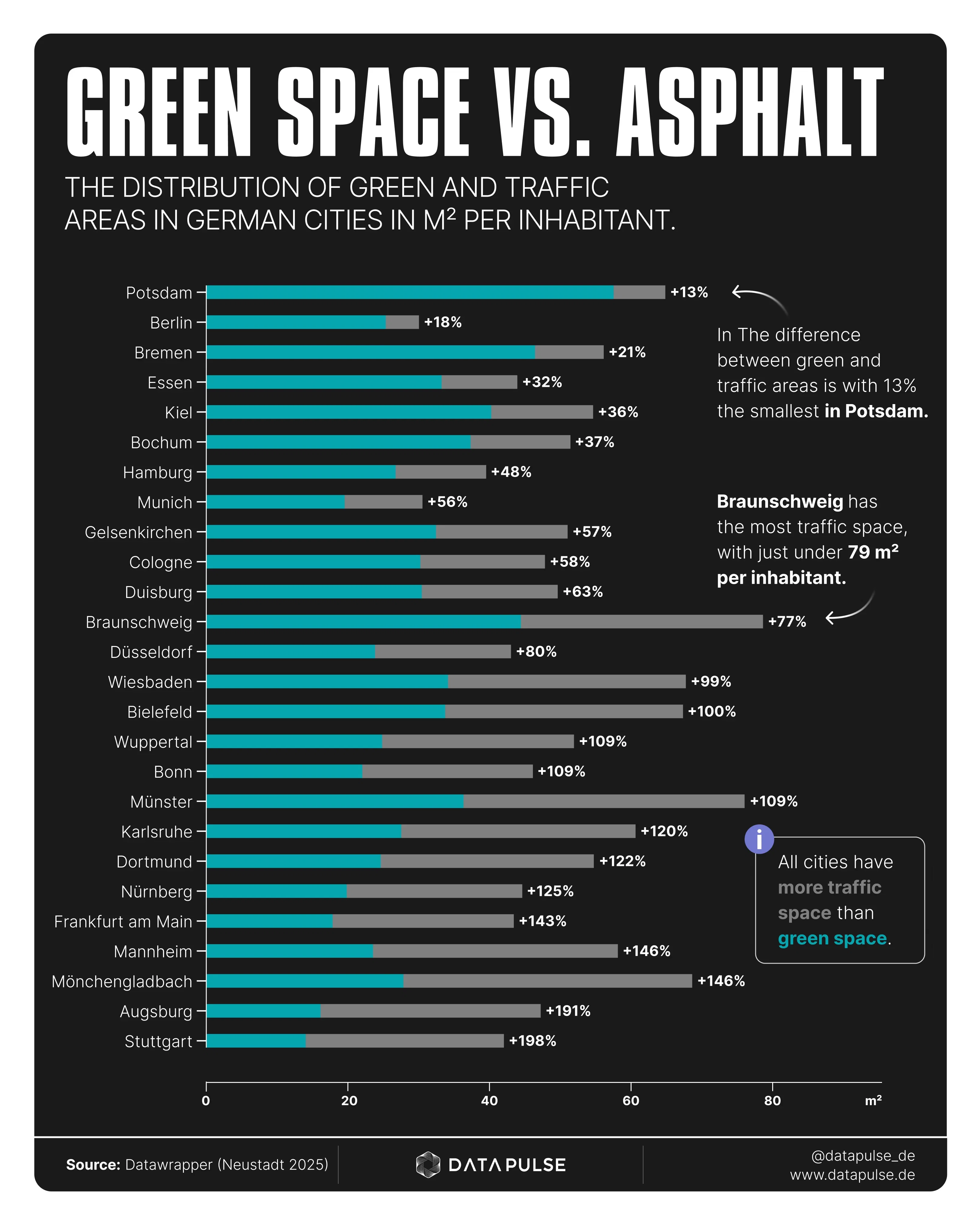
In most major German cities, there are significantly more roads and parking spaces per capita than parks and other green spaces. Even in positive examples such as Potsdam, there are around 40 m² of traffic area compared to just 35 m² of green space. Yet green spaces are the silent heroes of the city: they cool the air, create space for people to get together, offer room to breathe deeply and provide a habitat for urban wildlife.
Since 1992, the area covered by settlements and traffic has continued to expand, with around 50 hectares still being sealed every day. The goal of reducing the daily consumption of new land for residential and transport purposes to 30 hectares per day by 2030 has therefore not yet been achieved. This makes ideas such as the sponge city, which aims to use rainwater and its distribution in a sustainable way, even more exciting. This is currently being implemented in the Rummelsburger Bucht in Berlin, among other places.