
Where Data Tells the Story
© Voronoi 2026. All rights reserved.

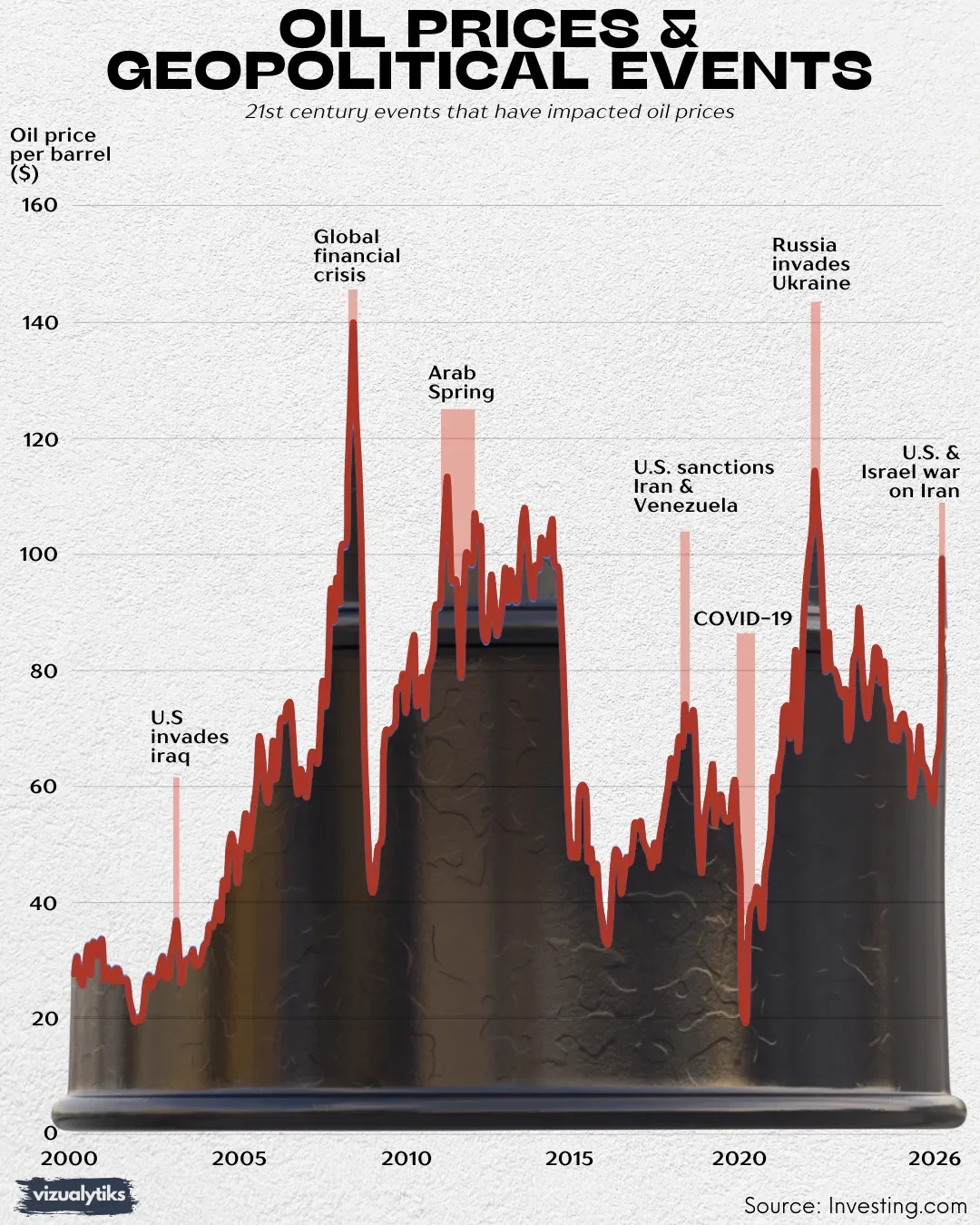
Oil prices rarely move on geopolitics alone, but major conflicts, sanctions, and supply shocks have repeatedly acted as catalysts for some of the sharpest swings of the century. From the Iraq war and the 2008 financial crisis to the Arab Spring, sanctions on Iran and Venezuela, COVID-19, and Russia’s invasion of Ukraine, each episode either threatened supply, weakened demand, or both. The pattern is clear: oil reacts fastest when markets fear disruption to production, transport routes, or global growth.
That same dynamic is playing out again in the current U.S.-Israel war with Iran. The conflict has pushed Brent back above $100 per barrel, disrupted flows around the Strait of Hormuz, and prompted the IEA to announce a record 400-million-barrel emergency stockpile release as governments try to calm markets. Several news outlets also report that the war has already cut regional oil flows sharply, with some analysts warning prices could rise toward $150 in a severe disruption scenario.
This really shows is that oil is not just an economic commodity, but a geopolitical barometer. When tensions rise in key producing regions, the price of crude quickly starts reflecting both the immediate supply risk and the wider fear premium built into global energy markets.