
The Cost to Start an LLC in Every U.S. State
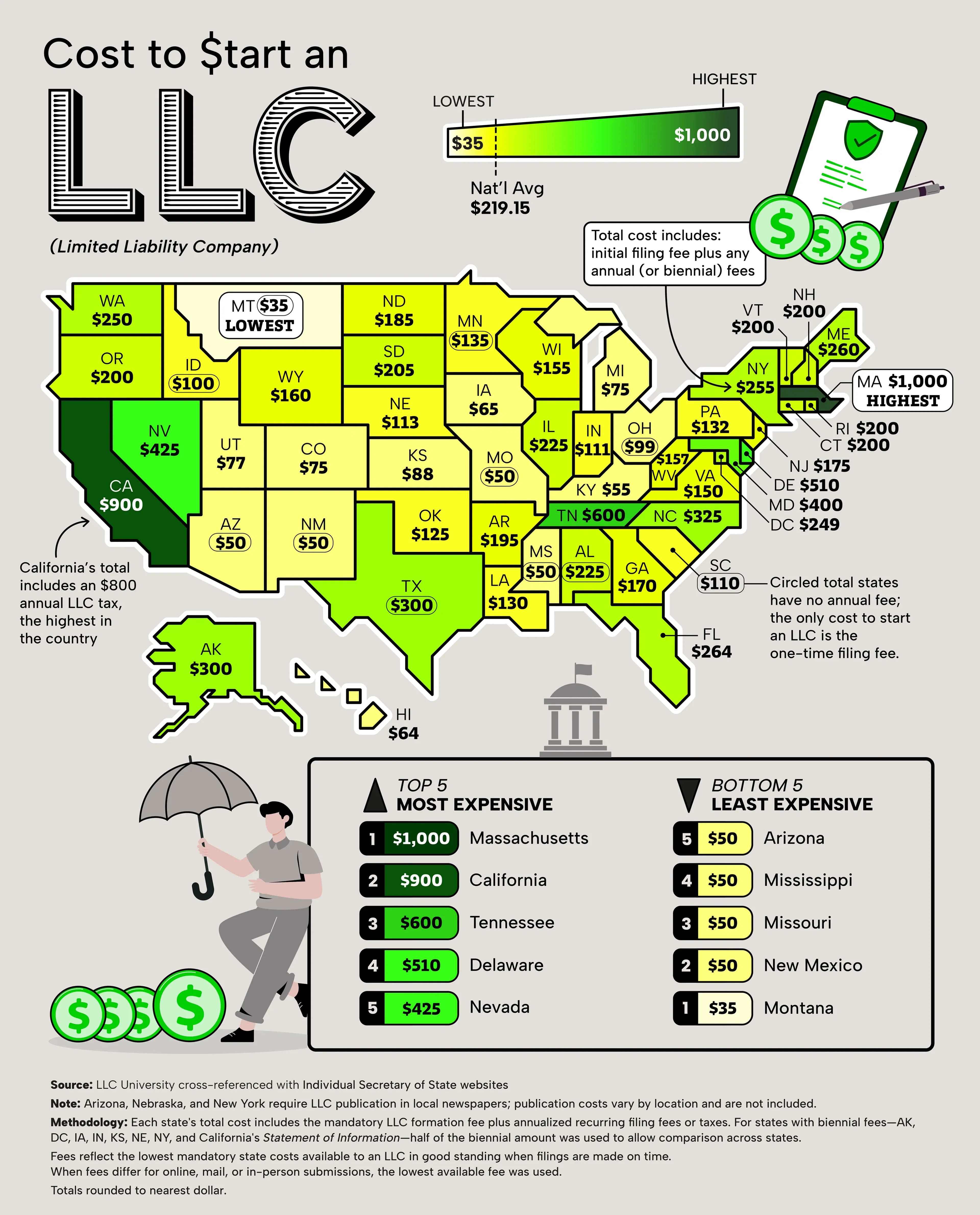
How much does it cost to start an LLC (limited liability company) in each US state?
It can be as low as $35 in Montana or as high as $1,000 in Massachusetts—a nearly 29-fold difference. This map shows the mandatory state cost of forming an LLC plus annualized recurring filing fees, if any. All states require an initial filing fee, which goes by various names, including Articles of Organization, Certificate of Organization, or Certificate of Formation. After that, states differ in their requirements for recurring fees, which may include annual or biennial reports, franchise taxes, or other mandatory filings. California, for example, requires an $800 annual franchise tax. Eleven states have no recurring filing fee or tax at all: Alabama, Arizona, Idaho, Minnesota, Mississippi, Missouri, Montana, New Mexico, Ohio, South Carolina and Texas.
Of the states that require recurring filing fees, eight require them biennially: Alaska, DC, Iowa, Indiana, Kansas, Nebraska, and New York. California requires a biennial Statement of Information.
Data was sourced from each state's Secretary of State or equivalent state agency. Because some fees have recently changed, third-party sources may contain outdated information.
Methodology: Each state's total cost includes the mandatory LLC formation fee plus annualized recurring filing fees or taxes. For states with biennial fees—AK, DC, IA, IN, KS, NE, NY, and California's Statement of Information—half of the biennial amount was used to allow comparison across states. Fees reflect the lowest mandatory state costs available to an LLC in good standing when filings are made on time. When fees differ for online, mail, or in-person submissions, the lowest available fee was used. Arizona, Nebraska, and New York require LLC publication in local newspapers; publication costs vary by location and are not included.