
Where Data Tells the Story
© Voronoi 2026. All rights reserved.

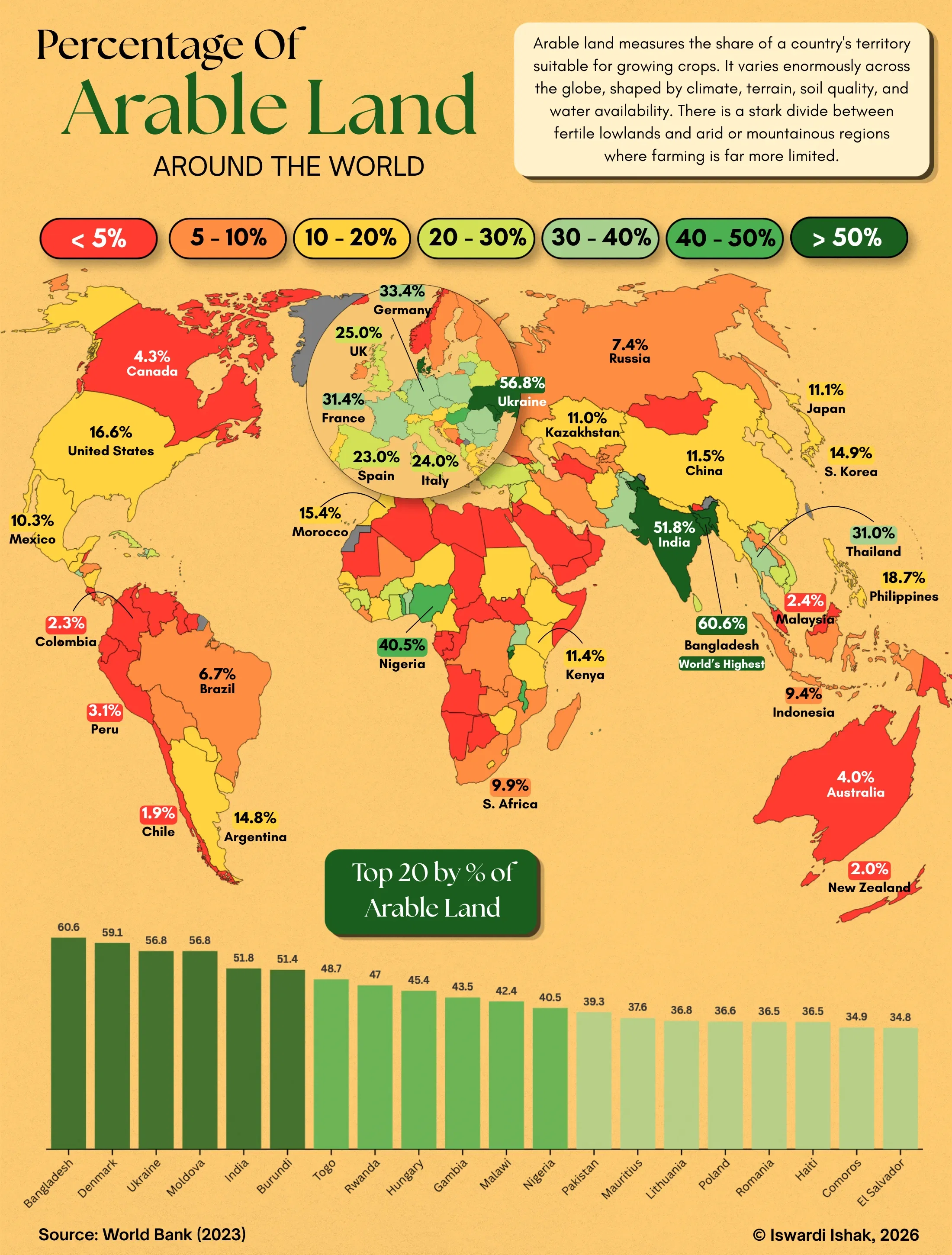
Arable land is far from evenly distributed around the world. Geography plays a large role, with climate, terrain, soil quality and water availability determining how much of a country's territory can be used to grow crops. The contrast is striking: in Bangladesh, more than 60% of the country's land is arable, while in countries such as Australia, Canada and Chile, only a small share is suitable for cultivation.
Europe contains many countries with relatively high proportions of arable land, including Ukraine, Moldova and Denmark, while much of the Middle East and North Africa has far less. Large countries do not necessarily have large amounts of cultivable territory either. Russia and Australia, for example, possess enormous land areas but much of their territory is too cold, dry or otherwise unsuitable for intensive crop production.
The figures highlight an important distinction between having land and having farmland. A country's food producing capacity depends not simply on its size, but on the portion of its territory that geography allows farmers to cultivate.