
Where Data Tells the Story
© Voronoi 2026. All rights reserved.

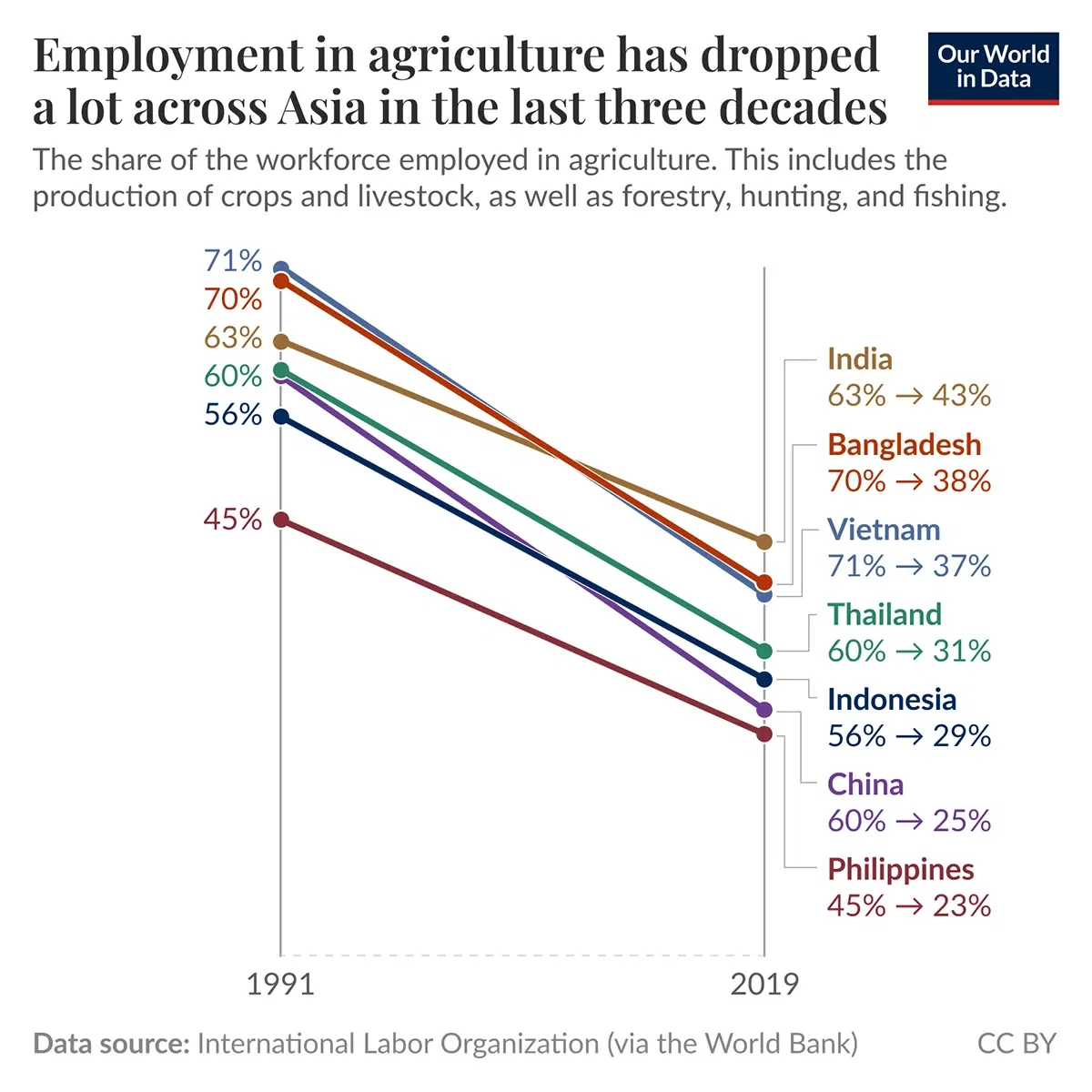
Over the last three decades, employment has changed dramatically across Asia.
In the early 1990s, almost two-thirds of the labor force in South Asia was employed in agriculture, and more than half in East Asia. Today, this is just 40% in the former, and one-quarter in the latter.
The chart shows the change across several countries in these regions. The share has fallen in all of them, but some stand out as having particularly dramatic transitions away from farming.
In Bangladesh and Vietnam, rates have fallen from around 70% to 38%. In China, they have dropped from 60% to 25%. In India, things have moved more slowly.
This matters for people still working in agriculture and those who have moved to jobs in other sectors. Productivity gains — which can allow family members and former workers to move away from the farm — mean that the financial returns per farm worker have increased over this time. Those who have moved to jobs in industry and services often see an increase in their wages. The result is that mean incomes have increased across these countries.